
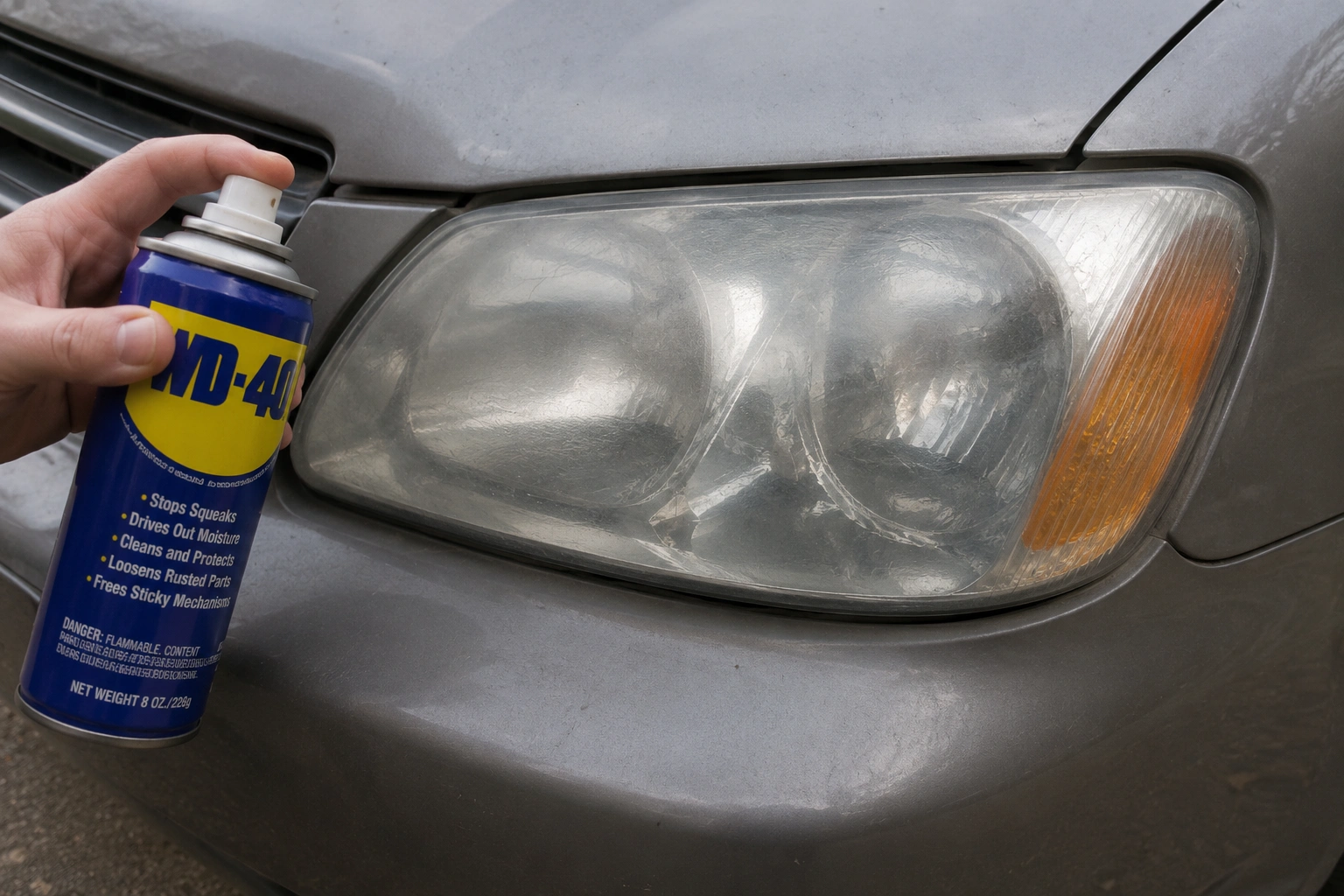
Clear headlights play a major role in both vehicle appearance and nighttime visibility. Over time, headlight lenses often become cloudy, yellow, hazy, or dull because of oxidation, dirt buildup, road debris, sunlight exposure, and weather conditions. Faded headlights not only make a car look older, but they can also reduce light output significantly, making nighttime driving more difficult and less safe.
Many drivers search for quick and affordable ways to improve headlight clarity without replacing the entire headlight assembly. One popular method involves using WD-40, a multi-purpose product commonly found in garages and toolboxes. Because WD-40 helps remove grime, moisture, and surface contamination, some vehicle owners use it to improve the appearance of dull headlights temporarily.
Although WD-40 can help clean headlights and restore some surface shine, it is important to know what it actually does, what results to expect, and how to use it correctly without damaging the lens. Proper preparation, cleaning technique, and long-term protection all matter if the goal is cleaner and clearer headlights that last longer.
Table of Contents
Why Headlights Become Cloudy Over Time
Modern headlight lenses are usually made from polycarbonate plastic rather than glass. While plastic is lighter and more impact-resistant, it becomes vulnerable to oxidation and surface wear after years of exposure.
Sunlight And UV Damage
One of the biggest reasons headlights turn yellow or cloudy is ultraviolet exposure from sunlight. Manufacturers apply a protective UV coating to headlight lenses during production, but this coating gradually wears down over time.
Once the protective layer weakens, the plastic underneath begins oxidizing. Oxidation creates the dull, faded, or yellow appearance commonly seen on older vehicles. The lens surface becomes rougher and less transparent, reducing the amount of light passing through.
Vehicles parked outdoors for long periods usually experience faster headlight deterioration because constant sunlight exposure accelerates oxidation. Hot climates and intense summer temperatures often worsen the process even further.
As oxidation increases, headlights may appear milky or foggy even after washing the car. Basic soap and water cleaning often fails because the damage develops inside the outer lens layer rather than from surface dirt alone.
Regular maintenance and UV protection help slow this aging process and preserve headlight clarity for longer periods.
| Cause Of Cloudy Headlights | Effect On Lens |
| UV Exposure | Yellowing And Oxidation |
| Road Debris | Surface Scratches |
| Dirt And Grime | Reduced Clarity |
| Moisture Exposure | Foggy Appearance |
Dirt, Oil, And Road Contamination
Headlights constantly face exposure to dirt, oil, insects, road salt, tar, and pollution during everyday driving. Over time, these contaminants form a layer of grime that reduces lens clarity and brightness.
Road oils and airborne pollution often stick to the plastic surface, especially during hot weather conditions. Rainwater may spread contaminants across the lens instead of washing them away completely.
Insects and debris create additional surface buildup that becomes harder to remove if left untreated for long periods. Headlights positioned low on the vehicle front absorb continuous impact from road particles while driving.
WD-40 can help loosen some of these oily contaminants and temporarily improve headlight appearance because of its cleaning and penetrating properties.
However, severe oxidation usually requires more than simple surface cleaning for long-lasting results.
Small Scratches And Surface Wear
Tiny scratches develop gradually on headlight lenses from dust, car washes, road debris, and improper cleaning materials. These scratches scatter light unevenly and contribute to a hazy appearance.
Automatic car washes sometimes worsen the problem because rotating brushes create fine surface marks over time. Dry wiping dirty headlights can also scratch the plastic surface.
Once enough micro-scratches accumulate, the headlight loses transparency and appears cloudy even if the lens itself remains structurally intact.
Proper cleaning tools and protective coatings help reduce additional surface wear during maintenance.
Can WD-40 Really Clean Headlights?
WD-40 is widely known for lubrication and moisture removal, but many people also use it for light surface cleaning on automotive components.
What WD-40 Actually Does On Headlights
WD-40 mainly works by loosening dirt, grease, road grime, and oily residue from the headlight surface. It also creates a temporary shiny layer that can improve the appearance of faded lenses for a short time.
When sprayed onto cloudy headlights and wiped properly, WD-40 may reduce surface haze and make the plastic appear clearer temporarily. The oils inside the product help fill tiny surface imperfections briefly, improving reflection and shine.
This effect often makes headlights look noticeably better immediately after cleaning. However, WD-40 does not permanently remove oxidation from the plastic itself. Severe yellowing or deep oxidation usually returns once the oily layer fades away.
For lightly dull headlights with mostly surface contamination, WD-40 may provide decent short-term improvement. For heavily oxidized lenses, stronger restoration methods involving sanding and polishing are often more effective long term.
WD-40 works best as a quick cleaning aid rather than a permanent restoration solution.
Benefits Of Using WD-40 On Headlights
One major advantage of WD-40 is convenience. Many households and garages already contain the product, making it an easy option for quick headlight cleaning without special tools.
WD-40 also removes sticky residue, bug stains, road tar, and oily contamination effectively. These contaminants sometimes contribute heavily to dull headlight appearance.
The process itself is simple and inexpensive compared to professional headlight restoration services. Drivers looking for fast cosmetic improvement often prefer quick methods requiring minimal effort.
Another benefit is moisture displacement. WD-40 may help reduce light surface moisture or temporary fogging around the lens exterior.
Because the process takes only a few minutes, many drivers use it before road trips, nighttime driving, or vehicle photography.
Limitations Of WD-40 For Headlight Restoration
Although WD-40 can improve appearance temporarily, it does not permanently repair oxidized plastic. Once the oily layer evaporates or washes away, oxidation usually becomes visible again.
Severely yellowed headlights often require sanding, polishing compounds, UV sealants, or professional restoration kits for long-lasting clarity improvements.
WD-40 should also not be sprayed heavily onto painted surfaces, rubber seals, or brake components unnecessarily because residue may attract dust or create slippery surfaces.
Drivers expecting permanent crystal-clear restoration from WD-40 alone may become disappointed if oxidation damage is already advanced.
For best results, WD-40 works more effectively as part of regular maintenance rather than a complete restoration replacement.
| WD-40 Effect | Result |
| Removes Surface Grime | Cleaner Appearance |
| Adds Temporary Shine | Improved Clarity |
| Loosens Road Residue | Easier Cleaning |
| Does Not Remove Deep Oxidation | Temporary Results |
How To Clean Headlights With WD-40 Properly
Using WD-40 correctly helps improve results while reducing the risk of smearing or unnecessary residue buildup.
Gather Proper Cleaning Supplies
Before starting, several basic cleaning materials help make the process smoother and safer for the headlight surface.
A microfiber cloth is strongly recommended because it reduces scratching compared to paper towels or rough fabrics. Soft cloths help lift dirt gently without damaging the plastic lens.
Car wash soap and water should also be used first to remove loose dirt and debris before applying WD-40. Cleaning the surface beforehand prevents rubbing abrasive particles across the lens during wiping.
A second clean microfiber towel helps remove excess WD-40 residue after application. Some drivers also use masking tape around the headlight edges to protect nearby paint surfaces.
Working in a shaded area is helpful because direct sunlight can dry products too quickly during cleaning.
Clean The Headlight Surface First
The headlights should always be washed with soap and water before spraying WD-40 directly onto the lens. This removes loose dirt, dust, bug remains, and road debris from the surface.
Skipping this step increases the risk of scratching the plastic because trapped particles may rub against the lens while wiping.
A soft sponge or microfiber cloth works best during the initial cleaning stage. Once cleaned, the headlights should be dried completely before applying WD-40.
Inspecting the lens afterward helps determine whether the haze comes mainly from surface contamination or deeper oxidation damage.
Light oxidation often responds better to WD-40 cleaning than severe yellowing or rough surface deterioration.
Apply WD-40 Carefully And Evenly
WD-40 should be sprayed lightly onto the headlight lens rather than soaking the surface heavily. A thin, even coating usually works best.
After spraying, a clean microfiber cloth should be used to wipe the lens gently using circular motions. This helps distribute the product evenly while lifting remaining grime and residue.
Drivers often notice immediate improvement in gloss and clarity as the oily layer fills small imperfections temporarily.
Once the lens appears cleaner, a separate dry microfiber towel should remove excess residue. Leaving too much WD-40 on the surface may create streaking or attract dust later.
For better results, some drivers repeat the process once or twice depending on headlight condition.
Better Long-Term Alternatives For Cloudy Headlights
WD-40 may improve appearance temporarily, but heavily oxidized headlights usually require stronger restoration methods for lasting clarity.
Sanding And Polishing Kits
Headlight restoration kits are one of the most effective long-term solutions for cloudy lenses. These kits usually include sandpaper, polishing compounds, applicator pads, and UV protective sealants.
Wet sanding removes the damaged oxidized layer from the plastic surface gradually. Polishing compounds then smooth the lens and restore transparency afterward.
The process requires more effort than using WD-40, but results usually last much longer when performed correctly.
Fine-grit sandpaper should always be used carefully with water lubrication to avoid deep scratches. Proper polishing afterward is necessary to restore optical clarity fully.
Many restoration kits also include UV sealants that help slow future oxidation damage significantly.
UV Sealants And Protective Coatings
After restoring headlights, UV protection becomes extremely important. Without a protective coating, oxidation often returns relatively quickly.
UV sealants create a protective barrier against sunlight and environmental contamination. Ceramic coatings and dedicated headlight protectants also help preserve lens clarity for longer periods.
Regular wax application may provide mild additional protection as well, although dedicated UV protectants work more effectively.
Drivers parking outdoors regularly benefit most from protective coatings because constant sunlight exposure accelerates oxidation damage rapidly.
Professional Headlight Restoration Services
Professional restoration services often provide the best results for severely damaged headlights. Technicians use machine polishers, specialized compounds, and commercial-grade sealants to restore clarity more evenly.
Some extremely damaged headlights may still require replacement if cracks, severe yellowing, or internal damage exist beyond surface oxidation.
Professional restoration generally costs far less than replacing entire headlight assemblies, especially on luxury vehicles with expensive lighting systems.
Drivers planning to keep their vehicle long term often benefit from professional restoration combined with UV protection maintenance afterward.
| Restoration Method | Durability |
| WD-40 Cleaning | Short-Term |
| DIY Restoration Kit | Moderate To Long-Term |
| UV Sealant Protection | Preventive Maintenance |
| Professional Restoration | Long-Lasting Results |
Tips To Keep Headlights Clear Longer
Regular maintenance greatly slows oxidation and helps maintain clearer headlights over time.
Wash Headlights Frequently
Routine washing removes road grime, bug residue, and pollution before contaminants permanently bond to the lens surface.
Gentle cleaning using automotive soap and microfiber cloths helps preserve the plastic finish without adding unnecessary scratches.
Keeping headlights clean also improves nighttime visibility and overall vehicle appearance consistently.
Avoid Harsh Cleaning Materials
Rough brushes, dirty rags, and abrasive cleaners often create micro-scratches that worsen cloudiness gradually.
Soft microfiber towels and non-abrasive products remain the safest choice for plastic headlight lenses.
Dry wiping dusty headlights should also be avoided because trapped debris may scratch the surface during cleaning.
Park Away From Excessive Sunlight
Vehicles parked in garages or shaded areas usually experience slower headlight oxidation compared to cars exposed to constant direct sunlight.
UV exposure remains one of the biggest causes of yellowing and lens deterioration over time.
Using car covers or shaded parking whenever possible helps preserve both paint and headlight condition more effectively.
Bottom Line
WD-40 can help clean headlights by removing surface grime, oily residue, bug stains, and light contamination while temporarily improving shine and clarity. For mildly dull headlights, the product may create noticeable cosmetic improvement within minutes using simple cleaning tools and minimal effort.
However, WD-40 does not permanently repair deep oxidation or severe yellowing because it mainly works on surface contamination rather than restoring damaged plastic fully. Heavily oxidized headlights usually require sanding, polishing, and UV protection for long-lasting clarity improvements.
Regular maintenance, gentle cleaning methods, and protective coatings help preserve headlight appearance and reduce future oxidation damage over time. Drivers who combine routine care with proper restoration techniques usually maintain brighter, clearer headlights and safer nighttime visibility for much longer.
FAQ
Can WD-40 Really Clean Cloudy Headlights?
Yes, WD-40 can remove surface grime and temporarily improve headlight clarity, especially on mildly dull lenses.
Does WD-40 Permanently Restore Headlights?
No, WD-40 mainly provides temporary improvement and does not permanently remove deep oxidation.
Is WD-40 Safe For Plastic Headlights?
When used lightly and wiped properly, WD-40 is generally safe for plastic headlights, but excessive use should be avoided.
How Long Does WD-40 Last On Headlights?
Results are usually temporary and may last from several days to a few weeks depending on weather and washing conditions.
What Works Better Than WD-40 For Headlight Restoration?
Headlight restoration kits with sanding, polishing compounds, and UV sealants provide much longer-lasting results.

- How To Clean Headlights With WD40 Safely And Easily - May 8, 2026
- How Fast Do Airbags Deploy? Complete Safety Guide - May 8, 2026
- Where Does Antifreeze Go? Complete Car Coolant Guide - May 8, 2026