
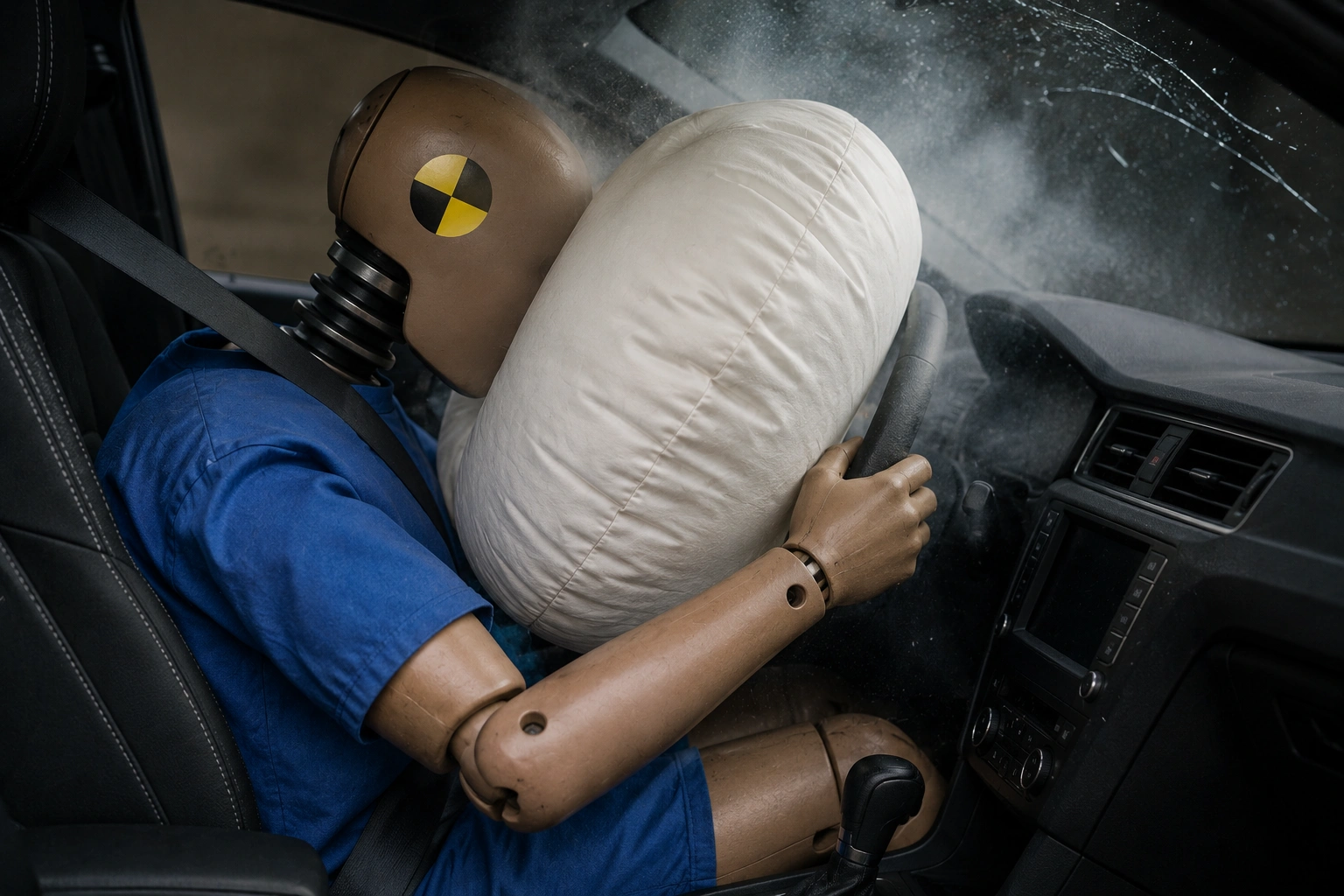
Modern vehicles include dozens of safety technologies designed to reduce injuries during collisions, but few systems react as quickly as airbags. Hidden behind steering wheels, dashboards, seats, pillars, and roof panels, airbags remain inactive during normal driving yet become fully inflated within milliseconds during a crash.
Most drivers never see airbags deployed in real life, which often creates curiosity about how fast they actually work and what happens during those critical moments after impact.
Airbags are designed to work together with seat belts to reduce the force experienced by occupants during sudden collisions. Their speed is extremely important because vehicle crashes happen faster than human reaction time. The airbag system must detect the crash, decide whether deployment is necessary, ignite the inflator, fill the airbag completely, and begin deflating almost instantly before the occupant moves forward significantly.
Although airbags save thousands of lives every year, many people misunderstand how they operate, how quickly they deploy, and why deployment force can sometimes cause injuries as well. Understanding how airbags work helps drivers better appreciate modern vehicle safety engineering and understand why proper seating position and seat belt use remain so important.
Table of Contents
How Fast Airbags Deploy During A Crash
Airbags deploy incredibly fast compared to normal human reaction speed. The entire process happens in fractions of a second during a collision.
Airbags Inflate Within Milliseconds
Most front airbags deploy within approximately 20 to 50 milliseconds after a serious crash begins. To understand how fast this is, a human blink usually takes around 300 to 400 milliseconds. This means airbags deploy far faster than the eye can fully process the event.
Crash sensors continuously monitor vehicle movement while driving. When sensors detect sudden deceleration strong enough to indicate a collision, the airbag control module instantly analyzes impact severity and determines whether deployment is necessary.
Once activated, an electrical signal ignites a chemical inflator inside the airbag module. This reaction rapidly produces gas that fills the folded airbag almost instantly. By the time the occupant begins moving forward significantly, the airbag is already fully inflated and positioned to absorb impact energy.
The deployment itself is extremely violent because the airbag must inflate faster than the occupant’s body moves during the crash. Some airbags can deploy at speeds exceeding 150 to 200 miles per hour during inflation.
Immediately after inflating, the airbag begins releasing gas through vent holes to cushion the occupant while reducing rebound force.
| Airbag Process | Approximate Time |
| Crash Detection | Few Milliseconds |
| Sensor Signal To Inflator | Almost Instant |
| Full Airbag Inflation | 20 To 50 Milliseconds |
| Initial Deflation Begins | Immediately After Inflation |
Why Airbags Must Deploy So Quickly
Vehicle crashes happen extremely fast. During a frontal collision, the vehicle structure may stop suddenly while occupants continue moving forward because of momentum. Without restraint systems, the body could strike the steering wheel, dashboard, windshield, or side structures with enormous force.
Airbags must inflate before the occupant moves too far forward. If deployment happened too slowly, the person could collide with interior surfaces before the airbag fully inflated. Timing is therefore critical.
At highway speeds, a crash can develop completely within fractions of a second. Modern airbag systems rely on advanced sensors and computer-controlled modules capable of reacting faster than human reflexes.
The rapid deployment speed allows the airbag to create a soft protective cushion between the occupant and hard vehicle structures. Once the body contacts the airbag, controlled deflation helps absorb impact energy more gradually.
Without extremely fast deployment, airbags would lose much of their protective effectiveness during serious collisions.
The Difference Between Airbag Deployment And Deflation
Many people imagine airbags staying fully inflated after a crash, but this is not how modern systems operate. Airbags inflate rapidly, then begin deflating almost immediately afterward.
Deflation is necessary because a fully rigid airbag would create dangerous rebound forces against the occupant’s body. Instead, small vent holes allow gas to escape gradually during impact.
This controlled deflation helps absorb crash energy while reducing chest, neck, and head forces. The entire inflation and deflation cycle often occurs within less than one second.
Drivers sometimes notice smoke or dust after deployment. This usually comes from the inflator chemicals and fine powder used to help airbags unfold properly during deployment.
Although airbags deploy violently, their design focuses on reducing injury severity during extremely high-force collisions.
How Airbag Systems Detect A Crash
Modern airbag systems use advanced electronics and sensors to determine when deployment becomes necessary.
Crash Sensors And Impact Detection
Airbag systems rely on crash sensors positioned throughout the vehicle. These sensors constantly measure acceleration, deceleration, and impact forces while the vehicle operates.
During a collision, sensors detect sudden changes in vehicle speed far beyond normal braking forces. The airbag control module then evaluates impact severity, crash angle, and occupant information before triggering deployment.
Frontal airbags usually activate during moderate to severe front-end collisions. Side airbags respond mainly to side impacts, while curtain airbags protect occupants during side crashes and rollover events.
Modern vehicles often use multiple sensors working together for greater accuracy. Some sensors monitor crush zones near the bumper area, while others measure movement closer to the cabin itself.
The system must react extremely quickly while avoiding unnecessary deployment during smaller bumps or minor impacts.
| Airbag Sensor Type | Main Purpose |
| Frontal Impact Sensors | Detect Head-On Collisions |
| Side Impact Sensors | Detect Side Crashes |
| Rollover Sensors | Detect Vehicle Tilt |
| Seat Occupancy Sensors | Detect Passenger Presence |
The Role Of The Airbag Control Module
The airbag control module acts like the central computer for the entire supplemental restraint system. It continuously receives information from sensors located around the vehicle.
When crash sensors detect sudden deceleration, the control module calculates whether deployment thresholds have been reached. It determines which airbags should deploy depending on crash direction and severity.
Modern systems also consider seat belt usage, seat position, occupant weight, and passenger presence before deployment. Some advanced airbags adjust deployment force based on occupant size and seating distance.
The control module stores crash data as well. After deployment, technicians often retrieve this information during accident investigations or repair procedures.
Because airbags involve explosive inflators, the control module includes multiple safety safeguards to prevent accidental deployment during normal driving conditions.
Why Airbags Do Not Deploy In Every Crash
Airbags are designed mainly for moderate to severe collisions. Minor accidents or low-speed impacts may not trigger deployment because seat belts alone often provide sufficient protection during smaller crashes.
For example, slow parking lot impacts usually do not create enough deceleration force to activate the airbag system. Deploying airbags unnecessarily would increase repair costs and potentially create avoidable injuries from the deployment itself.
Crash direction also matters. Front airbags generally respond only to frontal or near-frontal impacts. Side collisions may activate side airbags instead depending on impact location.
Modern airbag systems carefully balance safety benefits with deployment thresholds to provide protection only when necessary.
Different Types Of Airbags And Their Deployment Speeds
Modern vehicles contain several different airbag types designed to protect occupants during specific crash situations.
Front Airbags
Front airbags are the most recognizable airbags in modern vehicles. They are typically located inside the steering wheel for the driver and inside the dashboard for the front passenger.
These airbags primarily protect the head and chest during frontal collisions. They deploy extremely quickly because front-end crashes create intense forward momentum.
Driver airbags are usually smaller because the steering wheel sits closer to the occupant. Passenger airbags tend to be larger due to greater distance from the dashboard.
Modern front airbags often use dual-stage inflators capable of adjusting deployment intensity depending on crash severity. Smaller collisions may trigger lower deployment force, while severe crashes activate maximum inflation.
Front airbags work best together with seat belts. Seat belts help position occupants correctly while reducing forward movement before airbag contact occurs.
Side Airbags And Curtain Airbags
Side airbags deploy even faster than many front airbags because side-impact crashes provide much less crush space between occupants and the impact point.
Seat-mounted side airbags protect the chest and torso during side collisions. Curtain airbags deploy from the roof area and protect the head during side impacts or rollover accidents.
Some curtain airbags remain inflated longer than front airbags to provide extended rollover protection. This helps prevent occupants from striking windows or being partially ejected during rollovers.
Because side crashes occur so suddenly, side airbags may deploy within approximately 10 to 20 milliseconds after impact detection.
Modern vehicles increasingly use combined side-impact protection systems that coordinate multiple airbags simultaneously during severe crashes.
| Airbag Type | Main Protection Area |
| Front Airbag | Head And Chest |
| Side Airbag | Torso Protection |
| Curtain Airbag | Head Protection |
| Knee Airbag | Lower Leg Protection |
Knee Airbags And Rear Passenger Airbags
Some modern vehicles now include knee airbags designed to protect the lower legs during frontal crashes. These airbags reduce leg injuries and help control occupant positioning during impact.
Luxury vehicles may also include rear-seat airbags to improve protection for back-seat passengers. Rear airbags often deploy differently because seating positions and crash dynamics vary from front occupants.
Advanced restraint systems continue evolving as automakers improve occupant protection in different crash scenarios.
Although deployment timing varies slightly depending on airbag type, all systems operate within extremely small fractions of a second during collisions.
Common Myths And Misunderstandings About Airbags
Airbags save lives, but several misconceptions still surround how they operate and how safe they actually are.
Airbags Can Cause Injuries Too
Although airbags are designed to reduce severe injuries, deployment itself can still cause bruises, burns, abrasions, or fractures during certain crashes.
The rapid inflation force creates enormous pressure as the airbag bursts outward. Occupants sitting too close to the steering wheel or dashboard face higher injury risk because the body contacts the airbag before full inflation completes.
Children and small adults are especially vulnerable if seated improperly near active airbags. This is why child safety seats should never face backward in front of active passenger airbags.
Common airbag-related injuries include facial abrasions, wrist injuries, chest bruising, and temporary hearing discomfort from deployment noise.
Despite these risks, airbags dramatically reduce fatal injury risk during serious crashes when combined with seat belts properly.
Seat Belts Are Still Necessary
Some drivers mistakenly believe airbags replace seat belts, but airbags are designed as supplemental restraint systems rather than primary restraints.
Seat belts help position occupants correctly before airbag deployment. Without seat belts, occupants may move too far forward or out of position during a crash, increasing injury risk significantly.
Airbags alone cannot prevent occupants from being thrown around inside the cabin during rollovers or multiple-impact crashes. Seat belts remain essential for controlling occupant movement.
Modern safety systems are designed to work together. Seat belts, airbags, crumple zones, and reinforced structures combine to reduce injury forces during collisions.
Airbags Do Not Always Deploy During Every Collision
Many drivers assume airbags should deploy during any visible accident damage, but deployment depends mainly on crash forces and impact direction rather than cosmetic damage alone.
A vehicle may sustain heavy body damage during certain low-speed collisions without generating enough deceleration force to activate airbags. Conversely, some severe crashes with less visible damage may still trigger deployment because of sudden force transfer.
Airbag deployment thresholds are carefully calibrated to balance safety protection against unnecessary activation risks.
How To Stay Safe Around Airbags
Proper seating position and restraint usage greatly improve airbag effectiveness while reducing injury risk.
Maintain Proper Seating Distance
Drivers should sit far enough from the steering wheel to allow safe airbag deployment space. Most safety experts recommend maintaining at least 10 inches between the chest and steering wheel center.
Sitting too close increases the chances of airbag deployment injuries because the occupant contacts the airbag during early inflation stages.
Steering wheels should also be angled toward the chest rather than directly toward the face whenever possible.
Passengers should avoid placing feet on dashboards because deploying airbags can cause severe leg and facial injuries in those positions.
Always Wear Seat Belts Correctly
Seat belts remain the first line of protection during collisions. Properly worn seat belts help keep occupants positioned safely before airbags deploy.
Loose or improperly positioned seat belts reduce overall restraint effectiveness and increase injury risk during crashes.
Children should always ride in age-appropriate safety seats positioned correctly according to manufacturer guidelines.
Rear-seat passengers also benefit significantly from seat belt usage because unrestrained occupants can injure others inside the cabin during collisions.
| Safety Tip | Why It Matters |
| Wear Seat Belts Properly | Improves Airbag Protection |
| Sit At Safe Distance | Reduces Deployment Injury Risk |
| Use Child Seats Correctly | Protects Children Safely |
| Avoid Dashboard Foot Position | Prevents Severe Leg Injuries |
Replace Airbags After Deployment
Once airbags deploy, the entire supplemental restraint system requires professional inspection and repair before the vehicle returns to normal operation.
Deployed airbags, crash sensors, seat belt pretensioners, and control modules often require replacement after accidents. Driving with damaged restraint systems reduces crash protection significantly.
Some older vehicles also include recall campaigns related to defective airbag inflators. Owners should check recall notices regularly and complete safety repairs promptly.
Proper maintenance helps ensure airbag systems remain ready to function correctly if needed during future crashes.
Summary
Airbags deploy incredibly fast during collisions, usually inflating fully within 20 to 50 milliseconds after impact detection. This rapid response is necessary because crashes happen much faster than human reaction time, and occupants begin moving forward almost instantly during a collision.
Modern airbag systems rely on advanced crash sensors, control modules, and carefully calibrated inflators to provide protection during frontal, side, and rollover crashes. Front airbags, side airbags, curtain airbags, and knee airbags all work together with seat belts to reduce injury severity during serious accidents.
Although airbags can sometimes cause minor injuries because of their powerful deployment force, they remain one of the most important safety technologies in modern vehicles. Proper seating position, consistent seat belt usage, and correct child seat placement all help maximize airbag effectiveness while reducing risks.
Knowing how quickly airbags work and why they deploy with such force helps drivers better appreciate the advanced engineering behind modern automotive safety systems.
FAQ
How Fast Do Airbags Deploy In A Crash?
Most airbags fully deploy within about 20 to 50 milliseconds after a serious collision begins.
How Fast Does An Airbag Inflate?
Airbags can inflate at speeds exceeding 150 to 200 miles per hour during deployment.
Do Airbags Deploy Instantly?
They deploy almost instantly after crash sensors detect severe impact forces strong enough to require protection.
Why Do Airbags Deflate So Quickly?
Airbags deflate immediately after inflation to absorb crash energy safely and reduce rebound injuries.
Can Airbags Hurt You?
Yes, airbags can cause bruises, burns, or minor injuries during deployment, but they greatly reduce the risk of severe or fatal injuries overall.

- How To Clean Headlights With WD40 Safely And Easily - May 8, 2026
- How Fast Do Airbags Deploy? Complete Safety Guide - May 8, 2026
- Where Does Antifreeze Go? Complete Car Coolant Guide - May 8, 2026
