Antifreeze is one of the most important fluids inside a vehicle, yet many drivers are unsure where it actually goes or how it works inside the engine. Unlike fuel or windshield washer fluid, antifreeze moves through a sealed cooling system designed to control engine temperature under all weather conditions.
It protects the engine from overheating during hot weather and prevents freezing damage during cold temperatures. Without proper antifreeze circulation, modern engines would quickly suffer serious mechanical damage.
Many vehicle owners first notice antifreeze when checking the coolant reservoir under the hood or seeing a low coolant warning light appear on the dashboard. Others may encounter coolant leaks, overheating problems, or rising temperature gauges without fully knowing how the system operates.
Antifreeze does much more than simply cool the engine. It also prevents corrosion, lubricates certain cooling system components, and supports stable engine performance during daily operation.
Knowing where antifreeze goes, how it circulates, and what happens when levels become low can help drivers maintain their vehicles properly and avoid expensive cooling system repairs.
Table of Contents
What Antifreeze Does Inside A Vehicle
Antifreeze works as part of the engine cooling system. It constantly moves through several components to manage heat and protect the engine from temperature-related damage.
How Antifreeze Circulates Through The Cooling System
Antifreeze flows through a closed-loop cooling system powered mainly by the water pump. Once the engine starts, the water pump pushes coolant through passages inside the engine block and cylinder head. As combustion generates heat, the antifreeze absorbs excess temperature from metal engine components.
After collecting heat, the antifreeze travels toward the radiator through coolant hoses. Inside the radiator, airflow removes heat from the coolant before it circulates back into the engine again. This continuous process helps maintain safe operating temperatures during driving.
The thermostat controls coolant flow depending on engine temperature. When the engine is cold, the thermostat stays closed to help the engine warm up faster. Once operating temperature is reached, the thermostat opens and allows coolant to circulate fully through the radiator.
Antifreeze also flows through the heater core inside the dashboard. The heater core uses hot coolant to provide cabin heat during cold weather. This means the cooling system supports both engine temperature regulation and interior climate control at the same time.
Because the cooling system remains sealed and pressurized, antifreeze should not disappear under normal conditions unless leaks or mechanical problems develop.
| Cooling System Component | Antifreeze Function |
| Water Pump | Circulates Coolant |
| Radiator | Removes Heat |
| Thermostat | Controls Coolant Flow |
| Heater Core | Provides Cabin Heat |
| Engine Block | Absorbs Combustion Heat |
Why Antifreeze Is More Than Just Water
Although water can absorb heat effectively, modern engines require much more protection than plain water can provide. Antifreeze contains chemicals designed to improve temperature control and protect cooling system components.
One major advantage involves freeze protection. During extremely cold weather, water alone would freeze inside the engine and expand. Frozen coolant can crack engine blocks, radiators, and hoses. Antifreeze lowers the freezing point of the coolant mixture and prevents this damage.
Antifreeze also raises the boiling point of coolant under high temperatures. Modern engines operate very hot, especially under heavy loads or during summer driving. The coolant mixture helps prevent overheating and boil-over conditions.
Corrosion protection is another important benefit. Antifreeze contains additives that protect aluminum, steel, copper, and other metals inside the cooling system from rust and internal deterioration.
In addition, coolant lubricates the water pump seals and certain internal cooling system components. This helps extend the lifespan of the cooling system over time.
Difference Between Antifreeze And Coolant
Many people use the words antifreeze and coolant interchangeably, but there is a slight difference technically.
Antifreeze usually refers to the concentrated chemical fluid before mixing. Coolant generally describes the final mixture of antifreeze and water circulating through the engine.
Most vehicles use a 50/50 mixture of antifreeze and distilled water. This combination provides balanced freeze protection, boiling resistance, and corrosion prevention.
Some coolant products come pre-mixed and ready for use, while others require dilution before adding them to the vehicle.
Although the terms are commonly swapped during conversation, both refer to the same cooling system fluid in most everyday automotive discussions.
Where Antifreeze Goes In A Car
Antifreeze enters the cooling system through specific locations designed for safe filling and circulation.
The Coolant Reservoir Tank
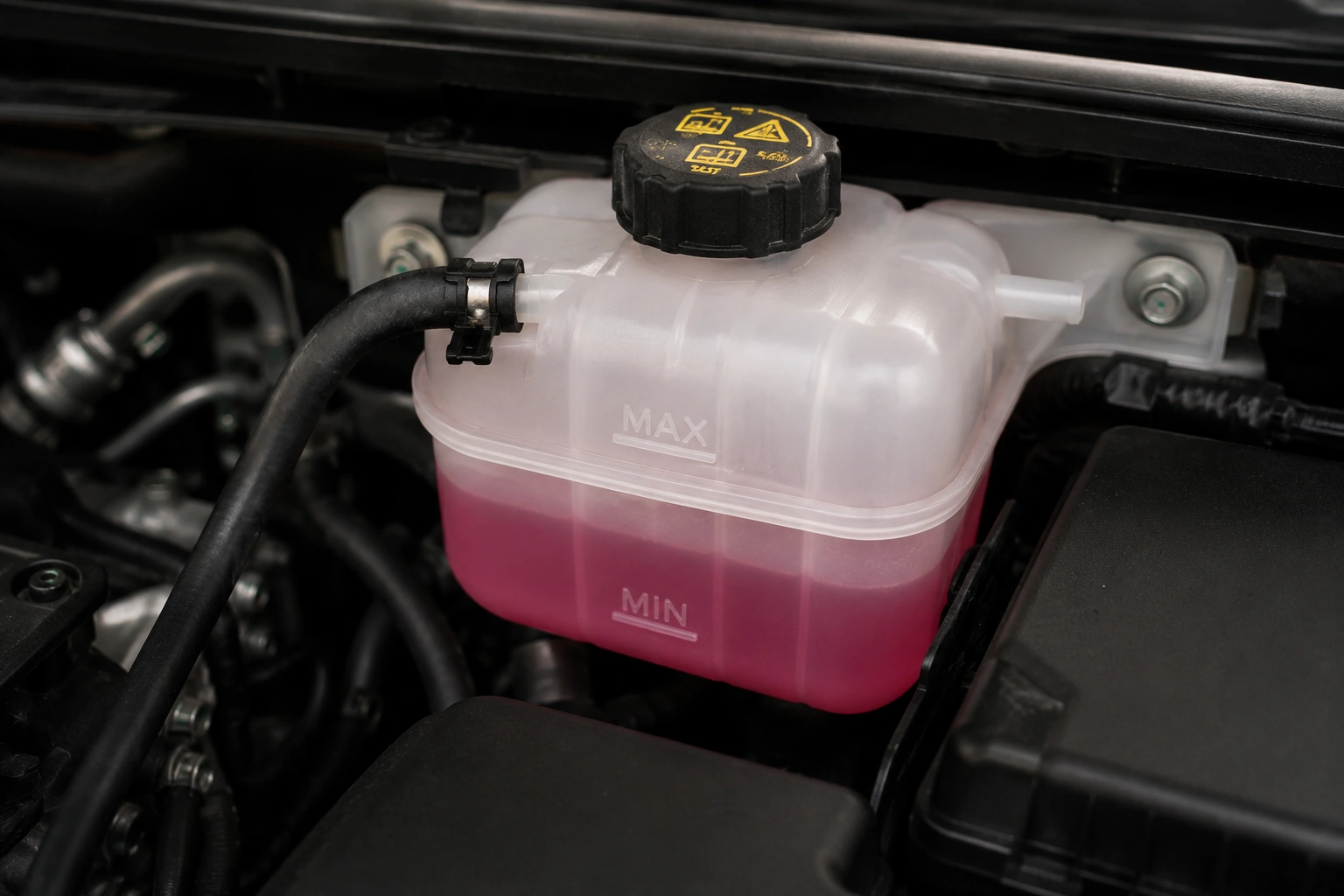
In most modern vehicles, antifreeze is usually added through the coolant reservoir tank. This translucent plastic container is connected directly to the radiator and cooling system through hoses.
The reservoir often includes “MIN” and “MAX” markings showing proper coolant levels when the engine is cold. Drivers can check coolant levels visually without opening the radiator itself in many cases.
As the engine heats up, coolant expands and flows into the reservoir temporarily. When the engine cools, coolant contracts and returns back into the radiator automatically. This expansion and recovery process helps maintain proper cooling system pressure.
Coolant reservoirs are usually located near the radiator or along the side of the engine compartment. The cap often includes warning labels about opening the system while hot.
Adding antifreeze through the reservoir is safer than removing the radiator cap directly because pressurized systems can release hot coolant suddenly if opened improperly.
The Radiator And Cooling Passages
After entering the system, antifreeze flows directly into the radiator and internal engine cooling passages. The radiator acts as the main heat exchanger for the cooling system.
Inside the radiator, thin cooling fins allow outside air to remove heat from the hot coolant. Electric cooling fans help increase airflow when the vehicle moves slowly or idles in traffic.
From the radiator, coolant travels through hoses into the engine block and cylinder head. Small coolant passages surrounding the combustion chambers absorb heat from the engine internals continuously.
The coolant then returns to the radiator again through the upper radiator hose, completing the circulation cycle repeatedly while the engine runs.
Because these internal passages are narrow and complex, using the correct coolant type is important to prevent corrosion and blockage over time.
| Location | Purpose |
| Coolant Reservoir | Stores Overflow Coolant |
| Radiator | Releases Heat |
| Engine Passages | Absorbs Engine Heat |
| Heater Core | Produces Cabin Warmth |
| Hoses | Transport Coolant |
The Heater Core Inside The Dashboard
Many drivers do not realize antifreeze also travels through the heater core located inside the dashboard area. The heater core functions similarly to a small radiator dedicated to cabin heating.
Hot coolant flows through the heater core whenever the engine reaches operating temperature. When the driver activates the heater system, the blower fan pushes air across the hot heater core surface and into the cabin vents.
If coolant levels become too low, heater performance often decreases because insufficient hot coolant reaches the heater core properly. Weak cabin heat during winter may sometimes indicate low coolant levels or trapped air inside the cooling system.
Coolant leaks inside the heater core can create sweet smells inside the cabin, fogged windows, or damp carpeting under the dashboard.
The heater core remains an important part of the overall cooling system even though its primary purpose focuses on interior comfort.
How To Add Antifreeze Correctly
Adding antifreeze is relatively simple, but following proper safety procedures is extremely important because cooling systems operate under high pressure and temperature.
Letting The Engine Cool Before Opening The System
The most important safety step before adding antifreeze is allowing the engine to cool completely. Hot cooling systems remain pressurized even after the engine shuts off.
Opening the radiator cap or reservoir cap while the system remains hot can release boiling coolant and steam suddenly. Serious burns may occur if the cap is removed carelessly.
Drivers should wait until the upper radiator hose feels cool before opening any cooling system components safely. Most vehicles require at least 30 minutes to cool after driving.
Even if the temperature gauge appears normal, pressure may still remain trapped inside the system. Patience during this step prevents injury and protects cooling system components from sudden pressure changes.
Safety always matters more than speed when working with coolant systems.
Choosing The Correct Antifreeze Type
Not all antifreeze formulas are compatible with every vehicle. Manufacturers design cooling systems around specific coolant chemistries and additive packages.
Coolant color alone should never determine compatibility because similar colors may contain completely different chemical formulas. The owner’s manual provides the most accurate coolant recommendation for each vehicle.
Common coolant types include green traditional coolant, orange Organic Acid Technology coolant, and several specialized formulas used by different manufacturers.
Mixing incompatible coolants may create sludge buildup, corrosion, or cooling system blockage over time. If the wrong coolant has already been added accidentally, a complete cooling system flush may become necessary.
Using distilled water for concentrated coolant mixtures also helps reduce mineral deposits inside the radiator and engine passages.
Filling The Reservoir Properly
Once the engine cools fully, the coolant reservoir cap can be removed carefully. A funnel helps reduce spills during filling.
Antifreeze should be added slowly until the coolant level reaches the proper “MAX” marking on the reservoir. Overfilling should be avoided because coolant expands significantly as temperatures rise during operation.
If using concentrated antifreeze, proper mixing with distilled water should occur before adding it to the system. Many pre-mixed coolant products already contain the correct ratio.
After filling, the cap should be tightened securely. Some vehicles may require bleeding trapped air from the cooling system afterward to prevent overheating or poor heater performance.
Checking for leaks after adding coolant helps confirm the system remains sealed properly.
Common Cooling System Problems Related To Antifreeze
Cooling systems can develop several problems over time that affect antifreeze circulation and engine temperature control.
Coolant Leaks And Low Antifreeze Levels
Antifreeze should normally remain at stable levels inside a sealed cooling system. Repeated coolant loss usually indicates leaks somewhere in the system.
Common leak sources include radiator hoses, water pumps, radiator seams, thermostat housings, heater cores, and expansion tanks. Leaks may appear as green, orange, pink, or yellow fluid underneath the vehicle depending on coolant type.
Small leaks sometimes evaporate before reaching the ground, making diagnosis more difficult. Sweet smells near the engine bay often indicate coolant leakage because antifreeze has a distinct sugary odor.
Ignoring coolant leaks can eventually cause overheating, engine damage, or complete cooling system failure. Drivers should never continue adding coolant repeatedly without finding the actual leak source.
Routine inspections help identify cooling system problems early before major repairs become necessary.
| Cooling System Problem | Possible Symptom |
| Coolant Leak | Low Coolant Level |
| Air In Cooling System | Overheating |
| Bad Thermostat | Temperature Fluctuation |
| Water Pump Failure | Coolant Circulation Loss |
Overheating From Low Coolant
Low antifreeze levels reduce the cooling system’s ability to absorb and remove engine heat effectively. Once coolant drops too low, overheating becomes much more likely.
Dashboard temperature gauges rising above normal should never be ignored. Steam from under the hood, coolant warning lights, or boiling sounds often indicate serious overheating conditions.
Driving while overheated may damage head gaskets, warp cylinder heads, or weaken internal engine components. Severe overheating can even destroy the engine completely in extreme situations.
Cooling fans, thermostats, water pumps, and radiator flow all depend on proper coolant circulation for stable operation.
Adding coolant may temporarily lower temperatures, but underlying leaks or mechanical failures still require proper repair afterward.
Air Pockets Inside The Cooling System
Air trapped inside the cooling system can disrupt coolant flow and create overheating problems even when coolant levels appear normal.
Air pockets commonly form after coolant replacement, leaks, or improper filling procedures. Trapped air prevents coolant from circulating evenly through the engine and heater core.
Symptoms may include fluctuating temperature gauges, poor cabin heat, gurgling sounds, or sudden overheating spikes.
Some vehicles require specific bleeding procedures to remove trapped air completely after adding coolant. Bleed screws near the thermostat housing or radiator sometimes help release air more effectively.
Proper air removal restores stable coolant circulation and helps prevent overheating issues later.
Long-Term Antifreeze Maintenance Tips
Cooling system maintenance plays a major role in long-term engine reliability and temperature control.
Checking Coolant Levels Regularly
Routine coolant inspections help catch leaks and cooling system problems early. Drivers should check coolant levels every few weeks, especially before long trips or extreme weather seasons.
Coolant should always be checked while the engine is cold for accurate readings. Reservoir level markings make inspections quick and easy without opening the radiator itself.
Changes in coolant color, smell, or texture may indicate contamination or aging coolant additives. Rust-colored coolant often signals internal corrosion inside the cooling system.
Regular inspections help prevent surprise overheating situations and expensive engine repairs.
Replacing Old Antifreeze On Schedule
Antifreeze does not last forever. Over time, corrosion inhibitors and additives break down, reducing coolant effectiveness.
Old coolant may become acidic and damage radiators, heater cores, water pumps, and engine passages internally. Manufacturers provide recommended coolant replacement intervals depending on coolant type and vehicle design.
Some long-life coolants last over 100,000 miles, while older formulas require replacement more frequently.
Cooling system flushes remove old coolant, internal contaminants, and buildup that may restrict coolant flow. Replacing coolant regularly helps preserve long-term cooling system reliability.
Inspecting Cooling System Components
Cooling system parts wear gradually over time because of heat, pressure, and vibration exposure.
Radiator hoses may crack, soften, or swell internally with age. Water pumps can develop leaks or bearing failure. Thermostats sometimes stick open or closed, affecting engine temperature control.
Radiators may corrode internally or suffer external fin damage from debris. Cooling fans should also operate correctly during idle conditions.
Routine inspections help identify weak components before sudden failures create overheating emergencies.
Conclusion
Antifreeze moves through a vehicle’s entire cooling system to control engine temperature, prevent freezing, reduce corrosion, and support proper engine operation. It circulates through the radiator, engine block, water pump, heater core, hoses, and coolant reservoir continuously while the engine runs.
Modern cooling systems rely heavily on proper antifreeze levels and correct coolant chemistry to maintain stable temperatures under all weather conditions. Low coolant, leaks, trapped air, or neglected maintenance can quickly lead to overheating and expensive mechanical damage.
Knowing where antifreeze goes, how it works, and how to maintain the cooling system properly helps drivers protect engine reliability and extend vehicle lifespan significantly. Routine coolant checks, timely fluid replacement, and quick attention to leaks remain some of the most important steps for preventing major cooling system failures.
FAQ
Where Does Antifreeze Go In A Car?
Antifreeze goes into the coolant reservoir or radiator and then circulates through the engine, radiator, heater core, and cooling hoses.
Can I Add Antifreeze Directly To The Radiator?
Yes, but only when the engine is completely cool. Many modern vehicles recommend adding coolant through the reservoir tank instead.
What Happens If Antifreeze Is Low?
Low antifreeze can cause overheating, weak cabin heat, poor coolant circulation, and serious engine damage if ignored.
Is Antifreeze The Same As Coolant?
Antifreeze usually refers to the concentrated fluid, while coolant refers to the final water-antifreeze mixture inside the system.
How Often Should Antifreeze Be Replaced?
Replacement intervals vary by vehicle and coolant type, but many modern coolants last between 50,000 and 100,000 miles.

- How Fast Do Airbags Deploy? Complete Safety Guide - May 8, 2026
- Where Does Antifreeze Go? Complete Car Coolant Guide - May 8, 2026
- Which Cars Are Least Likely To Have Catalytic Converter Stolen? - May 8, 2026