Every vehicle relies on a simple set of controls that allow the driver to manage speed and movement. Among these controls, the pedals play a central role. For new drivers, one of the most common questions is identifying which pedal controls acceleration. While experienced drivers recognize it instantly, beginners often need a clear explanation to avoid confusion.
The gas pedal, also known as the accelerator, is responsible for increasing engine power and moving the vehicle forward. It works in coordination with other pedals to maintain smooth and controlled motion. Knowing its position and function is essential for safe operation.
Although the layout of pedals is standardized in most vehicles, variations exist between automatic and manual transmissions. A proper understanding of these differences ensures better control and confidence behind the wheel.
Learning the correct pedal placement and usage is one of the first steps toward safe and efficient driving.
Table of Contents
Which Pedal Is The Gas In A Car
Standard Pedal Layout In Most Vehicles
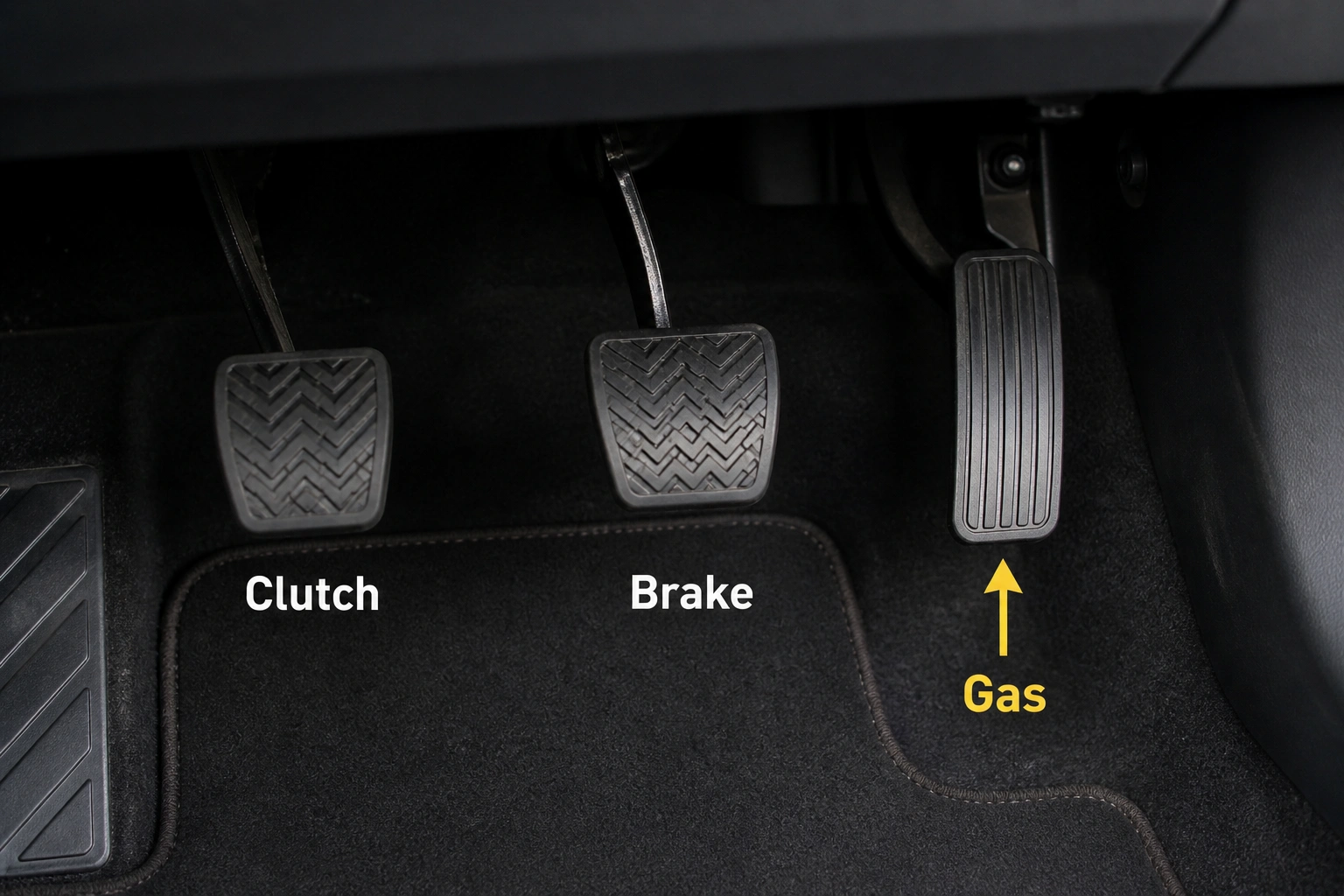
In most modern vehicles, the gas pedal is located on the right side of the pedal area. It is typically smaller and positioned slightly lower than the brake pedal. This placement allows the driver to use the right foot to control both acceleration and braking.
The brake pedal is positioned in the center, while the gas pedal sits to the right. This layout is consistent across most automatic vehicles, making it easier for drivers to adapt from one car to another.
The design ensures that the driver can quickly move their foot between the brake and gas pedals. This reduces the risk of confusion and improves response time.
Recognizing this standard layout helps drivers identify the gas pedal immediately.
Difference Between Gas And Brake Pedal
The gas pedal and brake pedal serve opposite functions. The gas pedal increases engine power, while the brake pedal slows the vehicle. Their size and placement reflect these roles.
The brake pedal is larger and positioned higher to make it easier to press quickly in emergencies. The gas pedal is smaller and designed for gradual input, allowing precise control of speed.
Pressing the wrong pedal can lead to sudden acceleration or delayed stopping. This highlights the importance of clearly identifying each pedal.
Understanding these differences ensures safe and controlled driving.
Pedal Layout In Automatic Vs Manual Cars
Automatic vehicles typically have two pedals: the brake on the left and the gas on the right. This simplifies operation and reduces complexity for the driver.
Manual vehicles include a third pedal on the far left, known as the clutch. The gas pedal remains on the right, with the brake in the middle.
Despite the additional pedal in manual cars, the position of the gas pedal does not change. This consistency helps drivers transition between different types of vehicles.
Knowing the layout for each type ensures proper use and avoids confusion.
How The Gas Pedal Works
Connection Between Pedal And Engine
The gas pedal is connected to the engine through an electronic or mechanical system. In modern vehicles, it often uses an electronic throttle control system. When the pedal is pressed, sensors send signals to the engine control unit, which adjusts the amount of fuel and air entering the engine.
This process increases engine speed and power, allowing the vehicle to accelerate. The system is designed to respond smoothly to input, providing precise control.
Older vehicles may use a cable system that directly links the pedal to the throttle. While the method differs, the result remains the same.
This connection ensures that the driver’s input translates into movement.
Role In Controlling Speed And Acceleration
The gas pedal controls how quickly the vehicle accelerates. Pressing it gently results in gradual acceleration, while pressing it more firmly increases speed more rapidly.
Maintaining steady pressure allows the vehicle to cruise at a consistent speed. Releasing the pedal reduces engine power, causing the vehicle to slow down.
This level of control is essential for safe driving. It allows the driver to adjust speed based on road conditions and traffic.
Proper use of the gas pedal ensures smooth and efficient operation.
Interaction With Other Vehicle Systems
The gas pedal works in coordination with other systems such as the transmission and braking system. In automatic vehicles, the transmission adjusts gears based on how the pedal is pressed.
Advanced systems may also include traction control and stability control, which manage power delivery to maintain control. These systems rely on input from the gas pedal to function effectively.
The interaction between these systems ensures that the vehicle responds appropriately to driver input.
Understanding this relationship helps in using the pedal more effectively.
Proper Way To Use The Gas Pedal
Using Right Foot For Control
The gas pedal should always be operated with the right foot. This allows quick movement between the brake and gas pedals, ensuring better control.
Using one foot for both pedals reduces the risk of pressing them simultaneously. It also improves coordination and response time.
Keeping the left foot off the pedals in automatic vehicles prevents accidental input.
This practice is widely recommended for safe driving.
Smooth Acceleration Techniques
Smooth acceleration is achieved by applying gradual pressure to the gas pedal. Sudden or aggressive input can cause jerky movement and reduce control.
Maintaining steady pressure allows the vehicle to accelerate smoothly. This improves comfort and reduces strain on the engine and transmission.
Practicing controlled input helps develop better driving habits.
Consistency in pedal use ensures a smoother ride.
Avoiding Common Mistakes
Common mistakes include pressing the gas pedal too hard or confusing it with the brake pedal. These errors can lead to sudden acceleration or delayed stopping.
Another mistake is resting the foot on the pedal, which can cause unintended acceleration. Keeping the foot positioned correctly prevents this issue.
Being aware of these mistakes helps improve safety and control.
Correct technique ensures better performance.
Pedal Layout Comparison Table
| Vehicle Type | Left Pedal | Middle Pedal | Right Pedal |
| Automatic Car | None | Brake | Gas |
| Manual Car | Clutch | Brake | Gas |
Tips For New Drivers To Identify Gas Pedal
Visual And Physical Identification
The gas pedal can be identified by its position and size. It is located on the right side and is usually narrower than the brake pedal.
Observing the pedal layout before driving helps familiarize the driver with its position. This reduces confusion during operation.
Feeling the pedals with the foot while stationary also helps build confidence.
Simple identification techniques improve awareness.
Practicing In A Safe Environment
Practicing in a controlled environment such as an empty parking area helps new drivers get comfortable with pedal operation. This allows them to focus on coordination without distractions.
Starting with gentle acceleration and braking helps build muscle memory. Repeating these actions improves confidence.
Gradual practice ensures better control when driving in real conditions.
Safe practice leads to better results.
Building Confidence Over Time
Confidence develops with experience. As drivers become more familiar with the pedal layout, they can operate the vehicle more smoothly.
Consistent practice helps improve reaction time and coordination. Over time, identifying and using the gas pedal becomes automatic.
Patience and practice are key to mastering pedal control.
Confidence ensures safer driving.
The gas pedal is always positioned on the right side in standard vehicle layouts, making it easy to identify once the basic arrangement is understood. Its role in controlling speed and acceleration makes it one of the most important controls in a car. Using it correctly, along with proper coordination with the brake pedal, ensures smooth and safe operation. With practice and awareness, identifying and using the gas pedal becomes second nature for any driver.
Frequently Asked Questions?
Which Pedal Is The Gas In A Car?
It is the rightmost pedal in both automatic and manual vehicles.
Do Automatic Cars Have A Gas Pedal?
Yes, automatic cars have a gas pedal on the right side.
Is The Gas Pedal Smaller Than The Brake?
Yes, it is usually smaller and positioned lower.
Can You Use Both Feet For Pedals?
It is recommended to use only the right foot for both gas and brake.
Does Gas Pedal Position Change In Different Cars?
No, it is consistently located on the right side in standard designs.

- What Does EPC Light Mean In A Car And How To Fix - May 5, 2026
- Symptoms Of Bad PCV Valve And How To Fix It - May 5, 2026
- Which Pedal Is The Gas And How To Use It Safely - May 5, 2026