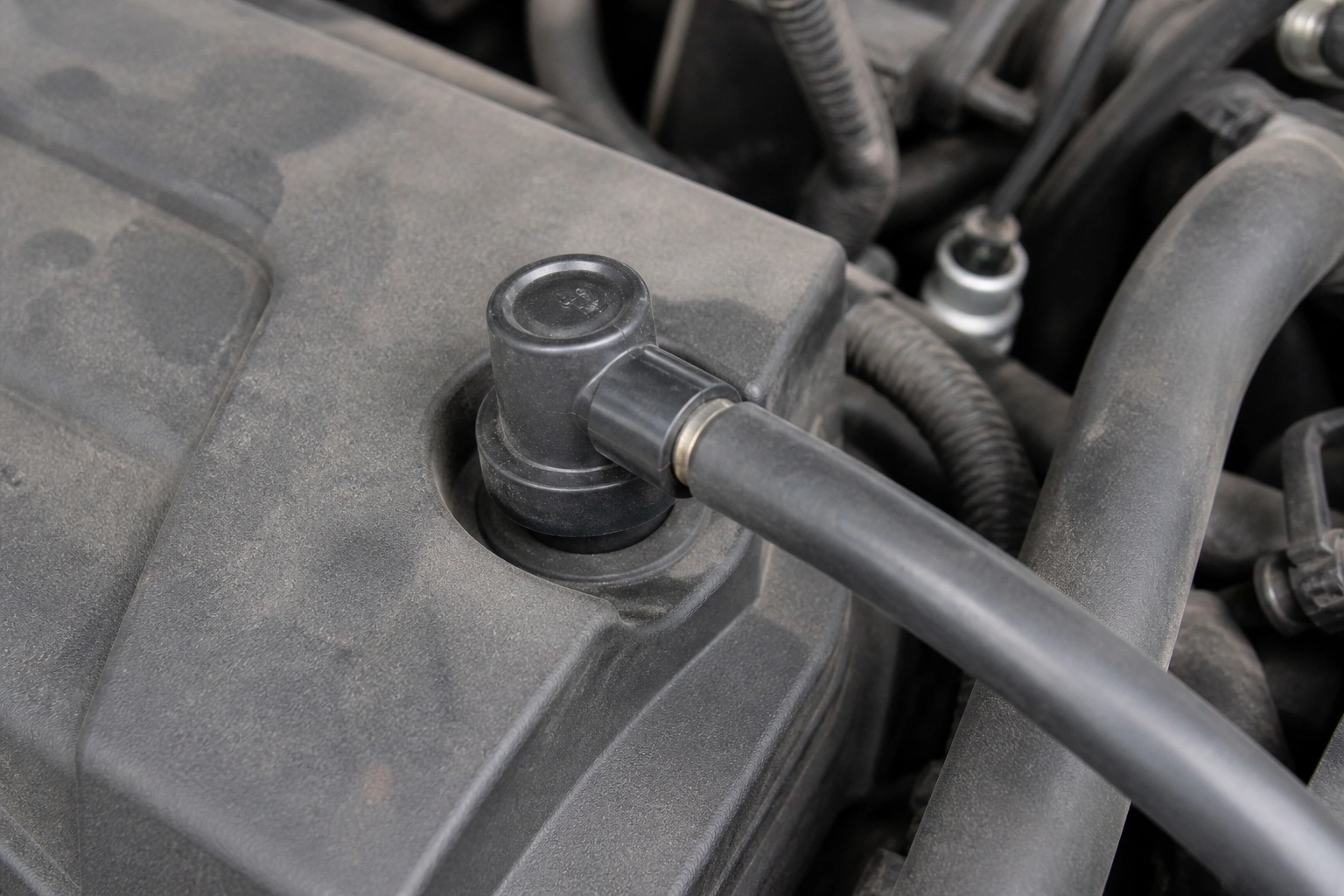
A small valve tucked into the engine can quietly influence performance, fuel efficiency, and even emissions. The PCV valve, short for Positive Crankcase Ventilation valve, manages pressure inside the engine by routing gases back into the intake system. It works constantly while the engine is running, helping maintain balance and preventing harmful buildup.
When this valve stops working correctly, the effects can spread across multiple systems. Pressure inside the engine may rise, oil may begin to leak, and performance can become inconsistent. Because the valve is small and inexpensive, it is often overlooked until symptoms become noticeable.
Recognizing early signs of failure can prevent more serious problems. Changes in engine behavior, unusual smoke, or unexpected oil issues often point toward this component. A clear understanding of these symptoms and how to address them helps keep the engine running smoothly and avoids unnecessary repairs.
Table of Contents
What Is PCV Valve And Its Role
Function Of PCV System In Engine
The PCV valve is part of a system designed to control pressure inside the engine’s crankcase. During combustion, small amounts of gases escape past the piston rings and enter the crankcase. These gases, known as blow-by gases, can build up pressure if not properly managed.
The PCV valve regulates the flow of these gases by directing them back into the intake manifold, where they are burned again. This process reduces emissions and prevents pressure buildup.
By maintaining proper airflow, the system helps protect engine seals and ensures efficient operation. It also plays a role in keeping the engine clean by reducing sludge formation.
This function makes the PCV valve an important component in overall engine health.
How PCV Valve Works
The PCV valve operates based on engine vacuum. When the engine is running, vacuum pressure pulls gases through the valve and into the intake system. The valve adjusts its opening depending on engine conditions.
At idle, the valve restricts flow to maintain stability. Under higher loads, it allows more gases to pass through. This variable operation ensures that the system adapts to different driving conditions.
A properly functioning valve maintains balance within the engine. If it becomes stuck or clogged, the flow of gases is disrupted.
This disruption can lead to various performance issues and symptoms.
Importance Of Proper Ventilation
Proper ventilation prevents excessive pressure inside the engine. Without it, seals and gaskets can be damaged, leading to oil leaks.
Ventilation also helps remove moisture and contaminants from the crankcase. This reduces the risk of sludge buildup and keeps the engine clean.
A well-functioning PCV system contributes to longer engine life and better efficiency.
Maintaining this system ensures consistent performance.
Common Symptoms Of Bad PCV Valve
Rough Idle And Engine Misfire
One of the most noticeable signs of a faulty PCV valve is rough idle. The engine may feel unstable, with uneven RPM levels. This happens because the valve affects the air-fuel mixture entering the engine.
If the valve is stuck open, it can introduce too much air, causing a lean condition. If it is stuck closed, pressure builds up, affecting combustion.
These conditions can lead to misfires, where the engine fails to fire properly in one or more cylinders. The result is a noticeable vibration or shaking sensation.
Addressing this issue early helps restore smooth operation.
Increased Oil Consumption
A bad PCV valve can cause increased oil consumption. When the valve is not regulating pressure correctly, oil may be drawn into the intake system and burned during combustion.
This leads to a gradual decrease in oil levels. Drivers may notice the need to add oil more frequently than usual.
Burning oil can also produce blue smoke from the exhaust, which is a clear sign of the issue.
Monitoring oil levels helps detect this problem early.
Oil Leaks And Engine Sludge
Excess pressure inside the engine can force oil past seals and gaskets, leading to leaks. These leaks may appear around the valve cover, oil pan, or other areas.
In addition, poor ventilation can cause sludge to form inside the engine. This thick buildup restricts oil flow and affects performance.
Sludge formation is often a long-term result of a faulty PCV valve. It can lead to more serious engine problems if not addressed.
Keeping the PCV system in good condition prevents these issues.
Additional Warning Signs To Watch
Check Engine Light Activation
A malfunctioning PCV valve can trigger the check engine light. This happens when the engine control system detects irregularities in airflow or emissions.
Diagnostic codes related to fuel mixture or vacuum leaks may appear. These codes help identify the problem.
Even if the light turns off, stored codes can provide valuable information.
Using a diagnostic tool helps confirm the issue.
Poor Fuel Efficiency
Changes in the air-fuel mixture can affect fuel efficiency. A faulty PCV valve may cause the engine to use more fuel than necessary.
This results in reduced mileage and higher fuel costs. Drivers may notice a drop in efficiency without any obvious reason.
Restoring proper airflow improves fuel usage.
Maintaining the PCV system helps keep fuel consumption stable.
Whistling Or Hissing Noise
A damaged or clogged PCV valve can produce unusual noises. A whistling or hissing sound may come from the engine bay due to vacuum leaks.
This noise is often more noticeable at idle. It indicates that air is escaping or flowing incorrectly.
Identifying the source of the noise helps pinpoint the problem.
Fixing the issue restores normal operation.
Quick Symptoms And Causes Table
| Symptom | Possible Cause | Recommended Action |
| Rough Idle | Valve Stuck Open/Closed | Inspect And Replace Valve |
| High Oil Consumption | Oil Entering Intake | Check PCV System |
| Oil Leaks | Excess Crankcase Pressure | Replace Faulty Valve |
| Check Engine Light | Airflow Or Vacuum Issue | Scan And Diagnose |
| Poor Fuel Efficiency | Incorrect Air-Fuel Ratio | Inspect System |
How To Test And Fix PCV Valve
Simple Inspection Methods
Testing the PCV valve can be done with basic inspection. Removing the valve and shaking it may produce a rattling sound, indicating that it is functioning. Lack of movement may suggest clogging.
Checking hoses for cracks or blockages also helps identify issues. Visual inspection can reveal oil buildup or damage.
These simple steps provide initial insight into the valve’s condition.
Regular inspection prevents unexpected problems.
Cleaning Or Replacing The Valve
In some cases, cleaning the PCV valve can restore function. Using appropriate cleaning solutions removes deposits and improves airflow.
However, replacement is often the best option due to the low cost of the valve. Installing a new valve ensures reliable operation.
Replacing worn components prevents recurring issues.
Choosing quality parts improves performance.
Preventive Maintenance Tips
Regular maintenance helps keep the PCV system in good condition. Checking the valve during routine service ensures that it is functioning properly.
Replacing the valve at recommended intervals prevents buildup and blockage. Keeping the engine clean also supports proper ventilation.
Preventive care reduces the risk of major problems.
Consistent maintenance ensures long-term reliability.
A faulty PCV valve may seem like a minor issue, but its impact on engine performance, oil management, and emissions can be significant. Early signs such as rough idle, increased oil consumption, and unusual noises should not be ignored. Replacing or maintaining this small component helps protect the engine from pressure buildup and long-term damage. Keeping the system in proper condition ensures smoother operation and better overall efficiency.
Frequently Asked Questions?
What Happens If PCV Valve Goes Bad?
It can cause rough idle, oil leaks, and poor engine performance.
Can I Drive With A Bad PCV Valve?
Yes, but it may lead to further engine damage if not fixed.
How Often Should PCV Valve Be Replaced?
It depends on the vehicle, but typically every 20,000 to 50,000 miles.
Does A Bad PCV Valve Cause Oil Burning?
Yes, it can allow oil to enter the intake system and burn.
Is PCV Valve Replacement Expensive?
No, it is usually an inexpensive and simple repair.

- What Does EPC Light Mean In A Car And How To Fix - May 5, 2026
- Symptoms Of Bad PCV Valve And How To Fix It - May 5, 2026
- Which Pedal Is The Gas And How To Use It Safely - May 5, 2026