Modern vehicles include a wide range of features designed to improve safety and visibility without requiring constant driver input. Among these features, DRL is one of the most commonly seen yet often misunderstood.
Many drivers notice the lights turning on automatically during the day but may not know their purpose or how they differ from standard headlights. These lights are not just for appearance; they serve a specific role in making vehicles more visible in various conditions.
Daytime visibility is just as important as nighttime clarity, especially in situations where lighting changes quickly or when weather conditions reduce contrast.
DRL systems address this need by ensuring a vehicle remains noticeable to others on the road. Their automatic nature means they work in the background, requiring no extra effort from the driver. A closer look at how DRL functions and why it exists reveals its importance in everyday driving.
Table of Contents
What DRL Means And How It Functions
Full Form And Basic Purpose Of DRL
DRL stands for Daytime Running Lights. These are lights that turn on automatically when a vehicle is in operation, typically as soon as the engine starts. Unlike traditional headlights, they are designed specifically for use during daylight hours rather than at night. Their main purpose is not to illuminate the road ahead but to make the vehicle more visible to other drivers, pedestrians, and cyclists.
The concept behind DRL is simple yet effective. Even during the day, vehicles can blend into their surroundings, especially in low-contrast environments such as cloudy weather, shaded roads, or urban areas with heavy visual clutter. By keeping a consistent light source active at the front of the vehicle, DRL helps others notice the car more easily.
These lights usually operate at a lower intensity compared to standard headlights. This ensures they do not cause glare while still being bright enough to stand out. In many vehicles, DRL uses LED technology, which provides clear visibility while consuming minimal energy. This balance between efficiency and effectiveness makes DRL a practical addition to modern vehicles.
How DRL Operates Automatically In Vehicles
One of the defining features of DRL is its automatic operation. Once the vehicle is started, the system activates without requiring manual input. This removes the need for drivers to remember to turn on lights during the day, ensuring consistent visibility at all times.
The system is typically integrated with the vehicle’s electrical and lighting control units. Sensors and programming determine when the lights should remain on or switch off. For example, when the headlights are turned on manually or automatically in low-light conditions, the DRL either dims or turns off to avoid overlap.
In many vehicles, DRL is linked to the ignition system. As soon as the engine starts, the lights activate, and they turn off when the engine is shut down. Some systems also adjust brightness based on ambient light conditions, providing a seamless transition between daytime and nighttime lighting.
This automated approach ensures that the feature works consistently without relying on driver behavior. It enhances safety by making the vehicle visible in a wide range of conditions, even when the driver may not think additional lighting is necessary.
Differences Between DRL And Other Car Lights
DRL Compared To Headlights And Parking Lights
DRL is often confused with headlights and parking lights, but each serves a different purpose. Headlights are designed to illuminate the road ahead during low-light conditions such as night driving or heavy rain. They provide strong, focused beams that help drivers see clearly in the dark.
Parking lights, on the other hand, are used when a vehicle is stationary or parked. They provide minimal illumination and are intended to make the vehicle visible without using full headlights. Their brightness is much lower compared to both headlights and DRL.
DRL stands apart because its purpose is visibility rather than illumination. It does not help the driver see the road better but ensures that others can see the vehicle. The light intensity is balanced to avoid glare while still being noticeable in daylight.
Another key difference lies in operation. Headlights and parking lights usually require manual activation or rely on automatic sensors for low-light conditions. DRL operates independently, turning on as soon as the vehicle is in use. This constant presence makes it a reliable safety feature.
Design Variations And Placement In Modern Cars
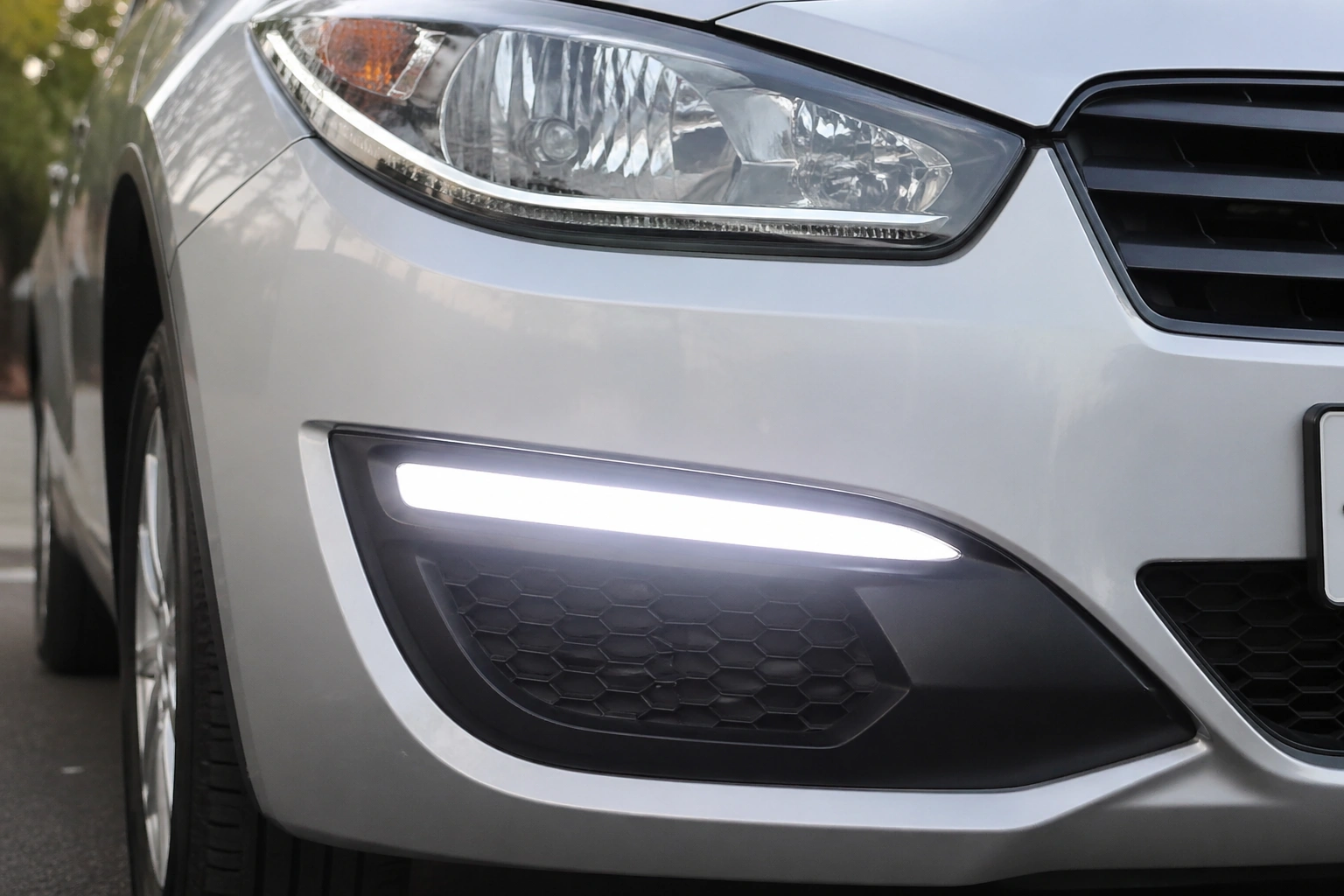
The design of DRL has evolved significantly over time. Early versions often used standard bulbs integrated into the headlight assembly. Modern vehicles, however, commonly use LED strips or dedicated light units that create a distinctive appearance.
Placement varies depending on the vehicle design. DRL is usually located at the front, often integrated into the headlight cluster or positioned as a separate strip along the edges. Some designs incorporate unique shapes that contribute to the vehicle’s visual identity.
Brightness and color are also carefully chosen. Most DRL systems use white light, as it provides clear visibility without being distracting. The intensity is lower than headlights but high enough to stand out during the day.
These design elements not only improve visibility but also enhance the overall look of the vehicle. Manufacturers often use DRL as a signature feature, making their models easily recognizable. This combination of function and style highlights the importance of DRL in modern automotive design.
Benefits Of DRL For Safety And Visibility
How DRL Improves Road Awareness
Visibility plays a critical role in preventing accidents, and DRL contributes significantly to this aspect. By keeping the front of the vehicle illuminated, it becomes easier for others to notice its presence, even in challenging conditions. This is particularly useful during dawn, dusk, or overcast weather when natural light is not consistent.
DRL helps reduce the chances of collisions by making vehicles stand out against the background. In situations where drivers may be distracted or visibility is reduced, the presence of DRL provides an extra layer of awareness. It acts as a visual signal that draws attention to the vehicle.
The feature is especially beneficial on busy roads and highways, where multiple vehicles are present. It helps in maintaining clear visual separation between vehicles, making it easier to judge distance and movement. This improved awareness contributes to safer driving conditions overall.
Consistency is another advantage. Since DRL operates automatically, it ensures that visibility is maintained at all times. This eliminates the risk of forgetting to turn on lights, which can happen during transitional lighting conditions.
Energy Efficiency And Long Term Advantages
Modern DRL systems are designed with efficiency in mind. Most vehicles use LED technology, which consumes less power compared to traditional lighting. This means the feature can operate continuously without placing significant strain on the vehicle’s electrical system.
Lower energy consumption also contributes to longer component life. LEDs are known for their durability and extended lifespan, reducing the need for frequent replacements. This makes DRL a low-maintenance feature that provides long-term value.
In addition to efficiency, DRL supports better fuel economy in a small but meaningful way. Since it uses less power, the overall load on the engine or battery is minimal. This ensures that the feature does not negatively impact performance.
The combination of safety and efficiency makes DRL a practical addition to modern vehicles. It provides continuous visibility without adding complexity or significant cost, making it a standard feature in many regions.
Common Questions And Misconceptions About DRL
Does DRL Replace Headlights At Night
One of the most common misconceptions is that DRL can replace headlights during nighttime driving. This is not the case. DRL is not designed to provide sufficient illumination for driving in the dark. Its brightness and focus are intended for visibility rather than lighting the road.
Headlights are essential for nighttime conditions because they provide the necessary beam pattern and intensity to see clearly. DRL lacks this capability and should not be relied upon in low-light situations. In many vehicles, DRL automatically turns off or dims when headlights are activated, ensuring proper lighting is used.
Relying on DRL alone at night can reduce visibility and increase risk. It is important to use headlights whenever conditions require clear illumination. Understanding this distinction helps avoid confusion and ensures safe driving practices.
Can DRL Be Turned Off Or Modified
The ability to turn off or modify DRL depends on the vehicle and local regulations. In some vehicles, the feature can be adjusted through settings, while in others it is permanently active. Manufacturers often design DRL to remain on for safety reasons.
Modifying DRL, such as changing its brightness or color, is generally not recommended. Alterations can affect visibility and may not comply with regulations in certain areas. It is important to ensure that any changes meet legal requirements and do not compromise safety.
Some drivers prefer to keep DRL active at all times, while others may look for ways to disable it. However, the benefits of improved visibility often outweigh the need for customization. Keeping the system as designed ensures consistent performance and reliability.
Conclusion
Daytime Running Lights have become a standard feature in modern vehicles, offering a simple yet effective way to improve visibility. Their automatic operation ensures that vehicles remain noticeable without requiring additional effort from the driver. This consistency plays a key role in enhancing safety on the road.
The difference between DRL and other lighting systems highlights its specific purpose. It is not meant to replace headlights but to complement them by providing visibility during the day. Its efficient design and low energy consumption make it a practical addition to any vehicle.
A clear awareness of how DRL works helps in using it effectively and avoiding common misconceptions. As vehicle technology continues to evolve, features like DRL remain essential in creating safer and more reliable driving conditions.
- How Long Does It Take For A Car To Cool Down Fully - May 1, 2026
- What Does DRL Mean On A Car And Why It Matters - May 1, 2026
- 5 Pin Relay Wiring Diagram Guide For Automotive Use - May 1, 2026