
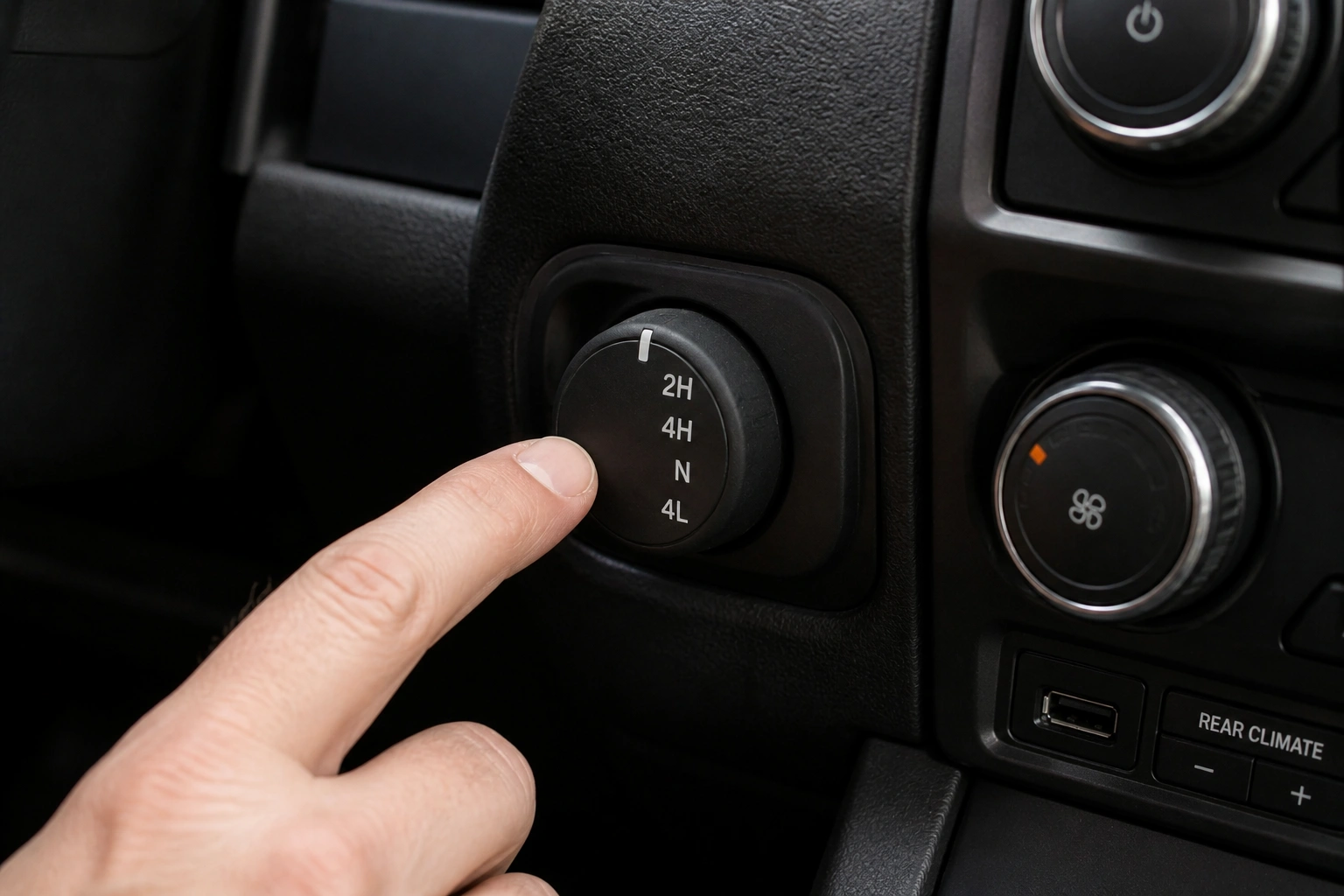
Four-wheel drive systems are built to give vehicles extra traction and control when road conditions become challenging. Among the available modes, 4 High is one of the most commonly used settings for drivers who face slippery surfaces such as snow, mud, or loose gravel. It allows all four wheels to receive power while still maintaining a usable speed range for regular driving conditions.
Despite its usefulness, many drivers are unsure about how fast they can safely drive in this mode. The answer depends on several factors, including road conditions, vehicle type, and how the system is designed. Driving too fast in 4 High can reduce control and place unnecessary strain on the drivetrain.
Knowing the limits of 4 High helps maintain safety and prevents damage. With the right approach, this mode becomes a reliable tool for handling difficult terrain while keeping the vehicle stable and responsive.
Table of Contents
What 4 High Means In A Four Wheel Drive System
Purpose Of 4 High In Modern Vehicles
4 High, often written as 4H, is a setting in four-wheel drive systems that distributes power to all four wheels equally. Unlike standard two-wheel drive, where only the front or rear wheels receive power, 4 High improves traction by engaging both axles. This helps the vehicle maintain grip on surfaces where traction is limited.
The system is designed for situations where additional control is needed but higher speeds are still required. It is commonly used on highways covered with snow, wet roads, or gravel paths where slipping is likely. The goal is to improve stability without sacrificing too much speed.
4 High does not change the gear ratio significantly, which allows the vehicle to maintain normal driving speeds. It simply ensures that power is delivered evenly across all wheels. This balance makes it suitable for a wide range of driving conditions.
Understanding its purpose helps in using it effectively without putting unnecessary stress on the vehicle.
Difference Between 4 High And 4 Low
4 High and 4 Low serve different purposes within the same system. While 4 High is designed for moderate speeds and improved traction, 4 Low focuses on maximum torque at very low speeds. The difference lies in how power is delivered and how the vehicle responds.
4 Low uses a lower gear ratio, which increases torque but limits speed. It is ideal for off-road conditions such as steep climbs, deep mud, or rocky terrain. Driving fast in 4 Low is not recommended because it can damage the drivetrain.
4 High, on the other hand, allows higher speeds while still providing extra traction. It is more suitable for everyday use in challenging weather conditions.
Knowing when to use each mode ensures better control and prevents unnecessary wear on the vehicle.
When Drivers Typically Use 4 High
Drivers usually engage 4 High when road conditions reduce traction but do not require extreme torque. Snow-covered roads, wet highways, and loose gravel are common scenarios where this mode is beneficial.
It is also useful when driving through light mud or sand where maintaining momentum is important. The added traction helps prevent wheel spin and keeps the vehicle moving steadily.
In regions with unpredictable weather, 4 High becomes a practical option for maintaining control without constantly switching modes. It provides a balance between performance and safety.
Using it at the right time improves stability and reduces the risk of losing control.
Recommended Speed In 4 High Mode
General Speed Range For Safe Driving
Most vehicles allow speeds of up to 80 to 100 km/h in 4 High under suitable conditions. However, this does not mean it is always safe to drive at the upper limit. The actual safe speed depends on the surface and environmental conditions.
On slippery roads, even moderate speeds can become unsafe. 4 High improves traction, but it does not eliminate the risk of skidding or losing control. Drivers should adjust their speed based on visibility, road surface, and traffic conditions.
Manufacturers often provide guidelines for maximum speed in 4 High. Following these recommendations ensures that the system operates within safe limits.
Maintaining a controlled speed helps protect both the vehicle and its occupants.
Factors That Affect Safe Speed
Several factors influence how fast you can drive in 4 High. Road condition is the most important factor. Snow, ice, mud, and gravel all require different levels of caution. Even with four-wheel drive, reduced traction can lead to loss of control.
Vehicle type also plays a role. Larger vehicles such as trucks and SUVs may handle differently compared to smaller vehicles. Tire condition and quality further affect grip and stability.
Weather conditions such as rain, fog, or strong winds can reduce visibility and control. These factors should always be considered when deciding on speed.
Driving within safe limits ensures better control and reduces the risk of accidents.
Risks Of Driving Too Fast In 4 High
Driving too fast in 4 High can create a false sense of security. While the system improves traction, it does not enhance braking or cornering capabilities. High speeds can still lead to skidding or loss of control.
Excessive speed also puts additional stress on the drivetrain. Components such as the transfer case and differential may wear out faster if used improperly. This can lead to costly repairs over time.
In some cases, driving fast in 4 High on dry pavement can cause binding in the drivetrain. This occurs because the wheels cannot rotate at different speeds, leading to strain.
Maintaining a reasonable speed ensures both safety and long-term reliability.
Best Driving Practices In 4 High
Maintaining Control On Different Surfaces
Driving in 4 High requires smooth and controlled inputs. Sudden acceleration or sharp turns can reduce stability, especially on slippery surfaces. Gradual movements help maintain traction and prevent wheel spin.
On snow or ice, keeping a steady speed and avoiding abrupt braking is essential. On gravel or loose surfaces, maintaining momentum helps prevent getting stuck.
Understanding how the vehicle responds in different conditions improves confidence and control. Adjusting driving style based on the surface ensures better handling.
Consistent and careful driving makes 4 High more effective.
Proper Use Of Acceleration And Braking
Acceleration should be applied gently when driving in 4 High. Rapid acceleration can cause wheels to lose traction, even with all four wheels engaged. Smooth throttle input ensures better grip and stability.
Braking should also be done gradually. Sudden braking can lead to skidding, especially on slippery roads. Maintaining a safe distance from other vehicles allows more time to react.
Using engine braking when possible helps maintain control without overloading the braking system. This approach reduces wear and improves safety.
Balanced use of acceleration and braking ensures a smoother and safer experience.
Switching Between Drive Modes Correctly
Switching between drive modes should be done according to manufacturer guidelines. Most vehicles allow shifting into 4 High while moving at moderate speeds, but it is important to confirm this for your specific model.
Returning to two-wheel drive when conditions improve helps reduce wear on the drivetrain. Driving in 4 High on dry pavement is not recommended, as it can cause unnecessary strain.
Being aware of when to switch modes ensures that the system is used efficiently. This helps maintain performance and prevents damage.
Proper use of drive modes enhances both safety and vehicle longevity.
Speed Comparison Table For Driving Modes
| Drive Mode | Recommended Speed Range | Best Use Conditions | Risk Level At High Speed |
| 2WD | Up to Highway Speeds | Dry Roads | Low |
| 4 High (4H) | Up To 80–100 Km/H | Snow, Rain, Gravel | Moderate |
| 4 Low (4L) | Up To 40 Km/H | Mud, Rocks, Steep Terrain | High |
Common Misconceptions About 4 High Speed
Belief That 4 High Improves Braking
A common misconception is that 4 High improves braking performance. While it enhances traction during acceleration, it does not shorten stopping distance. Braking depends on tire grip and road conditions.
Drivers may feel more confident and drive faster, assuming the system provides additional safety. This can lead to risky situations, especially on slippery surfaces.
Maintaining awareness of braking limitations is essential for safe driving.
Thinking Higher Speed Means Better Performance
Some drivers believe that driving faster in 4 High improves performance. In reality, higher speed increases risk and reduces control. The system is designed for traction, not speed.
Using 4 High within recommended limits ensures better handling and prevents unnecessary strain on the vehicle.
Performance should always be balanced with safety.
Assuming It Can Be Used On All Surfaces
4 High is not suitable for all surfaces. Using it on dry pavement can cause drivetrain binding and increased wear. It is designed for conditions where traction is limited.
Switching back to normal drive mode when conditions improve helps maintain system health.
Using the system correctly ensures long-term reliability.
Practical Takeaway
4 High is a valuable feature that improves traction and stability in challenging conditions. It allows drivers to maintain moderate speeds while keeping control on slippery or uneven surfaces. However, it is not a tool for high-speed driving.
Staying within recommended speed limits, adjusting to road conditions, and using smooth driving inputs make a significant difference. Understanding how the system works helps avoid common mistakes and ensures safe operation.
Using 4 High wisely keeps the vehicle stable, protects the drivetrain, and enhances overall safety without unnecessary risk.
Frequently Asked Questions?
Can you drive 100 km/h in 4 high?
Yes, many vehicles allow speeds close to 100 km/h in 4 High, but it depends on road conditions and manufacturer guidelines. Lower speeds are safer on slippery surfaces.
Is it bad to drive fast in 4 high?
Driving too fast can reduce control and increase wear on drivetrain components. Staying within recommended limits is important.
Can you use 4 high on dry roads?
It is not recommended because it can cause drivetrain binding and damage over time.
When should you switch out of 4 high?
Switch back to normal drive mode when road conditions improve and extra traction is no longer needed.
Does 4 high help in rain?
Yes, it can improve traction on wet roads, but careful driving is still necessary to maintain control.

- What Does BSM Mean In A Car And How It Works - May 2, 2026
- How Much Rhodium Is In A Catalytic Converter - May 2, 2026
- How Fast Can You Drive In 4 High Safely? - May 2, 2026