Tire pressure plays a major role in vehicle safety, fuel efficiency, ride comfort, and tire lifespan. Even a small drop in air pressure can affect braking, handling, and overall tire performance.
Because tires naturally lose air over time, checking and refilling them regularly is part of basic vehicle maintenance. One of the most common and convenient ways to add air is by using a gas station tire pump.
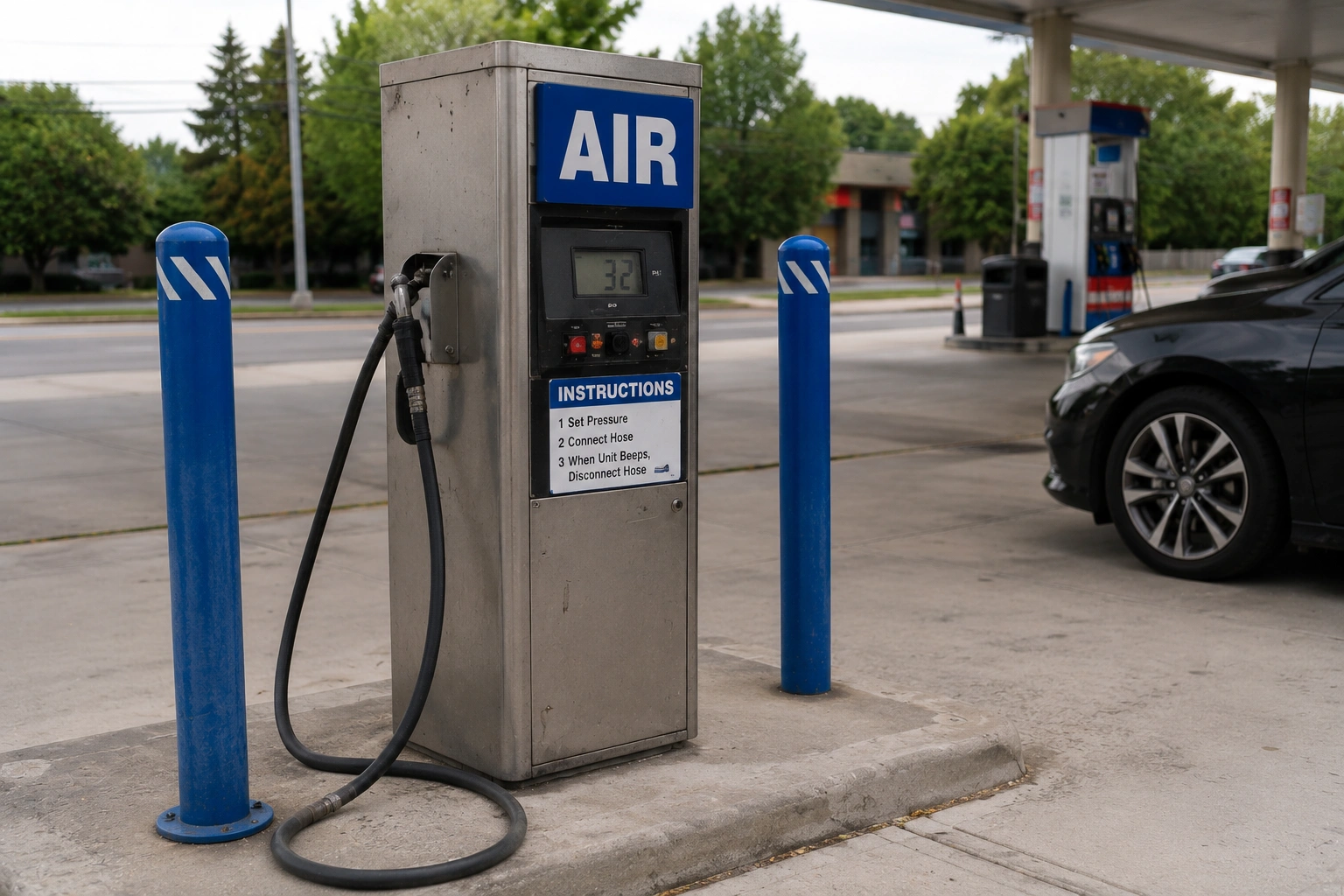
Most fuel stations provide air pumps designed to inflate vehicle tires quickly and easily. Some use digital systems with automatic pressure settings, while others rely on manual gauges and simple air hoses.
Although the process appears straightforward, many drivers still feel unsure about how much air to add, how to read tire pressure correctly, or how long to use the pump.
Using a gas station tire pump properly helps maintain safe pressure levels and prevents problems caused by underinflated or overinflated tires. A clear understanding of how these systems work makes tire maintenance easier and more reliable.
Table of Contents
Why Proper Tire Pressure Matters
Effect On Safety And Handling
Tires are the only part of a vehicle that directly contacts the road surface, which means proper inflation is critical for safe operation. Incorrect tire pressure changes the way the vehicle responds during braking, cornering, and sudden maneuvers.
Underinflated tires create excessive sidewall flex and reduce stability, while overinflated tires reduce the amount of tread touching the road. Both conditions can increase stopping distance and reduce traction.
Maintaining correct pressure helps the tires perform as designed and improves overall vehicle control.
Balanced tire pressure contributes to safer everyday driving.
Impact On Tire Wear
Improper tire pressure causes uneven tread wear. Low pressure often wears the outer edges of the tire more quickly, while excessive pressure wears the center tread faster.
Uneven wear shortens tire lifespan and reduces overall performance. Replacing tires prematurely can become expensive over time.
Keeping tires inflated to the recommended pressure helps maintain even contact with the road surface.
Regular pressure checks protect long-term tire condition.
Fuel Efficiency Benefits
Tire pressure also affects fuel consumption. Underinflated tires create more rolling resistance, forcing the engine to work harder to move the vehicle.
This additional resistance increases fuel usage, especially during highway driving. Even slightly low tire pressure can reduce efficiency noticeably over time.
Maintaining correct inflation helps the vehicle operate more efficiently and may reduce fuel costs.
Proper tire care improves both safety and economy.
How Gas Station Tire Pumps Work
Air Compressor System Basics
Gas station tire pumps use air compressors to deliver pressurized air through a hose and nozzle into the tire. The compressor stores compressed air in a tank or generates it continuously during operation.
When the nozzle is attached to the tire valve stem, air flows into the tire until the desired pressure is reached.
Modern systems often include automatic shutoff features that stop inflation once the selected pressure is achieved. Older systems may require manual monitoring with a gauge.
The basic principle remains the same across most air pump systems.
Digital Vs Manual Air Pumps
Digital air pumps are increasingly common at modern gas stations. These systems allow drivers to enter the desired tire pressure before inflation begins.
The machine automatically monitors pressure and stops once the target level is reached. This reduces the chance of overinflation and simplifies the process.
Manual air pumps require the driver to check pressure separately using a tire gauge. Air is added by pressing the nozzle onto the valve stem until the desired level is reached.
Digital systems are generally easier and more accurate for beginners.
Why Some Pumps Charge A Fee
Some gas stations provide free air pumps, while others charge a small fee. Paid systems help cover maintenance and operating costs associated with compressors and equipment.
In some regions, air must legally be provided free for customers purchasing fuel, while other areas allow stations to charge separately.
The cost is usually minimal compared to the importance of maintaining proper tire pressure.
Reliable equipment requires regular maintenance and upkeep.
How To Use A Gas Station Tire Pump
Checking Recommended Tire Pressure
Before adding air, it is important to know the correct tire pressure for the vehicle. This information is usually found on a sticker inside the driver’s door frame or in the owner’s manual.
The recommended pressure is measured in PSI, which stands for pounds per square inch. Front and rear tires may require different pressure levels depending on the vehicle.
The number printed on the tire sidewall is not the recommended operating pressure. It represents the maximum pressure limit for the tire.
Using the correct PSI helps maintain safe and balanced performance.
Connecting Air Hose Properly
After removing the valve cap, the air hose nozzle should be pressed firmly onto the valve stem. A brief hissing sound may occur during connection, but continuous air leakage usually means the nozzle is not seated correctly.
Once attached securely, the pump begins adding air to the tire. Digital systems display current pressure, while manual systems may require separate gauge checks.
Maintaining a firm connection ensures accurate inflation and prevents air loss.
Careful attachment improves efficiency during the process.
Monitoring Tire Pressure During Inflation
Tire pressure should be monitored carefully while inflating. Overinflation can affect ride comfort and traction, while underinflation reduces stability and increases tire wear.
Digital pumps usually stop automatically at the selected PSI, but manual systems require repeated checks with a gauge.
If too much air is added, pressing the valve pin briefly releases excess pressure.
Accurate pressure adjustment helps maintain proper tire performance.
Tire Pressure Guide Table
| Vehicle Type | Common PSI Range | Pressure Check Frequency |
| Compact Cars | 30–35 PSI | Monthly |
| SUVs And Crossovers | 32–38 PSI | Monthly |
| Pickup Trucks | 35–45 PSI | Before Heavy Loads |
| Performance Vehicles | 32–40 PSI | Every Two Weeks |
Common Problems With Gas Station Tire Pumps
Inaccurate Pressure Gauges
Some older gas station pumps may display inaccurate pressure readings due to wear or lack of calibration. This can result in overinflated or underinflated tires.
Using a personal tire pressure gauge provides a second level of verification and improves accuracy.
Digital systems tend to be more consistent, though occasional calibration issues can still occur.
Checking pressure independently helps avoid mistakes.
Air Hose Leakage Issues
Damaged or worn nozzles can leak air during inflation. This makes it difficult to achieve the correct tire pressure and may create confusion during use.
A leaking hose connection often produces a constant hissing sound. Repositioning the nozzle usually improves the seal.
If the equipment appears damaged, using another pump may save time and frustration.
Proper equipment condition affects inflation accuracy.
Overheating During Heavy Use
Air compressors generate heat during operation, especially when used continuously. Some pumps temporarily shut down to prevent overheating.
This is more common during busy travel periods or hot weather conditions.
Allowing the machine to cool briefly usually restores normal operation.
Understanding equipment limitations helps avoid confusion.
Tips For Better Tire Pressure Maintenance
Checking Pressure When Tires Are Cold
Tire pressure readings are most accurate when the tires are cold. Driving heats the tires and increases internal pressure temporarily.
Checking pressure before driving or after the vehicle has been parked for several hours provides more reliable results.
Cold pressure measurements align with manufacturer recommendations.
Accurate readings improve tire maintenance quality.
Keeping Valve Caps Secure
Valve caps protect the valve stem from dirt, moisture, and debris. Missing caps can allow contaminants to enter and potentially cause slow air leaks.
Although small, valve caps play an important role in maintaining proper tire condition.
Replacing missing caps is inexpensive and helps prevent future issues.
Simple maintenance improves long-term reliability.
Carrying A Portable Tire Gauge
A portable tire gauge provides quick and reliable pressure checks at any time. Even when using digital gas station pumps, a personal gauge adds extra accuracy.
Compact gauges are easy to store in the glove compartment or center console.
Having a gauge available encourages more frequent pressure monitoring.
Consistent checks help maintain safe tire condition.
Gas station tire pumps provide a fast and convenient way to maintain proper tire pressure, which directly affects safety, tire life, and fuel efficiency.
Whether using a modern digital system or a manual air compressor, knowing the correct PSI and monitoring pressure carefully helps prevent common inflation mistakes.
Regular tire maintenance not only improves vehicle performance but also reduces long-term costs related to uneven tire wear and poor fuel economy. A few minutes spent checking tire pressure can make a significant difference in overall vehicle reliability and road safety.
Frequently Asked Questions?
How Much Air Should I Put In My Tires?
Use the PSI recommendation listed inside the driver’s door or owner’s manual.
Are Gas Station Tire Pumps Accurate?
Most are reasonably accurate, but a personal tire gauge provides better verification.
Can Overinflated Tires Be Dangerous?
Yes, overinflation can reduce traction and increase uneven wear.
How Often Should Tire Pressure Be Checked?
At least once a month and before long trips.
Do Gas Station Air Pumps Work For All Vehicles?
Yes, most standard pumps work for cars, SUVs, trucks, and motorcycles.

- Gas Station Tire Pump Guide For Proper Tire Pressure - May 7, 2026
- Legal Tint In NY Rules And Window Tint Limits - May 7, 2026
- 20 Percent Window Tint Benefits And Visibility Guide - May 7, 2026