The starting system of a vehicle depends on several electrical components working together at the right moment. Among these parts, the starter solenoid plays a critical role by acting as a switch that connects battery power to the starter motor. Without proper wiring, the starter cannot receive the electrical current needed to crank the engine.
Although the solenoid itself is compact, the wiring connected to it carries a large amount of electrical energy. Incorrect connections, damaged wires, or loose terminals can prevent the engine from starting and may even damage other electrical components.
Many starting problems that seem serious are actually caused by wiring issues around the starter solenoid. Knowing how the wiring works, what each terminal does, and how to identify common faults helps make troubleshooting much easier. A clear understanding of the system also reduces the risk of incorrect repairs and electrical problems.
Table of Contents
What Starter Solenoid Does In A Vehicle
Role Of Solenoid In Starting System
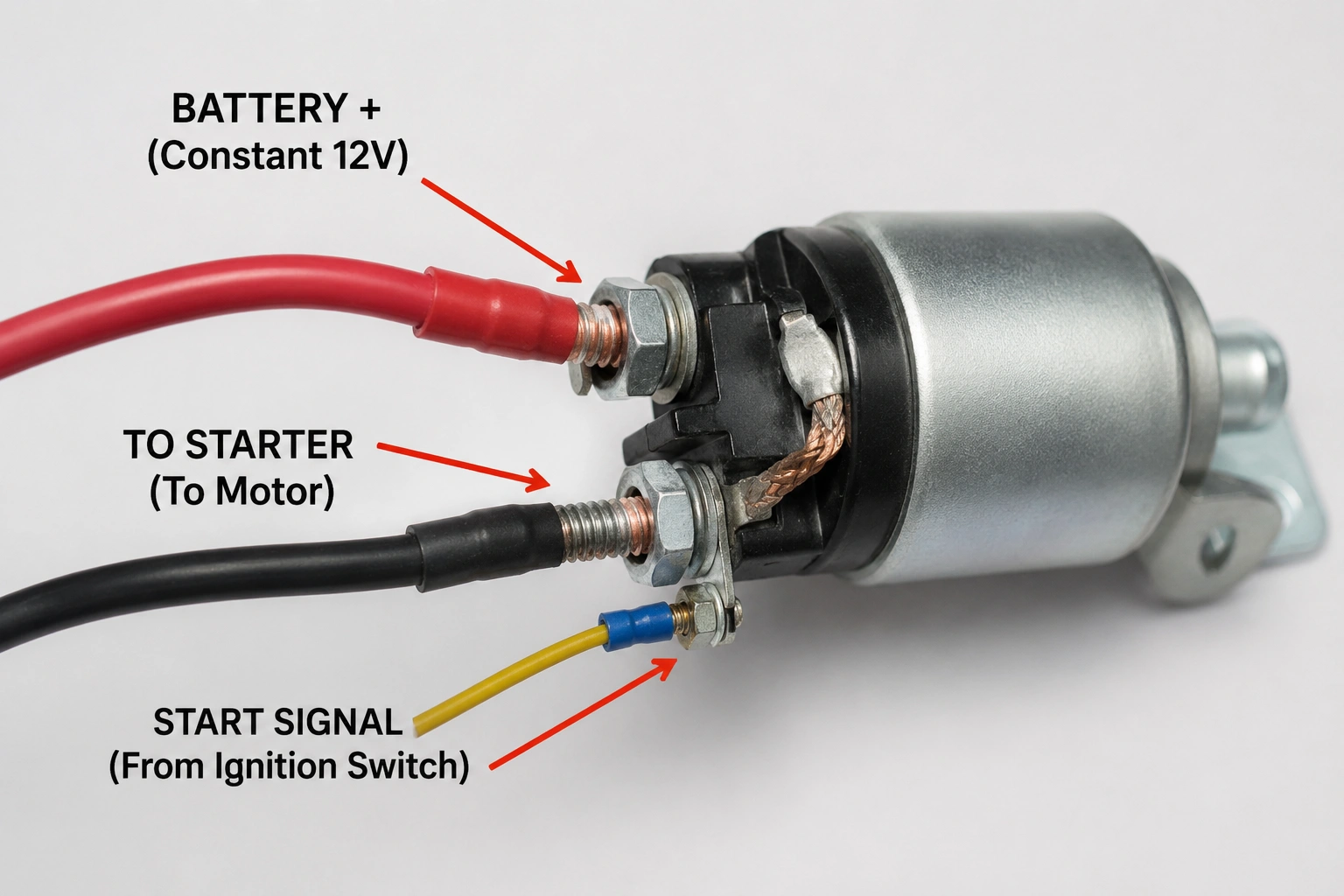
The starter solenoid acts as an electrical switch between the battery and the starter motor. When the ignition key is turned or the start button is pressed, the solenoid receives a small electrical signal. This signal activates an internal mechanism that connects the battery’s high-current power directly to the starter motor.
At the same time, the solenoid pushes the starter gear toward the engine’s flywheel. This engagement allows the starter motor to rotate the engine and begin the combustion process.
Without the solenoid, the starter motor would not receive enough electrical current to operate. It also prevents constant power flow to the starter when the engine is already running.
This dual function makes the solenoid an essential part of the starting system.
Difference Between Starter Motor And Solenoid
The starter motor and starter solenoid work together, but they serve different purposes. The starter motor is responsible for physically turning the engine, while the solenoid controls the electrical connection and gear engagement.
The solenoid acts like a heavy-duty relay capable of handling high electrical current. It ensures that power flows only when needed during startup.
In many vehicles, the solenoid is mounted directly on the starter motor assembly. In others, it may be positioned separately near the battery or fender area.
Recognizing the difference between these components helps in diagnosing starting issues accurately.
Why Proper Wiring Is Important
Starter solenoid wiring carries electrical current directly from the battery to the starter motor. Because of this, the wiring must be secure, clean, and correctly connected.
Loose or corroded wires increase electrical resistance, which can reduce power delivery. Incorrect wiring can prevent the starter from engaging or may cause electrical shorts.
Proper wiring also ensures safe operation of the starting system. Since high current is involved, poor connections can generate heat and damage components.
Maintaining correct wiring prevents many common starting problems.
Main Starter Solenoid Wiring Connections
Battery Terminal Connection
The battery terminal on the starter solenoid is the main source of electrical power. A thick positive cable from the battery connects directly to this terminal.
This wire carries high current needed to operate the starter motor. It must be securely attached and free from corrosion to ensure proper electrical flow.
Any looseness or buildup on this connection can reduce voltage and lead to weak or inconsistent starting.
Keeping the battery connection clean and tight is essential for reliable performance.
Starter Motor Terminal Connection
Another major terminal on the solenoid connects directly to the starter motor. When the solenoid activates, internal contacts allow power from the battery terminal to flow to this connection.
This wire also handles high current, so it must remain in good condition. Damaged or overheated wiring can affect starter performance.
The connection between the solenoid and starter motor is usually short because the components are mounted close together.
Proper contact ensures strong and consistent engine cranking.
Ignition Switch Signal Wire
The ignition switch wire is smaller than the main battery cable because it carries only a control signal. When the ignition key is turned to the start position, this wire sends voltage to the solenoid.
The signal activates the internal switch and engages the starter system. If this wire is damaged or disconnected, the starter will not respond even if the battery is fully charged.
Testing this wire is often one of the first steps in diagnosing a no-start condition.
A working signal wire is necessary for proper system activation.
Common Starter Solenoid Wiring Problems
Loose Or Corroded Connections
Loose or corroded connections are among the most common starter wiring issues. Corrosion creates resistance that limits current flow, while loose terminals interrupt the electrical circuit.
These problems often cause clicking sounds, weak cranking, or complete failure to start. In some cases, the issue may appear intermittently.
Cleaning terminals and tightening connections usually resolves the problem. Applying protective grease helps reduce future corrosion.
Regular inspection prevents electrical performance issues.
Damaged Or Burned Wires
Starter wiring operates under high electrical load, which means damaged wires can quickly become serious problems. Burned insulation, melted sections, or exposed conductors indicate excessive heat or short circuits.
Physical damage may also occur due to vibration, engine heat, or contact with moving parts. These conditions affect power delivery and can lead to complete starter failure.
Replacing damaged wiring ensures safe and reliable operation.
Ignoring damaged wires increases the risk of electrical faults.
Incorrect Wiring Installation
Incorrect wiring installation can prevent the starter from working properly. Connecting wires to the wrong terminals may cause continuous cranking, no response, or blown fuses.
This issue is more common after repairs or starter replacement. Using a wiring diagram and verifying each connection helps avoid mistakes.
Improper installation may also damage the solenoid or starter motor.
Careful wiring ensures proper operation and system safety.
Starter Solenoid Wiring Terminal Table
| Terminal Type | Function | Wire Size |
| Battery Terminal | Supplies Main Battery Power | Thick Cable |
| Starter Motor Terminal | Sends Power To Starter Motor | Thick Cable |
| Ignition Signal Wire | Activates Solenoid | Small Wire |
| Ground Connection | Completes Electrical Circuit | Medium Cable |
How To Test Starter Solenoid Wiring
Checking Voltage With Multimeter
A multimeter is one of the most useful tools for testing starter solenoid wiring. Measuring voltage at the battery terminal confirms whether power is reaching the solenoid.
The ignition signal wire can also be tested while turning the key to the start position. This verifies that the ignition switch is sending the correct signal.
Voltage testing helps identify wiring faults quickly and accurately.
Using proper tools improves troubleshooting efficiency.
Inspecting Wires And Connectors
Visual inspection is an important step in diagnosing starter problems. Looking for corrosion, loose terminals, or damaged insulation helps identify obvious issues.
Wiggling connectors gently while observing electrical response can reveal intermittent faults. Any signs of overheating or discoloration should be addressed immediately.
Inspection often reveals simple problems that can be corrected easily.
Routine checks improve reliability.
Testing Solenoid Operation
The solenoid itself can be tested by listening for a clicking sound when the ignition is turned. A click without starter movement may indicate poor power flow or internal failure.
Direct testing with a multimeter confirms whether the solenoid is transferring power correctly.
If the solenoid fails to activate despite proper voltage, replacement may be necessary.
Accurate testing prevents unnecessary component replacement.
Safety Tips During Wiring Work
Disconnecting Battery Before Repairs
The battery should always be disconnected before working on starter wiring. This prevents accidental short circuits and electrical shocks.
Removing the negative battery cable first is the safest approach. This step protects both the vehicle and the person performing repairs.
Working on live circuits increases the risk of damage.
Safety preparation is essential before beginning repairs.
Avoiding Short Circuits
Starter wiring carries high current, so tools or wires contacting metal surfaces can create sparks or shorts. Careful handling prevents electrical damage.
Keeping wires organized and insulated reduces the risk of accidental contact.
Avoiding shortcuts during repairs ensures safer results.
Proper technique protects electrical components.
Using Correct Replacement Parts
Replacement wires and connectors should match the original specifications. Using undersized wiring can lead to overheating and voltage loss.
Quality connectors ensure secure contact and long-term durability.
Using the correct parts improves reliability and safety.
Proper materials help maintain consistent performance.
Starter solenoid wiring is a critical part of the vehicle’s starting system because it controls how battery power reaches the starter motor. Clean connections, correct wiring placement, and proper voltage flow all contribute to reliable engine starting. Many common no-start problems are caused by loose terminals, damaged wires, or poor electrical contact rather than complete component failure. Careful inspection and correct wiring practices help maintain safe and dependable operation over time.
Frequently Asked Questions?
What Wires Connect To Starter Solenoid?
The battery cable, starter motor cable, and ignition signal wire are the main connections.
Can Bad Solenoid Wiring Cause No Start?
Yes, loose or damaged wiring can prevent the starter from working.
Why Does Starter Solenoid Click But Not Start?
This may indicate weak battery power, poor wiring, or a faulty starter motor.
How Do I Test Starter Solenoid Wiring?
A multimeter can be used to check voltage and continuity.
Is Starter Solenoid Wiring Dangerous?
Yes, it carries high current, so proper safety precautions are important.

- Loud Motorcycle Horn Guide For Better Road Safety - May 6, 2026
- PZEV Meaning And How It Works In Modern Cars - May 6, 2026
- Starter Solenoid Wiring Guide And Common Problems - May 6, 2026