Modern vehicles continue to evolve with features that quietly improve safety without requiring extra effort from the driver. Among these, BSM is one of the most useful yet often misunderstood technologies. It operates in the background, scanning areas that are difficult to see through mirrors alone. These hidden zones, commonly known as blind spots, can become risky during lane changes or merging into traffic.
BSM stands for Blind Spot Monitoring, a system designed to alert drivers when another vehicle is present in these hard-to-see areas. Instead of relying entirely on visual checks, it adds an extra layer of awareness through sensors and alerts. This makes everyday driving more controlled, especially on busy roads.
While the system is simple in concept, its working mechanism and benefits go beyond basic alerts. A closer look at how it functions, when it activates, and how to use it properly helps make better use of this feature and enhances overall road safety.
Table of Contents
What BSM Means In A Car
Full Form And Basic Definition
BSM stands for Blind Spot Monitoring, a safety feature that helps detect vehicles in areas not easily visible through mirrors. These blind spots are located on the sides and slightly behind the vehicle, where standard mirror angles may not provide full coverage.
The system uses sensors, usually placed in the rear bumper or side panels, to monitor surrounding traffic. When another vehicle enters this zone, the system activates a visual or audible alert. This warning allows the driver to avoid unsafe lane changes.
Unlike traditional methods that rely on constant head checks, BSM provides continuous monitoring without distraction. It works automatically once activated, making it a convenient addition to modern vehicles.
This feature is now widely available across different car segments, reflecting its importance in improving road awareness.
Why Blind Spots Are Dangerous
Blind spots are areas around a vehicle that cannot be seen through standard mirrors. Even with proper mirror adjustment, certain zones remain hidden, especially when vehicles approach from behind at similar speeds.
These areas become particularly risky during lane changes or merging. A driver may assume the path is clear, only to find another vehicle occupying the blind spot. This can lead to sudden braking or collisions.
Traffic density and high-speed roads increase the risk further. Motorcycles and smaller vehicles are especially difficult to spot, making blind spot awareness even more critical.
BSM addresses this issue by continuously scanning these zones, providing timely alerts and reducing the chances of accidents.
Evolution Of BSM Technology
Blind Spot Monitoring has evolved significantly over the years. Early systems were limited to basic warning lights, while modern versions include advanced sensors and integrated alerts.
Newer systems can detect vehicles at greater distances and provide more accurate warnings. Some even include steering assistance or braking support to prevent collisions.
Integration with other safety features such as lane departure warning and adaptive cruise control has further enhanced its effectiveness. This creates a more comprehensive safety system that works together seamlessly.
As technology continues to advance, BSM is becoming more precise and reliable, making it a standard feature in many modern vehicles.
How BSM System Works In Vehicles
Sensors And Detection Mechanism
The BSM system relies on sensors to detect vehicles in blind spots. These sensors are usually radar-based and are installed in the rear bumper or side panels. They continuously monitor the area around the vehicle, scanning for movement.
When another vehicle enters the monitored zone, the system processes the data and determines whether it poses a potential risk. This happens in real time, ensuring that alerts are provided without delay.
The sensors are designed to work in various conditions, including low visibility and nighttime driving. However, their performance may be affected by factors such as heavy rain or dirt buildup.
Maintaining clean sensor surfaces ensures accurate detection and reliable operation.
Warning Alerts And Driver Feedback
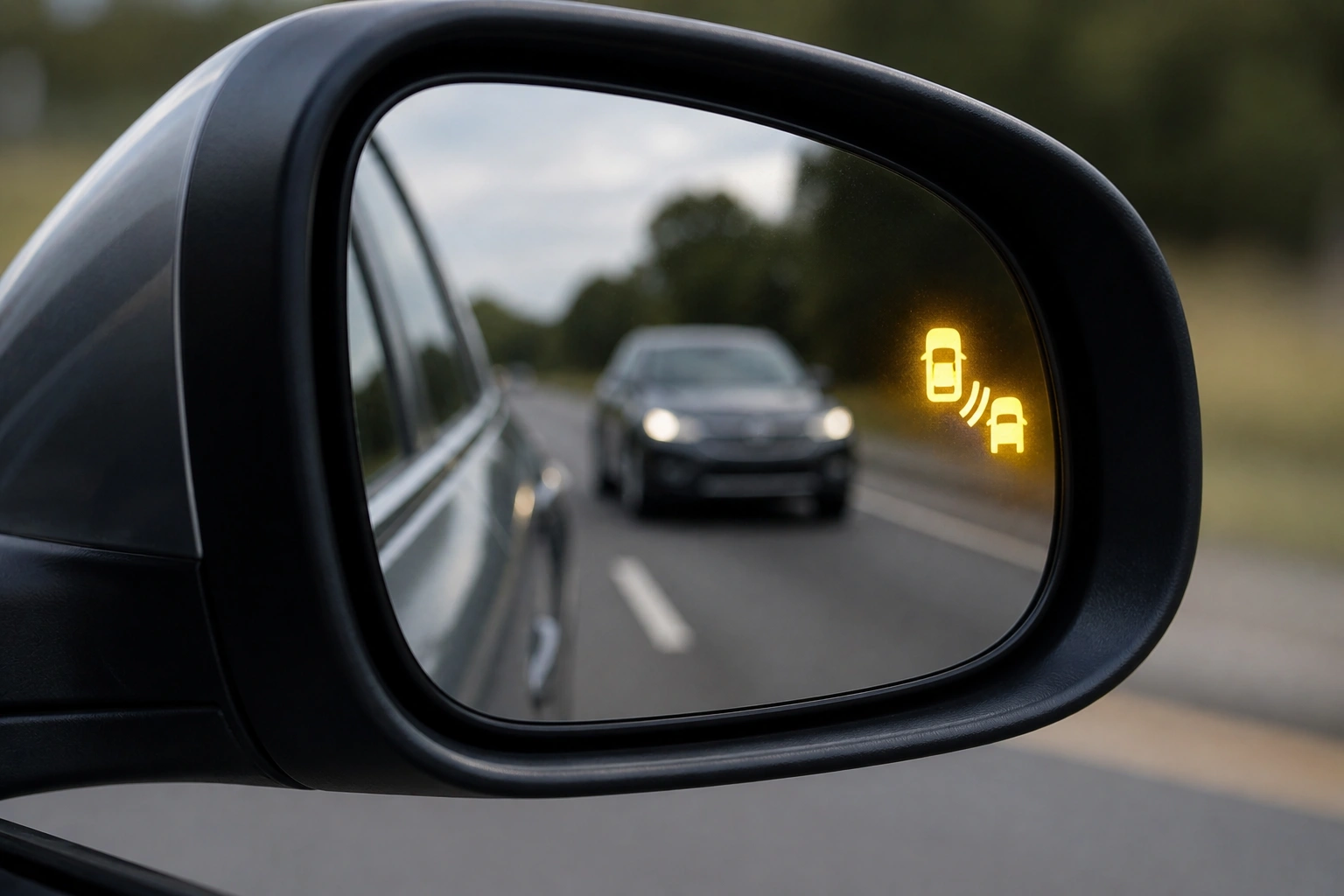
Once a vehicle is detected in the blind spot, the system provides a warning to the driver. This is usually in the form of a light indicator on the side mirror. The light remains on as long as the vehicle is within the monitored area.
If the driver attempts to change lanes while the blind spot is occupied, the system may provide additional alerts. These can include audible warnings or vibrations in the steering wheel.
Some advanced systems also display visual alerts on the dashboard. This multi-layered approach ensures that the driver is aware of potential خطر without being overwhelmed.
Clear and timely alerts help prevent unsafe maneuvers and improve overall safety.
Integration With Other Safety Systems
Modern BSM systems often work alongside other safety features. For example, they may integrate with rear cross-traffic alert, which detects vehicles approaching from the sides when reversing.
Some systems are connected to lane-keeping assistance, providing corrective steering if a lane change is attempted while the blind spot is occupied. This adds an extra layer of protection.
The combination of these features creates a comprehensive safety network. Each system supports the others, ensuring better awareness and control.
This integration reflects the growing focus on advanced driver assistance technologies in modern vehicles.
Benefits Of Using BSM In Daily Driving
Improved Awareness And Confidence
BSM enhances driver awareness by monitoring areas that are difficult to see. This reduces the need for constant head checks and allows the driver to focus more on the road ahead.
The system provides an extra set of “eyes,” helping detect vehicles that may otherwise go unnoticed. This is particularly useful in heavy traffic or during long journeys.
Increased awareness leads to more confident decision-making, especially when changing lanes or merging. Drivers can rely on the system to provide timely alerts.
This added confidence contributes to a safer and more controlled driving experience.
Reduced Risk Of Lane Change Accidents
Lane change accidents are often caused by vehicles hidden in blind spots. BSM significantly reduces this risk by providing early warnings before a maneuver is made.
The system ensures that drivers are aware of surrounding traffic, allowing them to make safer decisions. This is especially important on highways where vehicles move at higher speeds.
By preventing sudden lane changes, BSM helps maintain smooth traffic flow and reduces the likelihood of collisions.
Its role in accident prevention makes it one of the most valuable safety features in modern vehicles.
Convenience In Heavy Traffic Conditions
In busy traffic, constantly checking mirrors and blind spots can be tiring. BSM simplifies this process by automatically monitoring surrounding areas.
The system provides alerts only when necessary, reducing unnecessary distractions. This allows the driver to focus on navigation and traffic conditions.
It is particularly useful in urban environments where traffic density is high. The ability to rely on automated monitoring improves comfort and reduces stress.
This convenience makes everyday driving more manageable and efficient.
Limitations And Things To Keep In Mind
Situations Where BSM May Not Work Perfectly
While BSM is highly effective, it is not flawless. Certain conditions can affect its performance, such as heavy rain, snow, or dirt covering the sensors. These factors may reduce detection accuracy.
Small objects or fast-moving vehicles may also be harder to detect. In some cases, the system may not provide a warning in time.
Drivers should not rely solely on BSM and must continue to use mirrors and visual checks. The system is designed to assist, not replace, driver awareness.
Being aware of these limitations ensures safer use of the feature.
Importance Of Proper Mirror Adjustment
Even with BSM, proper mirror adjustment remains essential. Mirrors should be set to minimize blind spots as much as possible. This reduces reliance on the system and improves overall visibility.
Combining correct mirror positioning with BSM creates a more effective safety setup. It ensures that both visual and electronic monitoring work together.
Ignoring mirror adjustment can reduce the effectiveness of the system and increase risk.
A balanced approach provides the best results.
Maintenance And Sensor Care
Regular maintenance of the BSM system ensures reliable performance. Sensors should be kept clean and free from dirt or debris. This helps maintain accurate detection.
Periodic checks during vehicle servicing can identify any issues with the system. Addressing these problems early prevents malfunction.
Using the system as intended and following manufacturer guidelines ensures long-term reliability.
Proper care keeps the feature functioning effectively.
BSM Vs Traditional Mirror Checking
| Feature | BSM System | Traditional Mirrors |
| Blind Spot Detection | Automatic | Manual |
| Driver Effort | Low | High |
| Accuracy | High (With Limitations) | Depends On Driver |
| Alerts | Visual And Audible | None |
| Reliability | Consistent | Varies |
Practical Takeaway
BSM adds a valuable layer of safety by monitoring areas that are difficult to see. It does not replace traditional driving habits but enhances them. Using it alongside proper mirror adjustment and awareness ensures better control on the road.
The system works best when drivers remain attentive and use it as a support tool rather than a complete solution. With proper use, it helps reduce risk and improves confidence during everyday driving.
Frequently Asked Questions?
What Does BSM Mean In A Car?
It stands for Blind Spot Monitoring, a system that detects vehicles in areas not visible through mirrors.
Is BSM Always Accurate?
It is highly reliable but may be affected by weather or sensor blockage.
Can You Rely Only On BSM?
No, it should be used along with mirrors and visual checks.
Is BSM Available In All Cars?
It is common in modern vehicles but may not be standard in older models.
Does BSM Work At All Speeds?
Most systems work at moderate to high speeds, but functionality may vary by vehicle.

- What Does BSM Mean In A Car And How It Works - May 2, 2026
- How Much Rhodium Is In A Catalytic Converter - May 2, 2026
- How Fast Can You Drive In 4 High Safely? - May 2, 2026