
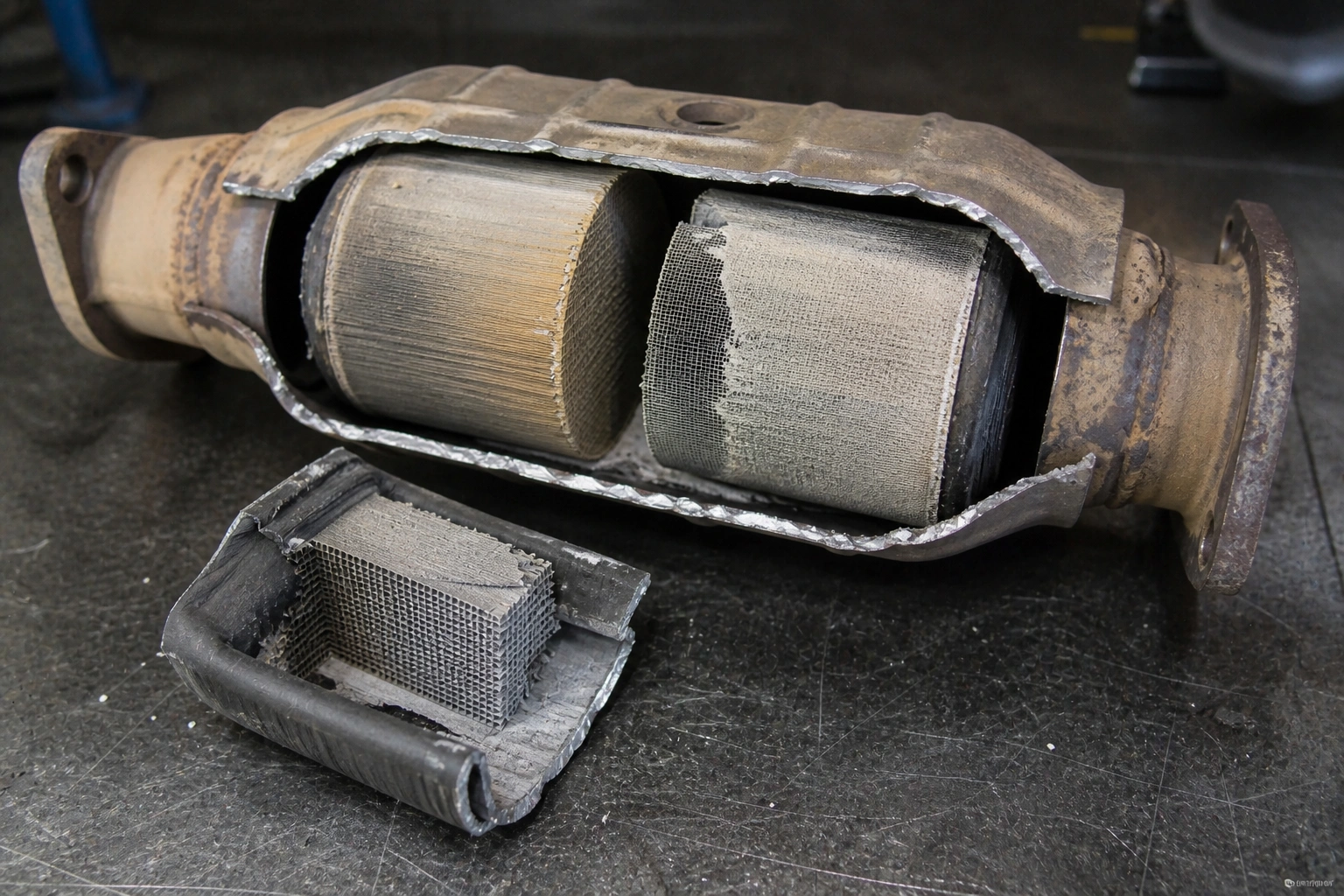
Catalytic converters sit quietly in the exhaust system, yet they perform one of the most important jobs in modern vehicles. They reduce harmful emissions by converting toxic gases into less harmful substances before they leave the exhaust pipe. Inside this compact component lies a combination of precious metals, including platinum, palladium, and rhodium.
Among these, rhodium stands out because of its rarity and high value. Even though it is used in very small amounts, it plays a critical role in controlling nitrogen oxide emissions. Its unique chemical properties make it highly effective, which is why manufacturers include it despite its cost.
Many people are surprised to learn how little rhodium is actually present in a catalytic converter. The quantity is measured in fractions of a gram, yet its impact on performance and environmental protection is significant. Understanding how much is used, why it is included, and how it affects value provides a clearer picture of this essential automotive component.
Table of Contents
What Rhodium Does Inside A Catalytic Converter
Role Of Rhodium In Emission Control
Rhodium is one of the key elements responsible for reducing nitrogen oxide emissions in a catalytic converter. These emissions are harmful gases produced during combustion, and they contribute to air pollution. Rhodium acts as a catalyst, meaning it helps trigger chemical reactions without being consumed in the process.
When exhaust gases pass through the converter, rhodium facilitates the breakdown of nitrogen oxides into nitrogen and oxygen. This process significantly reduces the environmental impact of vehicle emissions. Without rhodium, controlling these gases would be far less effective.
Its role is highly specialized compared to other metals used in the converter. While platinum and palladium handle carbon monoxide and hydrocarbons, rhodium focuses specifically on nitrogen oxides. This division of tasks ensures that the converter operates efficiently.
The effectiveness of rhodium in this process is one of the main reasons it remains a valuable and essential component.
Why Rhodium Is So Valuable And Rare
Rhodium is one of the rarest precious metals found on Earth. It is mined in limited quantities, often as a byproduct of platinum and nickel mining. Its scarcity contributes to its high market value, which can fluctuate significantly over time.
The demand for rhodium is driven largely by the automotive industry, where it is used in catalytic converters. Strict emission regulations increase the need for efficient catalysts, further raising demand.
Unlike other metals, rhodium has unique properties that make it highly effective in high-temperature environments. It resists corrosion and maintains performance under extreme conditions, which is essential for exhaust systems.
Its rarity and performance characteristics make it one of the most expensive components in a catalytic converter.
How Rhodium Works With Other Metals
Rhodium does not work alone inside the catalytic converter. It is combined with platinum and palladium to create a balanced system that handles multiple types of emissions. Each metal has a specific role, and together they ensure efficient operation.
Platinum and palladium focus on oxidizing harmful gases, while rhodium reduces nitrogen oxides. This combination allows the converter to address different pollutants simultaneously.
The metals are applied as a thin coating on a ceramic or metallic substrate. This design maximizes surface area, allowing more reactions to occur within a compact space.
The cooperation between these metals ensures that the converter meets emission standards while maintaining durability and performance.
How Much Rhodium Is In A Catalytic Converter
Average Rhodium Content In Vehicles
The amount of rhodium in a catalytic converter is surprisingly small. On average, a standard passenger vehicle contains between 0.1 to 0.3 grams of rhodium. Despite this tiny quantity, its value can be significant due to the high price of the metal.
The exact amount varies depending on the vehicle type and emission standards. Newer vehicles may use slightly more rhodium to meet stricter regulations, while older models may contain less.
Even though the quantity is minimal, the efficiency of rhodium allows it to perform its function effectively. This makes it one of the most impactful components relative to its size.
Understanding these numbers helps explain why catalytic converters are valuable despite their small size.
Comparison With Other Precious Metals
Catalytic converters contain a mix of precious metals, each with different quantities and roles. The following table provides a general comparison:
| Metal | Average Amount (Per Converter) | Primary Function |
| Platinum | 2 to 7 grams | Oxidizes carbon monoxide |
| Palladium | 2 to 7 grams | Controls hydrocarbons |
| Rhodium | 0.1 to 0.3 grams | Reduces nitrogen oxides |
Rhodium is used in much smaller quantities compared to platinum and palladium. However, its high value often makes it one of the most important components in terms of cost.
This balance ensures that the converter remains efficient while keeping production costs manageable.
Factors That Affect Rhodium Quantity
Several factors influence how much rhodium is used in a catalytic converter. Vehicle size and engine type play a major role, as larger engines produce more emissions and require more effective catalysts.
Emission regulations also affect the quantity. Stricter standards require higher efficiency, which may lead to increased use of rhodium. Manufacturers adjust the composition to meet these requirements without excessive cost.
Advancements in technology have also improved how metals are used. Modern converters are designed to maximize efficiency with minimal material, reducing the amount of rhodium needed.
These factors combine to determine the final composition of each converter.
Why Catalytic Converters Have High Value
Role Of Rhodium In Converter Pricing
The presence of rhodium significantly contributes to the overall value of a catalytic converter. Even though it is used in small amounts, its high market price makes it a key factor in determining value.
Fluctuations in rhodium prices can directly affect the cost of converters. When prices rise, the value of used converters also increases, making them attractive for recycling.
This relationship between metal content and market value explains why catalytic converters are often targeted for theft.
Understanding the role of rhodium helps in appreciating the economic importance of these components.
Recycling And Recovery Of Precious Metals
Recycling plays a major role in recovering rhodium from used catalytic converters. Specialized processes extract the metal from the ceramic substrate, allowing it to be reused in new converters.
This process helps reduce the need for mining and supports sustainable practices. Recovered rhodium is often refined and reintroduced into the supply chain.
Recycling also contributes to the value of used converters. Even small amounts of rhodium can be worth significant money when recovered efficiently.
The ability to recycle these metals ensures that resources are used effectively and reduces environmental impact.
Market Demand And Price Fluctuation
The price of rhodium is influenced by supply and demand. Limited availability and high demand from the automotive industry can cause prices to rise sharply.
Economic factors, mining output, and regulatory changes also affect pricing. These fluctuations make rhodium one of the most volatile precious metals.
For vehicle owners and recyclers, these changes can impact the value of catalytic converters. Staying informed about market trends helps in making better decisions.
The dynamic nature of the market adds another layer of importance to this small but valuable metal.
How To Identify Rhodium Content In Converters
Visual Inspection And Limitations
It is not possible to determine the exact amount of rhodium in a catalytic converter through visual inspection alone. The metal is applied as a microscopic coating on the internal structure, making it invisible to the naked eye.
External appearance does not provide accurate information about metal content. Two converters may look identical but contain different amounts of precious metals.
This limitation makes professional testing necessary for accurate evaluation. Relying on visual inspection alone can lead to incorrect assumptions.
Understanding these limitations helps avoid confusion when assessing converter value.
Professional Testing Methods
Specialized testing methods are used to determine the metal content in catalytic converters. These include chemical analysis and advanced equipment that can measure the composition accurately.
Laboratories and recycling facilities use these methods to evaluate converters and determine their value. This ensures that the correct amount of rhodium and other metals is identified.
Professional testing provides reliable results and eliminates guesswork. It is the most accurate way to assess the true value of a converter.
This approach ensures transparency and accuracy in the recycling process.
Importance Of Serial Numbers And Codes
Many catalytic converters have serial numbers or identification codes that provide information about their composition. These codes can be used to estimate the amount of precious metals inside.
Databases and reference tools help match these codes with known specifications. This allows recyclers and buyers to determine approximate values without physical testing.
While not as precise as laboratory analysis, this method provides a useful starting point. It helps streamline the evaluation process and improves efficiency.
Using these identifiers ensures better accuracy when assessing converter content.
Key Takeaway
Rhodium may be present in only a fraction of a gram within a catalytic converter, yet its role is essential and its value is significant. Its ability to reduce harmful emissions makes it indispensable in modern vehicles, while its rarity keeps it among the most expensive metals.
The balance between performance, cost, and environmental responsibility shapes how much rhodium is used. Advances in technology continue to refine this balance, ensuring efficient operation with minimal material.
Recognizing the importance of this small component provides a deeper appreciation for the engineering behind emission control systems and the value hidden within everyday automotive parts.
Frequently Asked Questions?
How Much Rhodium Is Typically Found In A Catalytic Converter?
Most converters contain between 0.1 to 0.3 grams of rhodium, depending on the vehicle and emission standards.
Why Is Rhodium Used Instead Of Other Metals?
Rhodium is highly effective at reducing nitrogen oxide emissions and performs well under extreme temperatures.
Does Every Catalytic Converter Contain Rhodium?
Most modern converters include rhodium, but the amount varies based on design and regulations.
Can Rhodium Be Recycled From Old Converters?
Yes, recycling processes can extract rhodium and reuse it in new catalytic converters.
Why Are Catalytic Converters Valuable?
They contain precious metals like rhodium, platinum, and palladium, which have high market value.

- What Does BSM Mean In A Car And How It Works - May 2, 2026
- How Much Rhodium Is In A Catalytic Converter - May 2, 2026
- How Fast Can You Drive In 4 High Safely? - May 2, 2026
