A car that refuses to start can quickly turn a normal day into a frustrating one. Among the many roadside tricks people talk about, tapping the starter motor with a hammer is one of the most commonly mentioned.
It sounds simple, almost too simple, yet there is a reason this method has been passed around for years. In certain situations, it can temporarily bring a failing starter back to life just long enough to get the engine running.
That said, this is not a repair. It is a short-term workaround meant for emergencies when the starter motor is sticking or not engaging properly. Knowing exactly where to tap, how hard to do it, and when it makes sense can prevent further damage.
A careful approach matters, because the starter is connected to critical engine components and electrical systems. Done correctly, it may save time. Done carelessly, it can create bigger problems.
Table of Contents
How A Starter Motor Works And Why It Gets Stuck
Internal Components And Their Function
The starter motor is responsible for turning the engine over when the key is turned or the start button is pressed. It uses electrical power from the battery to spin a small gear that engages with the engine’s flywheel. This movement starts the combustion process, allowing the engine to run on its own.
Inside the starter, there are several moving parts that must work together smoothly. The solenoid pushes the gear outward to engage the flywheel. At the same time, the motor spins rapidly to crank the engine.
Brushes inside the starter help transfer electrical current, and these brushes wear down over time. When they become worn or dirty, they may fail to make proper contact.
As these components age, they can begin to stick or respond slowly. Heat from the engine can also affect performance, especially after long drives. The result is a starter that sometimes works and sometimes does not. This inconsistency is what leads people to try tapping it as a temporary fix.
Why Tapping The Starter Can Work Temporarily
When a starter motor sticks, it is often due to worn brushes or internal parts not making proper contact. A light tap can sometimes shift these components just enough to restore connection. This allows electricity to flow again, enabling the starter to spin.
The effect is similar to freeing a jammed mechanism. The tap does not repair the worn parts, but it can reposition them briefly. This is why the method is often described as a last-resort solution rather than a reliable fix.
Heat expansion can also play a role. After the engine has been running, the starter may expand slightly, causing tighter internal movement. A tap can relieve that tension momentarily. However, once the car is turned off again, the issue usually returns.
It is important to recognize that this method only works in specific situations. If the starter has completely failed or if the problem lies elsewhere, tapping it will not help. Knowing when it might work can save time and avoid unnecessary effort.
Where To Hit The Starter With A Hammer
Locating The Starter Motor In Different Vehicles
Before attempting to tap the starter, it is essential to know where it is located. The starter motor is usually mounted near the engine’s lower section, often close to where the transmission meets the engine. This position allows it to connect directly to the flywheel.
In many vehicles, the starter is accessible from underneath. This means the car may need to be safely lifted or accessed from a low angle. In some cases, it can be reached from the top of the engine bay, but this depends on the design of the vehicle.
The starter is typically a cylindrical component with electrical connections attached to it. It may be partially covered by other parts, so identifying it correctly is important. Mistaking it for another component can lead to unintended damage.
Consulting the vehicle’s manual or a reliable diagram can help confirm its location. Taking a few minutes to identify the correct part ensures that any action taken is focused and safe.
The Correct Spot To Tap And How To Do It
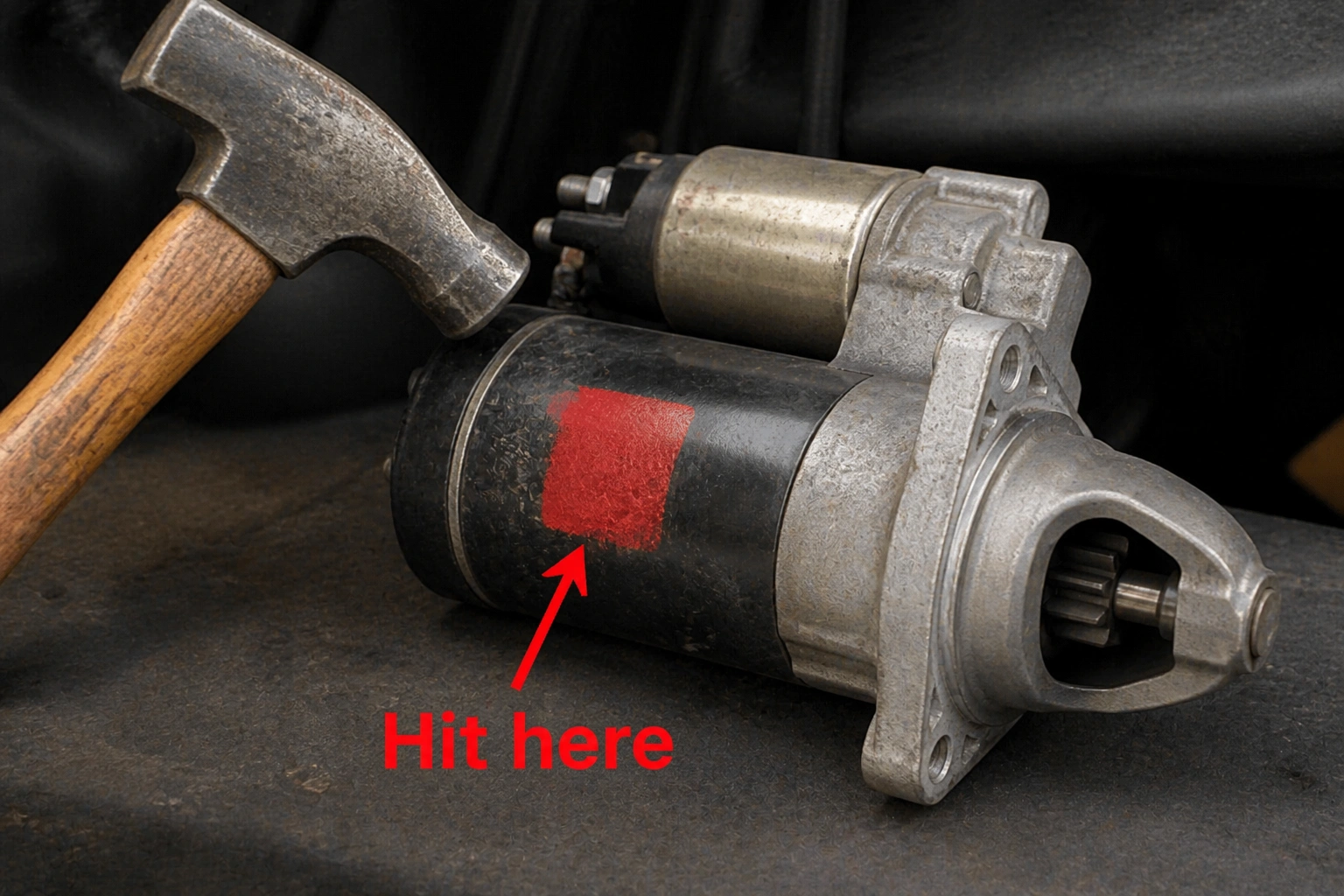
Once the starter is located, the next step is knowing where to tap. The goal is to lightly strike the body of the starter motor, not the electrical connections or surrounding components. The cylindrical housing is usually the safest area to target.
A moderate tap is enough. There is no need for forceful hits, as the intention is to free internal parts, not to break anything loose. Using a small hammer or a similar tool provides better control compared to larger tools.
It is often helpful to have another person turn the key while tapping the starter. This increases the chances of the internal components aligning and engaging. Timing the tap with the start attempt can make the process more effective.
Care should be taken to avoid hitting wires, connectors, or nearby parts. These areas are sensitive and can be damaged easily. A controlled and precise approach ensures that the action remains helpful rather than harmful.
Safety Precautions Before Attempting This Method
Protecting Yourself And The Vehicle
Working around a vehicle’s engine and electrical system requires caution. Before attempting to tap the starter, the car should be in a secure position. If accessing it from underneath, proper support such as jack stands should be used instead of relying solely on a jack.
The engine should be turned off initially while locating the starter. This reduces the risk of accidental movement or injury. Wearing gloves can protect hands from sharp edges and hot surfaces, especially if the engine has been running recently.
Battery safety is also important. While the starter needs power to operate, avoiding direct contact with exposed electrical connections prevents accidental shocks or short circuits. Being aware of where wires are located helps reduce risk.
A careful setup ensures that the process is controlled and safe. Rushing or skipping basic precautions can lead to unnecessary accidents.
When Not To Try This Approach
Tapping the starter is not suitable in every situation. If there are signs of major electrical failure, such as no dashboard lights or a completely dead battery, this method will not address the issue. In such cases, the problem lies elsewhere.
Unusual noises, burning smells, or visible damage around the starter are also warning signs. Attempting to hit the starter in these conditions can worsen the problem or cause further damage. It is better to seek proper diagnosis in such cases.
Repeatedly tapping the starter without results is another indicator that the issue is beyond a simple fix. Continuing to try the same method may lead to additional wear or damage.
Recognizing these limits helps avoid unnecessary effort and ensures that attention is directed toward proper repairs when needed.
Long Term Solutions For Starter Problems
Repairing Or Replacing The Starter Motor
While tapping the starter can provide a temporary solution, it does not address the underlying issue. Over time, worn components inside the starter will continue to degrade. Repairing or replacing the starter becomes necessary to restore reliable operation.
In some cases, rebuilding the starter may be an option. This involves replacing worn parts such as brushes and cleaning internal components. It can be a cost-effective solution if the damage is not extensive.
Replacement is often the more straightforward approach. A new or refurbished starter ensures consistent performance and eliminates the need for temporary fixes. Installation should be done carefully, ensuring all connections are secure and properly aligned.
Addressing the problem directly provides peace of mind and prevents unexpected breakdowns. It also reduces the risk of being stranded due to repeated starting issues.
Preventive Maintenance And Early Warning Signs
Preventive maintenance can help extend the life of the starter. Keeping the battery in good condition ensures that the starter receives adequate power. Weak batteries can strain the starter and contribute to premature wear.
Listening for early warning signs is also important. Slow cranking, clicking sounds, or intermittent starting issues often indicate that the starter is beginning to fail. Addressing these signs early can prevent complete failure.
Regular inspections of electrical connections and wiring help maintain proper function. Loose or corroded connections can affect performance and mimic starter problems.
Taking a proactive approach reduces the likelihood of sudden issues. It ensures that the starting system remains reliable and minimizes the need for emergency fixes.
Conclusion
Tapping a starter motor with a hammer is a well-known trick that can sometimes get a vehicle running in an emergency. It works by freeing stuck internal components, allowing the starter to engage briefly. However, it is not a permanent solution and should only be used when necessary.
Knowing where to tap, how to do it safely, and when to stop is essential. A careful approach can make the difference between a quick fix and unintended damage. At the same time, recognizing the limits of this method ensures that proper repairs are not delayed.
Reliable vehicle performance comes from well-maintained components. Addressing starter issues through repair or replacement provides long-term confidence and reduces the chances of unexpected problems.

- How Long Does It Take For A Car To Cool Down Fully - May 1, 2026
- What Does DRL Mean On A Car And Why It Matters - May 1, 2026
- 5 Pin Relay Wiring Diagram Guide For Automotive Use - May 1, 2026