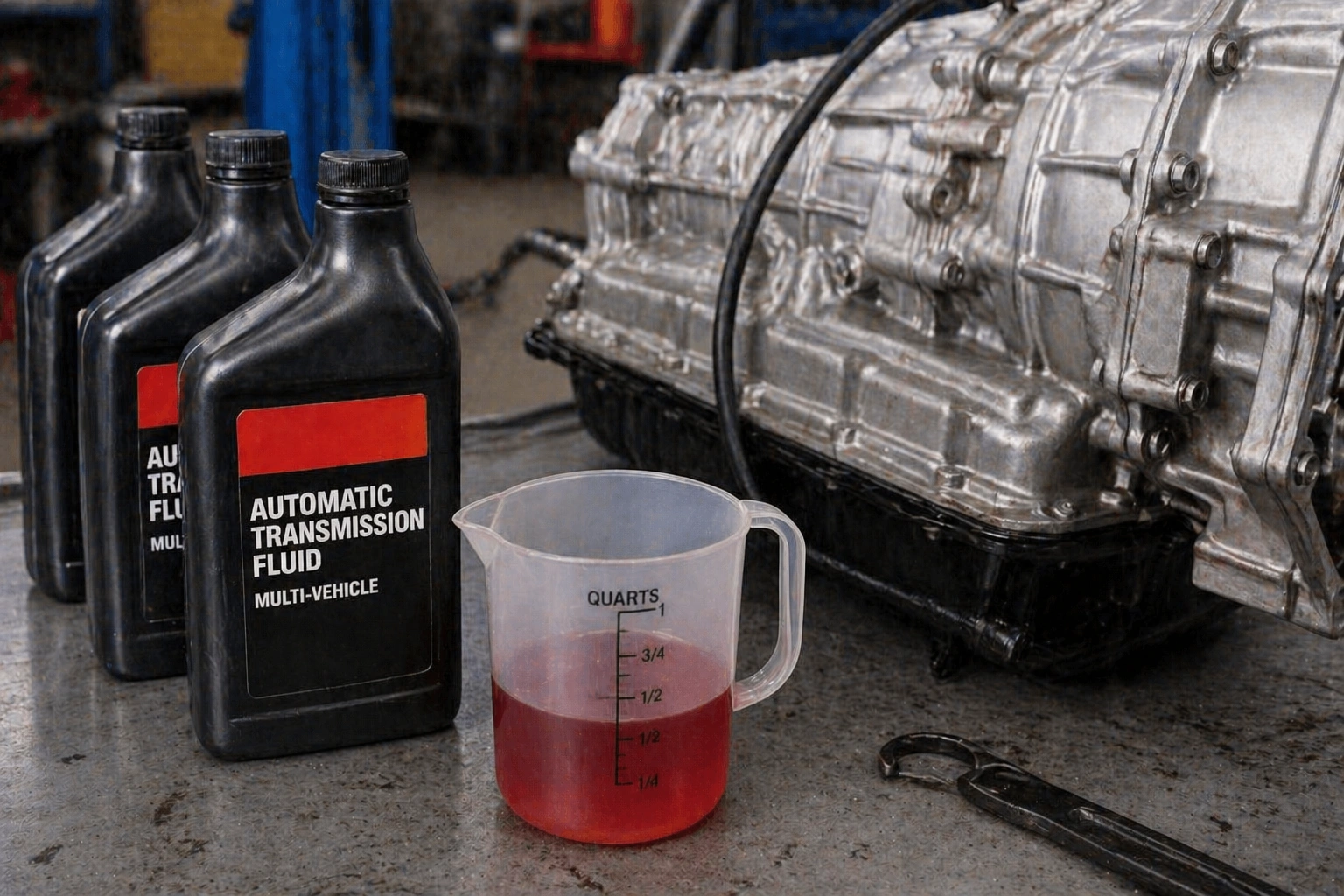
Transmission fluid is one of the most overlooked yet essential fluids in a vehicle. While engine oil often gets the most attention, the transmission relies just as heavily on proper lubrication and cooling to function correctly.
Every time a vehicle accelerates, shifts gears, or maintains speed, the transmission works continuously behind the scenes. The fluid inside it not only lubricates moving parts but also transfers power, reduces heat, and keeps internal components clean.
The amount of fluid required varies depending on the type of transmission, vehicle size, and the specific service being performed. A small compact car may need only a few quarts for a basic service, while a larger truck or SUV can require significantly more.
Vehicles such as the Toyota Camry and Ford F-150 demonstrate how fluid capacity changes based on design and purpose. Knowing how much fluid is needed and when to replace it helps maintain smooth shifting and prevents costly transmission damage over time.
Table of Contents
Typical Transmission Fluid Capacity In Different Vehicles
Average Fluid Capacity For Passenger Cars
Most standard passenger vehicles require between 4 to 12 quarts of transmission fluid depending on the design of the transmission. Smaller cars with compact transmissions usually fall on the lower end of this range, while larger sedans and crossovers require more.
A basic drain and refill service typically replaces only a portion of the total fluid, often around 3 to 6 quarts. This is because some fluid remains inside the torque converter and internal passages.
Vehicles such as the Honda Accord generally require around 8 to 10 quarts for a complete fill, though a routine service may use less.
The exact amount depends on whether the service involves a full flush or a partial replacement.
Checking manufacturer specifications ensures the correct amount is used.
Fluid Capacity In Trucks And Larger Vehicles
Larger vehicles such as trucks and SUVs often have more complex transmissions designed to handle heavier loads. These transmissions require a greater volume of fluid to maintain proper operation.
Pickup trucks like the Chevrolet Silverado 1500 may require anywhere from 10 to 15 quarts or more for a complete fluid replacement.
The increased capacity helps manage heat and maintain lubrication under demanding conditions such as towing or carrying heavy loads.
Vehicles such as the Toyota Tacoma also use larger transmission systems that require additional fluid.
This higher capacity ensures durability and consistent performance during heavy use.
Difference Between Drain And Refill Vs Full Transmission Flush
Partial Fluid Replacement During Routine Service
A standard drain and refill service involves removing fluid from the transmission pan and replacing it with fresh fluid. This process typically replaces only a portion of the total fluid.
Because some fluid remains trapped inside the torque converter and internal components, a drain and refill does not completely renew the fluid.
Vehicles such as the Nissan Altima may require around 4 to 5 quarts during this type of service.
This method is often used for regular maintenance because it is less invasive and helps maintain fluid quality over time.
Repeating this service at intervals can gradually refresh most of the fluid.
Complete Fluid Replacement With A Flush
A transmission flush replaces nearly all of the old fluid by circulating new fluid through the entire system. This process requires more fluid than a standard drain and refill.
During a flush, the system pushes out old fluid while simultaneously adding new fluid. This ensures that internal components receive clean fluid throughout.
Vehicles such as the Ford Explorer may require 10 to 14 quarts for a complete flush depending on transmission design.
This method is often used when fluid is heavily contaminated or during major maintenance intervals.
A full flush provides a more thorough cleaning but should be performed according to manufacturer recommendations.
Factors That Affect How Much Fluid Is Needed
Transmission Type And Design
Different types of transmissions require different amounts of fluid. Automatic transmissions generally require more fluid than manual transmissions because they rely on fluid for both lubrication and hydraulic operation.
Continuously variable transmissions and dual clutch systems may also have unique fluid requirements depending on their design.
Vehicles such as the Subaru Outback use specialized transmission systems that require specific fluid types and quantities.
The internal design of the transmission determines how much fluid circulates through the system.
Using the correct amount ensures proper function and prevents damage.
Service Method And Maintenance History
The amount of fluid needed also depends on the type of service being performed. A simple top off requires only a small amount, while a complete flush requires a full system capacity.
Maintenance history plays a role as well. Vehicles that receive regular fluid changes may require less fluid during each service because the system remains clean.
Vehicles such as the Hyundai Sonata benefit from consistent maintenance schedules that prevent fluid degradation.
Neglecting fluid changes may require more extensive servicing and higher fluid usage.
Following recommended service intervals helps maintain efficiency.
How To Check And Maintain Proper Fluid Level
Maintaining the correct transmission fluid level is essential for smooth operation. Too little fluid can cause slipping, overheating, and poor shifting. Too much fluid can create pressure issues and affect performance.
Some vehicles include a dipstick for checking fluid levels, while others require inspection through a service port. The procedure may vary depending on the vehicle design.
Vehicles such as the Jeep Grand Cherokee may require specific steps to check fluid levels accurately.
Checking fluid condition is just as important as checking quantity. Clean fluid should appear clear and have a consistent color, while dark or burnt fluid indicates the need for replacement.
Regular monitoring helps ensure the transmission operates efficiently.
Transmission fluid capacity varies widely depending on vehicle size, transmission design, and service type. Most passenger vehicles require between 4 and 12 quarts, while larger trucks may need significantly more.
A basic service replaces only part of the fluid, while a full flush requires the entire system capacity. Using the correct amount and maintaining proper fluid levels helps ensure smooth shifting, reduces wear, and extends the life of the transmission.

- Shock Replacement Cost Breakdown And What To Expect - April 30, 2026
- Do Exhaust Tips Change Sound Or Just Style - April 30, 2026
- How Many Quarts Of Transmission Fluid Do You Need - April 30, 2026