
The engine inside a vehicle follows a precise sequence every time it runs. Each cylinder fires in a carefully timed order so that power delivery remains smooth and balanced.
In V8 engines, this sequence becomes even more important because multiple cylinders operate simultaneously in a compact layout. The Ford 5.4 Triton V8 is a well known engine used in trucks and large SUVs, valued for its durability and torque output.
This engine has been widely used in models like the Ford F-150 and Ford Expedition, making it familiar to many drivers and technicians. The firing order determines how combustion events are distributed across the engine.
When the sequence is correct, the engine runs smoothly and efficiently. When it is incorrect, problems such as misfires, rough idle, and reduced performance can occur. Knowing how the firing order works, along with cylinder placement, helps with maintenance, troubleshooting, and repairs.
Table of Contents
Correct Firing Order For Ford 5.4 Engine
Standard Firing Sequence Used In Triton V8
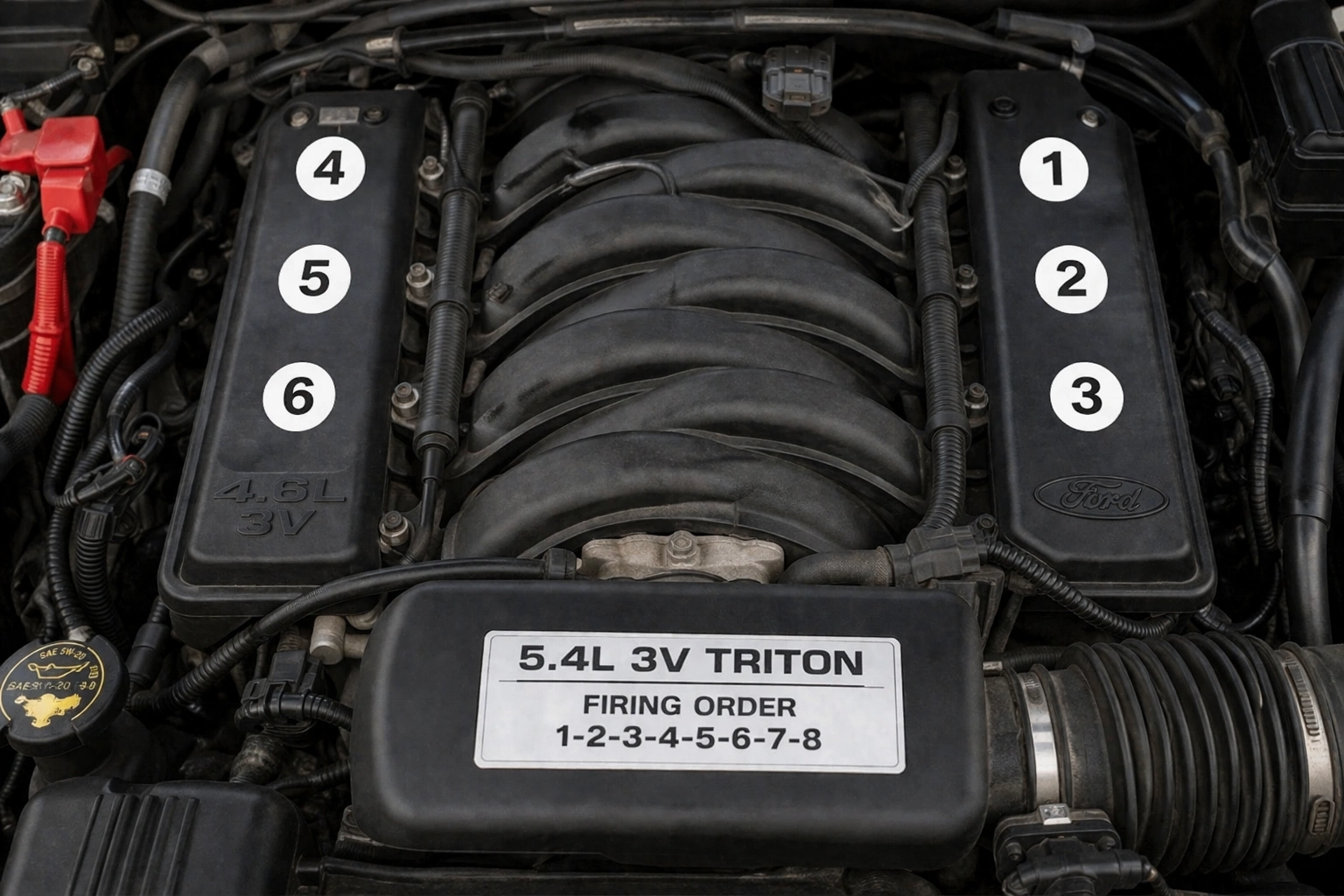
The Ford 5.4 Triton engine follows a specific firing order designed to balance power delivery across all cylinders. The correct firing order is:
1-3-7-2-6-5-4-8
This sequence ensures that combustion events occur in a pattern that reduces vibration and distributes load evenly throughout the engine. Each cylinder fires at a precise moment controlled by the engine’s timing system.
Engines such as those found in the Ford F-250 rely on this sequence to maintain consistent torque output, especially under heavy loads.
If the firing order is disrupted, the engine may struggle to run smoothly. Spark timing and fuel delivery depend on this exact sequence to function properly.
Maintaining the correct firing order is essential for both performance and engine longevity.
Why This Firing Order Design Is Used
The firing order in a V8 engine is not random. Engineers design it to minimize engine vibration and ensure even distribution of power strokes. In the Ford 5.4 engine, the sequence alternates between different banks of cylinders.
This pattern helps balance the engine and prevents excessive stress on internal components. It also improves combustion efficiency by spacing out firing events evenly.
Vehicles such as the Lincoln Navigator benefit from this balanced operation, resulting in smoother performance.
A well designed firing order reduces wear on engine mounts and improves overall reliability.
This careful arrangement is one of the reasons the 5.4 Triton engine is known for durability.
Cylinder Numbering And Engine Layout
Cylinder Position In Ford 5.4 Engine
Understanding cylinder numbering is essential when working with firing order. The Ford 5.4 engine uses a standard V8 layout with two banks of cylinders.
When viewed from the front of the engine, the cylinders are arranged as follows:
- Left bank (driver side): 5-6-7-8
- Right bank (passenger side): 1-2-3-4
Cylinder number one is located at the front of the passenger side. The numbering continues toward the rear of the engine.
Vehicles like the Ford E-Series Van use this same configuration.
Correct identification of cylinder positions is necessary when diagnosing misfires or replacing ignition components.
This layout forms the foundation for applying the firing order correctly.
Relationship Between Cylinder Layout And Firing Order
The firing order works in coordination with cylinder placement to create a balanced combustion cycle. The sequence alternates between the two cylinder banks to distribute power evenly.
This prevents multiple cylinders on the same side from firing consecutively, which could create uneven forces within the engine.
Vehicles such as the Ford Explorer rely on this balance for smooth engine operation.
The relationship between layout and firing order ensures that each combustion event contributes to steady power output.
Proper alignment of spark timing with cylinder order is critical for engine performance.
How Firing Order Affects Engine Performance
Smooth Operation And Reduced Vibration
A correct firing order ensures that the engine runs smoothly by evenly spacing combustion events. Each cylinder contributes to power production at the right moment, preventing sudden changes in engine speed.
This balanced operation reduces vibration and improves overall engine stability. It also helps maintain consistent power delivery across different driving conditions.
Vehicles such as the Ford F-150 benefit from smooth operation when towing or carrying heavy loads.
An incorrect firing order disrupts this balance and leads to rough engine behavior.
Maintaining proper sequence ensures reliable performance and comfort.
Impact On Fuel Efficiency And Power Output
The firing order also influences how efficiently fuel is burned inside the engine. Proper sequencing allows each cylinder to receive the correct air fuel mixture and ignite at the right time.
This results in complete combustion and better energy conversion. When the sequence is disrupted, fuel may not burn efficiently, leading to reduced power and increased fuel consumption.
Vehicles such as the Ford Expedition depend on efficient combustion for consistent performance.
Correct firing order supports optimal engine output and helps maintain fuel efficiency.
Common Problems Related To Incorrect Firing Order
Misfires And Rough Engine Performance
One of the most common symptoms of an incorrect firing order is engine misfire. This occurs when a cylinder does not fire at the correct time or fails to ignite the air fuel mixture.
Misfires can cause rough idling, hesitation during acceleration, and reduced engine power. The engine may also produce unusual vibrations.
Vehicles like the Ford F-250 may experience noticeable performance issues if the firing order is incorrect.
Diagnosing misfires often involves checking spark plug wiring and ignition timing.
Correcting the firing order usually restores normal engine operation.
Wiring Errors During Maintenance
Incorrect spark plug wire connections are a common cause of firing order problems. When wires are connected to the wrong cylinders, the ignition system sends spark at the wrong time.
This disrupts the combustion sequence and prevents the engine from running properly. Careful labeling and reference to cylinder numbering help avoid these errors.
Vehicles such as the Lincoln Navigator require precise wiring connections for optimal performance.
Following the correct firing order during maintenance ensures reliable engine function.
Attention to detail during repairs helps prevent these issues.
The firing order of the Ford 5.4 Triton engine plays a critical role in maintaining smooth operation, efficient combustion, and consistent power output. The sequence 1-3-7-2-6-5-4-8 is designed to balance the engine and reduce stress on internal components.
Combined with proper cylinder numbering and accurate ignition timing, this firing order ensures reliable performance in vehicles that rely on this engine. Maintaining correct wiring and timing helps prevent misfires and keeps the engine operating efficiently over time.

- Shock Replacement Cost Breakdown And What To Expect - April 30, 2026
- Do Exhaust Tips Change Sound Or Just Style - April 30, 2026
- How Many Quarts Of Transmission Fluid Do You Need - April 30, 2026