
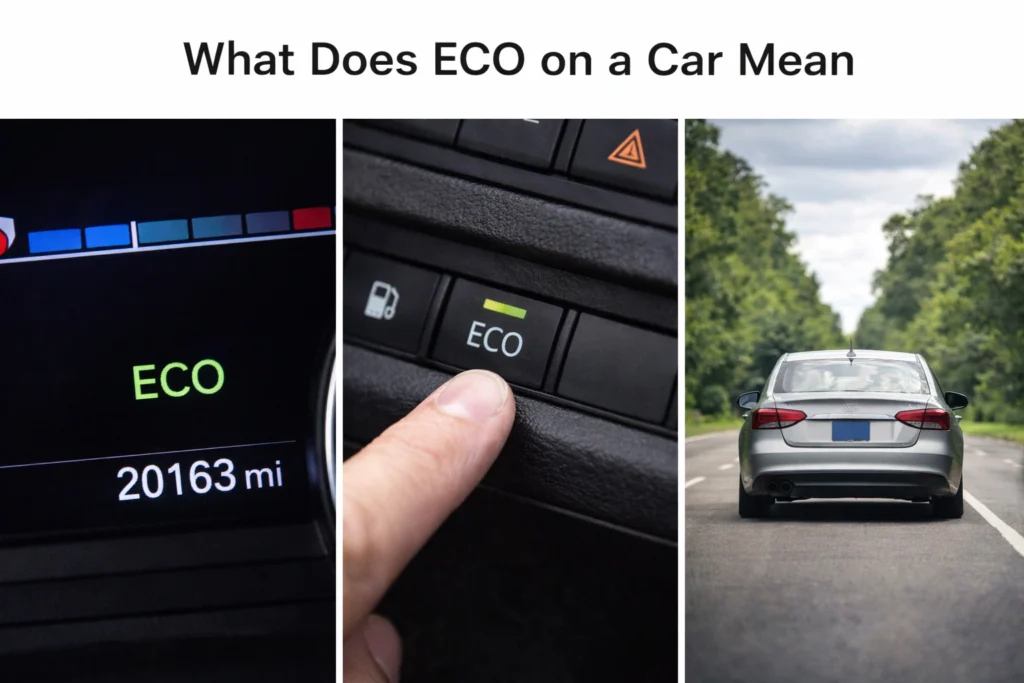
Modern cars are packed with small lights, symbols, and modes that quietly work in the background. One of the most common yet confusing among them is the green ECO indicator.
Many drivers notice it switching on and off while driving and wonder whether it is helping, limiting power, or quietly changing the way the vehicle behaves. Some assume it is only about fuel savings, while others fear it may strain the engine or transmission over time.
The truth sits somewhere in between. ECO mode is not a single technology, and it does not behave the same way across all vehicles. In some cars, it simply acts as a guide.
In others, it actively reshapes throttle response, transmission behavior, and even air conditioning performance. When used correctly, it can improve efficiency and reduce fuel consumption. When misunderstood, it can feel sluggish or annoying.
This guide breaks down what ECO on a car truly means, how it operates behind the scenes, when it works best, and when it may not suit your driving needs. Everything is explained clearly, without technical overload, so the meaning becomes practical rather than confusing.
Table of Contents
What ECO On A Car Actually Means
ECO stands for Economy. When shown on a car’s dashboard or selected as a driving mode, it signals that the vehicle is operating in a way designed to reduce fuel usage and emissions. The goal is smoother acceleration, gentler throttle input, and smarter energy management.
ECO is not a single button with a universal definition. Manufacturers design it differently based on engine type, transmission, and overall vehicle purpose. In some models, ECO is simply an indicator. In others, it is an active mode that changes how the car responds to driver input.
At its core, ECO focuses on efficiency rather than speed or performance. It encourages driving habits that reduce unnecessary fuel burn, especially during city traffic and steady cruising.
ECO Indicator Vs ECO Mode
There is an important difference between an ECO indicator and ECO mode.
An ECO indicator lights up when the vehicle senses fuel-efficient driving behavior. Smooth acceleration, steady speed, and gentle throttle input often trigger it. The car itself does not change performance; it only provides feedback.
An ECO mode, usually activated by a button or drive selector, actively alters how the vehicle operates. Throttle response becomes softer, gear shifts happen earlier, and engine output is managed to prioritize efficiency.
Many drivers confuse the two and expect the same behavior from every car. Understanding which one your vehicle uses makes a noticeable difference in expectations.
Why Manufacturers Use ECO Systems
Fuel efficiency standards have become stricter worldwide. ECO systems help manufacturers meet these regulations while also offering drivers better mileage. Beyond regulations, fuel savings appeal directly to buyers, especially during periods of rising fuel prices.
ECO systems also reduce emissions by limiting aggressive engine behavior. This not only helps the environment but can also reduce wear on certain components over time when used appropriately.
How ECO Mode Works Inside The Car
ECO mode influences several systems at once. Rather than focusing on a single part, it coordinates engine output, transmission behavior, and auxiliary systems to reduce energy use.
Throttle Response Changes
One of the most noticeable effects of ECO mode is reduced throttle sensitivity. Pressing the accelerator pedal delivers power more gradually. This prevents sudden fuel-rich bursts that occur during hard acceleration.
The pedal still reaches full power when pushed far enough, but the response curve becomes smoother. This encourages calm acceleration without forcing the driver to constantly monitor foot pressure.
Transmission Shift Behavior
Automatic transmissions behave differently in ECO mode. Gears shift earlier, keeping engine speed lower. Lower revolutions mean less fuel burned per minute.
In continuously variable transmissions, ECO mode keeps engine speed within a narrow efficiency range. This often makes acceleration feel slower, but it helps maintain consistent mileage.
Manual transmission vehicles with ECO indicators encourage early upshifts through dashboard prompts rather than altering mechanical behavior.
Engine Load Management
Modern engines rely heavily on electronic control units. In ECO mode, these systems limit unnecessary fuel delivery during partial throttle driving. Engine timing and air intake are optimized for efficiency rather than power.
This does not damage the engine. In fact, controlled combustion under lighter loads often results in cleaner operation.
Climate Control Adjustments
Air conditioning can place a noticeable load on the engine. In ECO mode, climate systems may reduce compressor intensity or cycle more frequently instead of running continuously.
Cabin cooling may feel slightly slower, especially in hot climates, but the fuel savings add up during long drives.
Electrical System Optimization
Alternators and battery charging systems also adapt. Charging may be delayed during acceleration and prioritized during braking or cruising. This reduces engine strain during power-demanding moments.
When ECO Mode Works Best And When It Does Not
ECO mode is not designed for every situation. Knowing when to rely on it helps avoid frustration.
Ideal Driving Conditions For ECO Mode
ECO mode shines in steady, predictable environments. City traffic with frequent stops, suburban roads, and highways with consistent speeds benefit the most.
Smooth acceleration from traffic lights, gentle cruising, and light loads allow the system to operate at peak efficiency. Over time, these small adjustments translate into measurable fuel savings.
Daily commuting is where ECO mode usually proves its value.
Situations Where ECO Mode Feels Limiting
Hilly terrain, quick overtakes, and heavily loaded vehicles can make ECO mode feel sluggish. Reduced throttle response may delay power delivery when immediate acceleration is needed.
During steep climbs, the transmission may upshift too early, forcing the engine to work harder at low speeds. Many drivers instinctively disable ECO mode in such scenarios.
Emergency maneuvers also benefit from full throttle responsiveness. While ECO mode does not block power entirely, it may delay response just enough to feel uncomfortable.
Highway Driving Considerations
On highways, ECO mode works well during steady cruising. However, frequent lane changes and overtakes may feel less responsive.
Some drivers prefer switching ECO mode off temporarily during high-speed merging, then reactivating it once cruising speed is reached.
Common Myths And Misunderstandings About ECO Mode
ECO mode is often misunderstood, leading to unnecessary worry or misuse.
ECO Mode Does Not Damage The Engine
A common fear is that ECO mode strains the engine by forcing it to operate at low power. In reality, engines are designed to handle a wide range of operating conditions.
Running at lower engine speeds under light load is generally easier on components than aggressive acceleration. ECO mode operates well within safe parameters defined by manufacturers.
ECO Mode Does Not Permanently Reduce Power
ECO mode does not remove horsepower. Full power remains available when the accelerator is pressed firmly. The system simply requires more deliberate input.
Drivers expecting instant response may mistake delayed throttle for lost power, but the engine remains capable of full output.
ECO Mode Is Not Only For Hybrid Cars
While hybrids heavily rely on ECO systems, many petrol and diesel vehicles use them as well. The concept applies to any engine where fuel efficiency can be improved through controlled operation.
Hybrid vehicles often show more dramatic effects because they combine engine management with electric motor assistance.
ECO Light Does Not Mean Perfect Efficiency
Seeing the ECO indicator does not guarantee optimal fuel usage. External factors like road conditions, traffic, and load still influence consumption.
The indicator serves as a guide, not a guarantee.
Long Term Impact Of ECO Mode On Mileage And Ownership
ECO mode offers gradual benefits rather than instant results.
Fuel Savings Over Time
Short trips may not show noticeable improvements. Over months of consistent driving, ECO mode can reduce fuel consumption by a measurable margin.
Savings depend on driving habits, terrain, and vehicle type. Calm drivers see greater benefits than aggressive ones.
Maintenance And Wear Considerations
Smoother acceleration and reduced engine strain can lower stress on brakes, tires, and drivetrain components. Early upshifts reduce high-rev operation, which may help extend component life.
However, prolonged low-speed driving without occasional higher engine speeds can lead to carbon buildup in certain engines. Balanced driving habits remain important.
Driver Behavior Influence
ECO mode often retrains driving habits. Drivers become more aware of throttle input and acceleration patterns. Even when ECO mode is off, these habits tend to persist, improving efficiency naturally.
Should ECO Mode Always Stay On
There is no universal rule.
For daily commuting and relaxed driving, ECO mode makes sense. For demanding conditions, steep roads, or performance-oriented driving, switching it off can feel more natural.
Many drivers treat ECO mode as a tool rather than a permanent setting. Used intentionally, it enhances efficiency without compromising comfort or safety.
Final Thoughts On ECO Mode Meaning And Use
ECO on a car represents a smarter, calmer approach to driving rather than a restriction. It encourages efficiency through subtle adjustments rather than forceful limitations. When used in the right conditions, it saves fuel, lowers emissions, and promotes smoother operation.
Understanding how it works removes frustration and builds confidence behind the wheel. Instead of reacting to the light or button, drivers can choose when it fits their needs.
A car equipped with ECO features offers flexibility. Efficiency becomes an option rather than an obligation, giving drivers control over how their vehicle behaves every day.
- How Families in UAE Manage Changing Vehicle Needs - March 4, 2026
- How Many Axles On A Car And What They Do - March 2, 2026
- Metal Shavings In Oil Causes And What It Means - March 2, 2026