
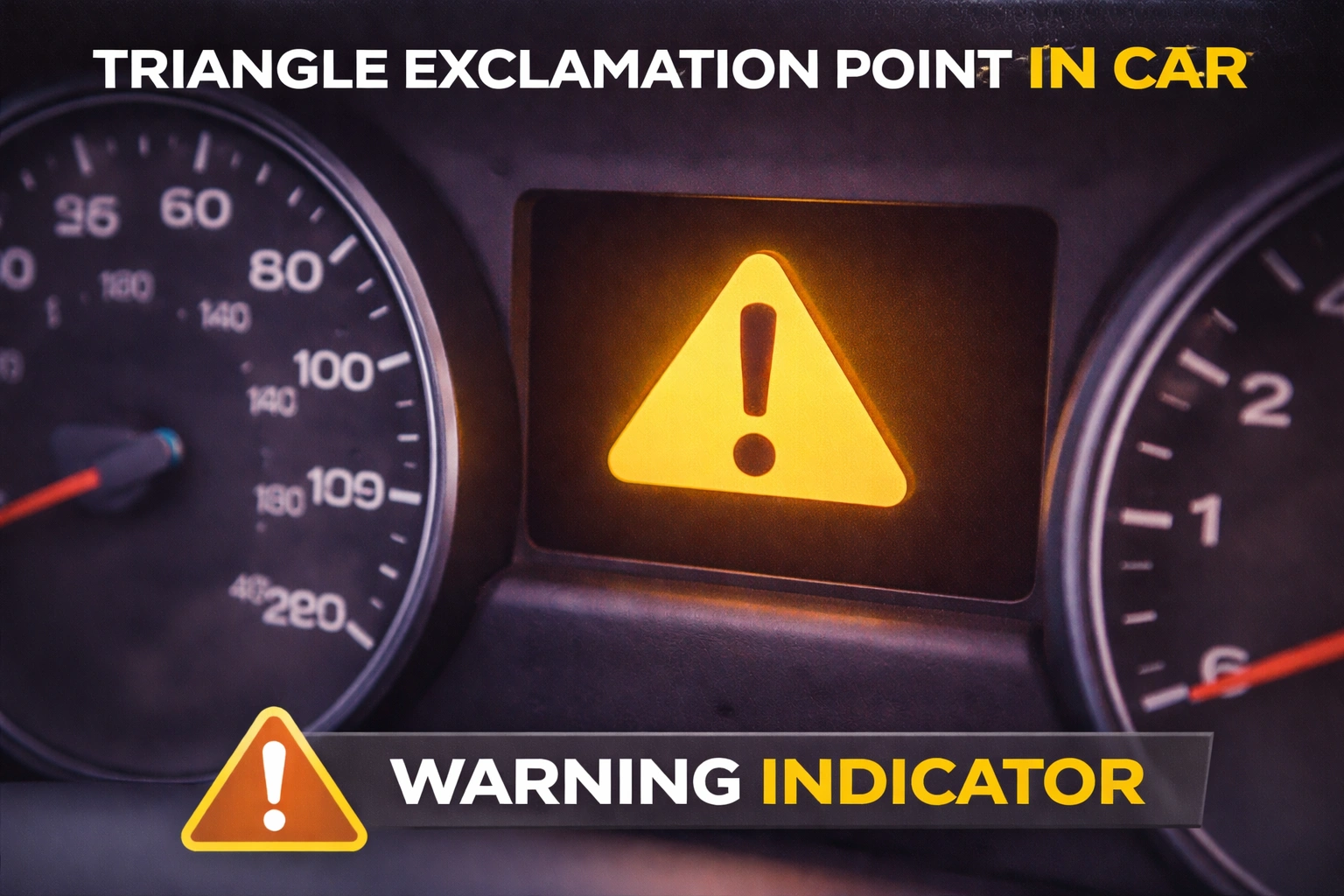
Dashboard symbols are designed to speak quickly and clearly. Among the most noticeable is the triangle with an exclamation point inside it. Unlike specific icons for oil pressure or battery charge, this symbol feels more general and often leaves drivers uncertain about its exact meaning. It is sometimes called the master warning light because it can represent several different alerts depending on the vehicle.
Manufacturers use this symbol as an attention signal. It tells the driver that something requires review, even if another detailed message appears on the display. The triangle itself does not always describe the problem directly. Instead, it works as a gateway warning connected to other systems such as traction control, stability control, hybrid components, or driver assistance features. The key to resolving it lies in reading accompanying messages and checking stored diagnostic codes rather than reacting to the icon alone.
Table of Contents
What The Triangle With Exclamation Point Represents
Master Warning Light Function
In many vehicles, the triangle with an exclamation mark serves as a master warning indicator. It activates when the car’s computer detects a condition that needs attention. Unlike dedicated symbols, this light does not specify oil pressure, coolant temperature, or brake issues directly. Instead, it prompts the driver to check the information screen for more details.
Vehicles such as the Toyota Prius and Nissan Altima commonly use this master warning approach. When illuminated, a message may appear describing the specific issue, such as low tire pressure, malfunction in a safety system, or hybrid battery concern.
This layered alert system allows manufacturers to keep dashboard designs simple while delivering detailed information through digital displays. Ignoring the triangle can lead to missed maintenance or safety concerns, so reviewing the associated message is always the first step.
Difference Between Red And Yellow Triangle Lights
Color plays an important role in interpreting dashboard warnings. A yellow or amber triangle usually signals a cautionary condition. It often indicates non-critical issues such as sensor alerts, minor malfunctions, or temporary deactivation of features.
A red triangle, however, signals urgency. It may relate to serious system faults requiring immediate attention. For example, hybrid vehicles sometimes display a red master warning light if high-voltage components detect abnormal behavior.
Recognizing the color helps determine the level of urgency. Yellow suggests prompt inspection, while red often calls for stopping the vehicle and seeking professional evaluation.
Common Reasons The Triangle Light Appears
Traction Control Or Stability System Alerts
One frequent cause of the triangle warning is traction or stability control intervention. If wheel slip occurs on wet or icy surfaces, the system may activate and briefly trigger the light. In these cases, the symbol may flash instead of remaining solid.
If the triangle stays illuminated, it could indicate a fault within the stability system. Wheel speed sensors, steering angle sensors, or electronic control modules may require inspection.
Vehicles like the Honda Accord integrate stability systems that rely on precise sensor input. Even minor sensor errors can activate the master warning symbol.
Routine inspection and diagnostic scanning identify whether the issue is temporary or mechanical.
Tire Pressure Monitoring System Issues
Low tire pressure commonly triggers the master warning light. While some vehicles display a dedicated tire symbol, others use the triangle icon combined with a message on the dashboard screen.
Driving with underinflated tires reduces fuel efficiency and compromises safety. Checking tire pressure and inflating to recommended levels often resolves the warning quickly.
In some cases, a faulty tire pressure sensor may trigger the alert. Sensor battery life varies and replacement may be necessary after several years.
Maintaining proper tire pressure prevents recurring warnings and promotes safe vehicle operation.
Hybrid Or Battery Related Warnings
Hybrid vehicles frequently use the triangle symbol for battery or electrical alerts. In models like the Toyota Camry Hybrid, the master warning light may indicate issues with the hybrid system or charging components.
Hybrid systems include complex electronics and high-voltage batteries. Even minor irregularities prompt caution signals.
If the triangle appears alongside a “Check Hybrid System” message, professional inspection becomes necessary. Continuing to operate with unresolved hybrid faults can reduce efficiency and increase repair costs.
Battery health, cooling systems, and control modules all contribute to hybrid system reliability.
What To Do When The Triangle Light Turns On
Check The Information Display Immediately
The first action should always involve reading the message center on the dashboard. Most vehicles provide additional context explaining why the light activated.
Some alerts require simple adjustments, such as tightening a fuel cap. Others may recommend immediate service.
Ignoring the message may allow minor problems to develop into larger repairs. Prompt review ensures informed action.
Use Diagnostic Tools For Clarity
If the message is unclear or persists, using an OBD-II scanner helps retrieve stored trouble codes. These codes provide detailed insight into system performance.
Professional technicians rely on these codes to identify electrical, mechanical, or sensor-related faults. Even if the vehicle appears to run normally, stored codes reveal hidden issues.
Clearing codes without resolving the underlying cause may result in recurring warnings. Accurate diagnosis prevents repeated alerts.
Preventive Maintenance And Monitoring
Regular vehicle maintenance reduces the likelihood of unexpected warnings. Keeping tires properly inflated, maintaining battery health, and servicing braking systems support overall reliability.
Software updates from manufacturers may also address system glitches. Staying informed about service bulletins ensures optimal system function.
The triangle exclamation point symbol acts as a central alert, reminding drivers that modern vehicles rely heavily on electronic monitoring. Responding calmly and methodically ensures continued safety and dependable performance.
When addressed promptly, most issues associated with this symbol can be resolved efficiently. Ignoring it, however, may allow minor concerns to evolve into significant mechanical challenges.

- How Families in UAE Manage Changing Vehicle Needs - March 4, 2026
- How Many Axles On A Car And What They Do - March 2, 2026
- Metal Shavings In Oil Causes And What It Means - March 2, 2026