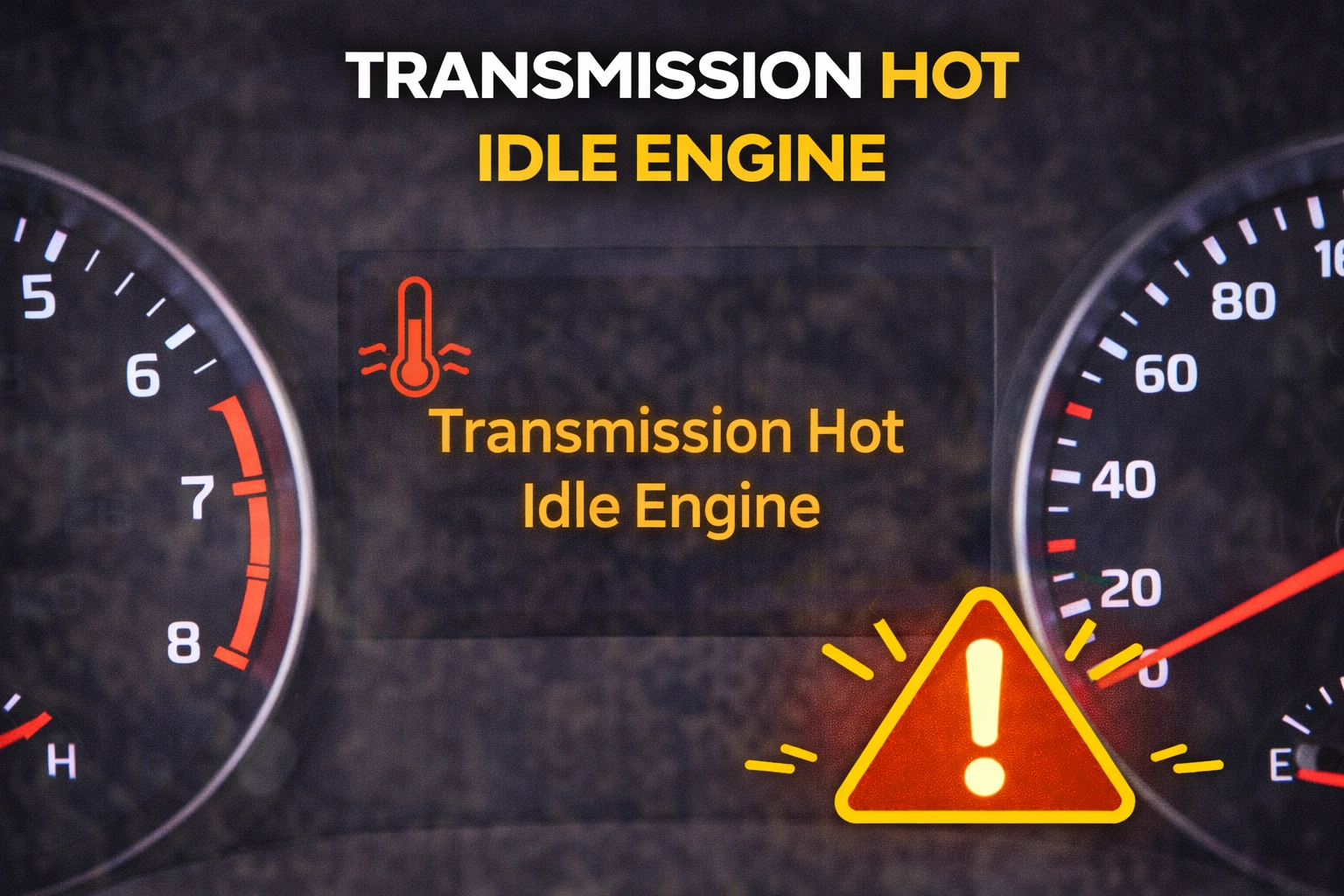
Modern vehicles constantly monitor internal systems to protect vital components. When a message such as “Transmission Hot — Idle Engine” appears on the dashboard, it is not a minor notification. It signals that transmission fluid temperature has risen beyond safe operating limits and that immediate action is required to prevent internal damage.
Automatic transmissions rely heavily on fluid not only for lubrication but also for cooling and hydraulic pressure. As temperatures rise, fluid begins to lose its protective properties. When that happens, clutch packs, seals, and internal components can suffer accelerated wear.
The message often appears during heavy towing, long uphill climbs, stop-and-go traffic, or extreme weather conditions. However, it can also point to deeper cooling system issues. Addressing the warning promptly protects the transmission from costly failure and preserves long-term vehicle reliability.
Table of Contents
What The Transmission Hot Idle Engine Warning Means
How Transmission Temperature Is Monitored
Modern vehicles use sensors to monitor transmission fluid temperature in real time. These sensors communicate with the engine control module or transmission control module. When fluid temperature exceeds a calibrated threshold, the system triggers a warning message instructing the driver to let the engine idle.
Idling allows the transmission pump to circulate fluid while reducing load on internal components. During idle, airflow through the radiator and transmission cooler can gradually lower fluid temperature.
This alert is a protective measure. It appears before severe damage occurs, giving the driver an opportunity to reduce strain and allow cooling.
Why Idling Helps Reduce Heat
When the vehicle is in motion under load, especially during towing or steep climbs, the transmission works harder to transfer engine power to the wheels. That process generates heat.
By shifting to park or neutral and allowing the engine to idle, the transmission pump continues moving fluid without additional torque demand. Cooling circuits within the radiator or auxiliary cooler remove excess heat more effectively during this reduced load condition.
Ignoring the message and continuing to drive aggressively can push temperatures beyond safe limits, increasing the risk of clutch material breakdown.
Common Causes Of Transmission Overheating
Low Or Degraded Transmission Fluid
Transmission fluid plays a dual role: lubrication and cooling. When fluid levels drop below specification, internal friction increases. Heat builds rapidly because there is insufficient fluid to absorb and dissipate thermal energy.
Old or contaminated fluid also loses viscosity and cooling efficiency. Over time, heat cycles degrade fluid additives. Burnt-smelling or dark-colored fluid signals that replacement may be necessary.
Routine fluid inspection and timely replacement reduce overheating risk significantly.
Towing Or Heavy Load Conditions
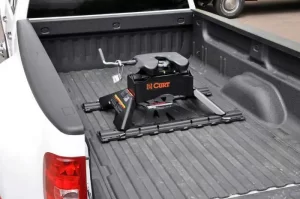
Vehicles towing trailers or carrying heavy cargo place added strain on the transmission. Torque converters generate more heat as they transfer power under load.
Without an adequate transmission cooler, temperatures can spike quickly during uphill climbs or in hot weather.
Manufacturers often recommend auxiliary coolers for frequent towing applications. Installing one improves thermal management and extends transmission life.
Faulty Transmission Cooler Or Radiator
Most automatic transmissions rely on a cooler integrated into the radiator or mounted externally. If the cooler becomes clogged or airflow is restricted, heat cannot dissipate efficiently.
Debris blocking the radiator fins or malfunctioning cooling fans further reduce heat exchange capacity.
Inspecting cooling components ensures proper airflow and fluid temperature control.
Internal Mechanical Wear
Worn clutch packs, slipping bands, or torque converter problems generate excess heat. When internal components fail to engage properly, friction increases.
Prolonged slipping creates rapid temperature spikes that trigger warning messages.
Professional diagnostic testing helps identify mechanical causes before complete transmission failure occurs.
Immediate Steps To Take When The Warning Appears
Safely Pull Over And Allow Idle Cooling
When the warning appears, reduce speed and find a safe location to stop. Shift into park or neutral and allow the engine to idle. Keep the hood closed initially to maintain controlled airflow through cooling systems.
Monitor the dashboard for temperature reduction. Once fluid temperature drops to a safe range, the warning may disappear.
Resuming travel should be done cautiously, avoiding heavy acceleration or towing until the root cause is addressed.
Check Fluid Level And Condition
After the vehicle cools, check transmission fluid level if accessible. Follow manufacturer procedures carefully, as some vehicles require checking fluid at operating temperature.
Look for discoloration or burnt odor. If fluid appears dark or contaminated, replacement may be necessary.
Maintaining proper fluid level prevents repeated overheating episodes.
Long Term Effects Of Ignoring Overheating
Clutch And Seal Damage
Excessive heat degrades clutch material and hardens internal seals. Once seals lose elasticity, hydraulic pressure may drop, causing slipping and delayed engagement.
Repeated overheating shortens transmission lifespan dramatically.
Repair costs escalate when internal damage progresses beyond minor fluid issues.
Fluid Breakdown And Contamination
High temperatures cause fluid oxidation. Oxidized fluid loses lubrication properties and forms varnish deposits inside valve bodies.
These deposits restrict hydraulic passages, leading to erratic shifting or harsh gear engagement.
Replacing fluid promptly after overheating reduces contamination risk.
Increased Repair Costs Over Time
Addressing minor cooling system issues or fluid maintenance typically costs less than full transmission rebuilds. Internal rebuilds require extensive labor and component replacement.
Taking early corrective action preserves internal components and prevents expensive mechanical failure.
Preventive Measures To Keep Transmission Cool
Regular Fluid Maintenance
Following manufacturer-recommended service intervals keeps fluid fresh and capable of absorbing heat. Severe-duty usage, including towing or frequent stop-and-go traffic, may require more frequent service.
Using the correct fluid specification ensures compatibility with internal clutch materials and hydraulic systems.
Routine maintenance reduces temperature spikes and prolongs service life.
Installing Auxiliary Cooling Systems
For drivers who tow regularly or operate in hot climates, adding an auxiliary transmission cooler provides extra protection.
These coolers increase fluid capacity and surface area for heat dissipation.
Improved cooling stabilizes temperature during demanding conditions.
Monitoring Driving Habits
Avoiding aggressive acceleration while towing, downshifting appropriately on hills, and allowing cooldown periods during long climbs reduce thermal stress.
Maintaining proper tire pressure and ensuring radiator cleanliness also support overall cooling efficiency.
Responsible vehicle operation helps prevent overheating warnings from recurring.
Bottom Line
The “Transmission Hot — Idle Engine” warning indicates that fluid temperature has exceeded safe limits and requires immediate attention. Allowing the engine to idle reduces load and promotes cooling, but identifying the root cause remains essential.
Low fluid levels, degraded fluid, towing stress, cooling system restrictions, or internal mechanical wear commonly contribute to overheating. Prompt diagnosis and maintenance protect clutch packs, seals, and hydraulic systems from damage.
Maintaining fluid health, ensuring effective cooling, and adopting responsible driving practices preserve transmission reliability and prevent costly repairs.

- How Families in UAE Manage Changing Vehicle Needs - March 4, 2026
- How Many Axles On A Car And What They Do - March 2, 2026
- Metal Shavings In Oil Causes And What It Means - March 2, 2026