
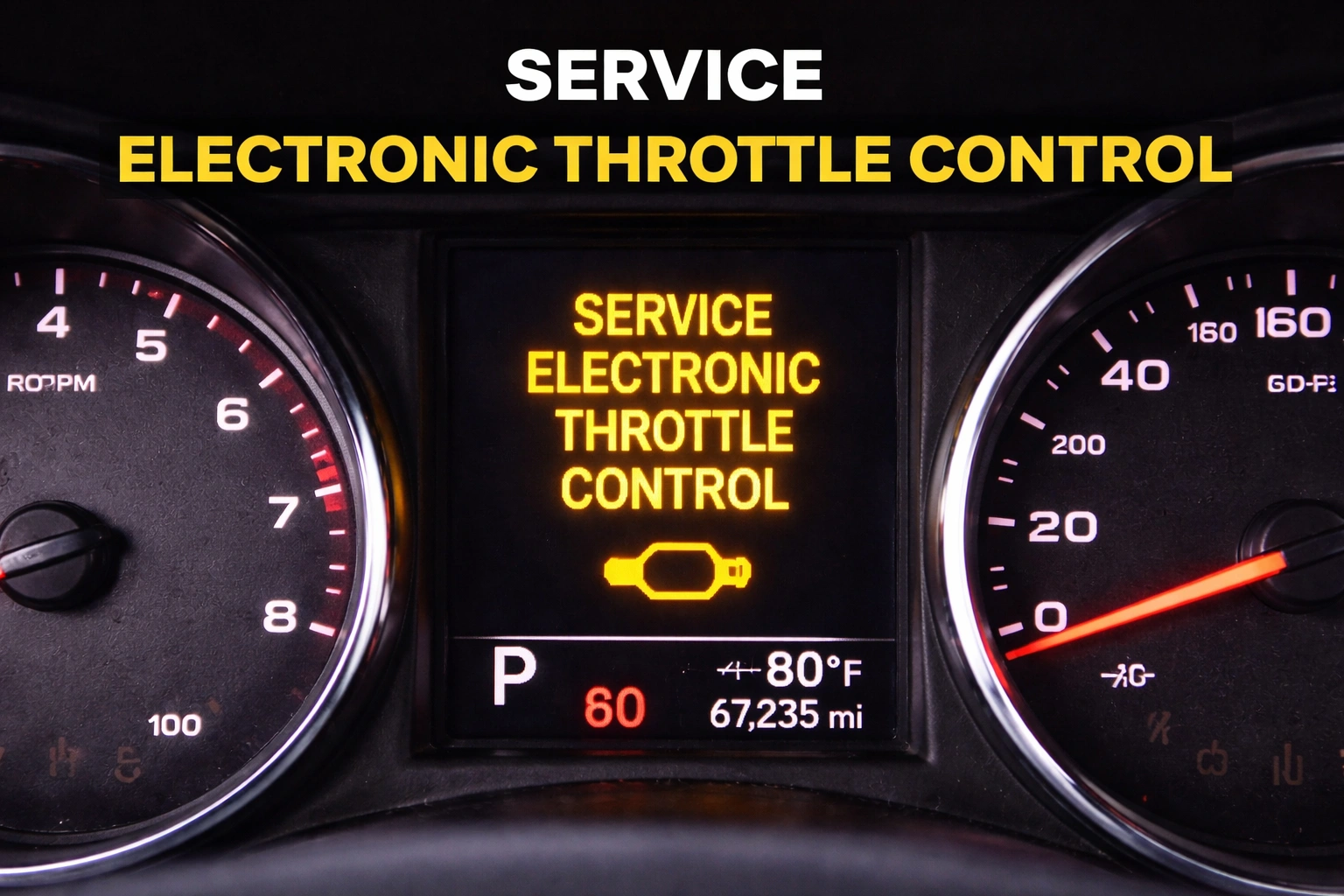
Modern engines no longer rely on a traditional cable connecting the gas pedal to the throttle plate. Instead, most vehicles use an electronic throttle control system. This setup replaces mechanical linkage with sensors, wiring, and a motorized throttle body. The system constantly monitors pedal input and adjusts airflow into the engine with precise electronic control.
When the dashboard displays “Service Electronic Throttle Control,” it signals that the system has detected a fault. In many cases, the vehicle may enter reduced power mode. Acceleration may feel sluggish, unresponsive, or inconsistent. The warning often appears suddenly, creating concern about engine safety and drivability.
Electronic throttle control plays a central role in performance, fuel management, emissions, and safety systems. A malfunction can affect more than just acceleration. Diagnosing the issue correctly prevents unnecessary parts replacement and ensures safe operation. Identifying the root cause requires examining sensors, wiring, throttle body function, and control module communication in a systematic way.
Table of Contents
How Electronic Throttle Control Works
From Pedal Position To Throttle Plate Movement
In an electronic throttle control system, the accelerator pedal contains position sensors. When the pedal is pressed, those sensors send voltage signals to the engine control module. The module interprets how far the pedal is pressed and calculates how much air the engine needs.
Instead of pulling a cable, the module sends commands to a motor inside the throttle body. That motor opens or closes the throttle plate accordingly. Multiple sensors inside the throttle body monitor the exact position of the plate and send feedback to the module.
This constant communication ensures that airflow matches driver input. The system also works with traction control, cruise control, and stability systems. Because of this integration, throttle control faults may affect multiple vehicle functions.
Built In Safety Monitoring
Electronic throttle systems include redundant sensors for safety. If one sensor sends incorrect data, the module compares it with backup readings. When discrepancies exceed acceptable limits, the system triggers a warning and may enter limp mode.
Limp mode limits engine power to prevent sudden acceleration or unsafe conditions. The vehicle remains operable but with restricted performance.
These safeguards prevent uncontrolled throttle movement. However, they also mean that minor electrical inconsistencies can activate warning messages.
Common Causes Of Service Electronic Throttle Control Warning
Throttle Body Carbon Buildup
Over time, carbon deposits accumulate inside the throttle body. This buildup restricts airflow and interferes with smooth throttle plate movement. The motor may struggle to achieve the commanded position.
When feedback sensors detect inconsistent plate movement, the system may log a fault code. Cleaning the throttle body often restores normal operation if buildup is the primary cause.
Regular maintenance reduces the risk of carbon-related throttle errors.
Faulty Throttle Position Sensor
Throttle position sensors provide feedback about plate angle. If the sensor sends inaccurate voltage signals, the engine control module may detect a mismatch between commanded and actual position.
Symptoms often include hesitation, surging, or inconsistent acceleration. Diagnostic scanning typically reveals specific fault codes related to sensor range or performance.
Replacing the throttle body assembly may be required if the sensor is integrated and non-serviceable.
Accelerator Pedal Position Sensor Issues
The pedal assembly contains multiple sensors that report pedal angle. If one sensor fails or sends erratic readings, the module may trigger a throttle control warning.
Inconsistent pedal signals can cause delayed throttle response or sudden reduction in power. Replacing the pedal assembly usually resolves the issue.
Electrical testing confirms signal consistency before replacement.
Wiring Or Connector Problems
Electronic throttle systems rely on stable electrical connections. Corrosion, damaged wiring, or loose connectors can interrupt signal flow.
Even minor voltage fluctuations may cause system faults. Inspecting wiring harnesses near the throttle body and pedal assembly helps identify visible damage.
Repairing wiring issues restores proper communication between components.
Symptoms Associated With Throttle Control Failure
Reduced Engine Power Mode
When the system detects a serious fault, it may activate reduced power mode. Acceleration becomes limited, and engine RPM may not exceed a specific threshold.
This mode prevents potential unsafe throttle operation. While the vehicle remains drivable, performance decreases significantly.
Reduced power mode signals the need for prompt inspection.
Rough Idle Or Stalling
Erratic throttle control may cause unstable idle speed. The engine may fluctuate between high and low RPM while stationary.
In severe cases, the engine may stall unexpectedly. Stalling increases safety risk, particularly in traffic situations.
Addressing throttle control faults quickly prevents further complications.
Check Engine Light And Diagnostic Codes
The service electronic throttle control message often appears alongside the check engine light. Diagnostic codes stored in the engine control module provide clues about the specific component involved.
Scanning for codes narrows the troubleshooting process. Clearing codes without addressing the underlying issue typically results in recurring warnings.
Accurate code interpretation ensures effective repair.
Diagnostic Approach
Scan For Stored Trouble Codes
Using an OBD-II scanner reveals fault codes related to throttle control. Codes may reference throttle position sensors, pedal position sensors, or motor circuit faults.
Reviewing freeze-frame data shows conditions present when the fault occurred. This information helps identify intermittent problems.
Diagnostic scanning should be the first step before replacing parts.
Inspect And Clean The Throttle Body
Remove the air intake hose to access the throttle plate. Inspect for carbon deposits and buildup.
Use appropriate throttle body cleaner and a lint-free cloth to remove deposits carefully. Avoid forcing the throttle plate manually unless manufacturer instructions permit.
Cleaning resolves many minor throttle-related issues.
Test Electrical Connections
Inspect wiring harnesses for visible damage. Check connectors for corrosion or loose terminals.
Voltage testing with a multimeter verifies proper signal flow between sensors and the control module.
Electrical integrity is critical for accurate throttle response.
Repair Costs And Long Term Reliability
Component Replacement Costs
Throttle body assemblies may vary in cost depending on vehicle make and model. Labor charges depend on accessibility.
Pedal assemblies and wiring repairs typically cost less but still require diagnostic confirmation.
Accurate diagnosis prevents unnecessary replacement of expensive components.
Preventive Maintenance Tips
Regular air filter replacement reduces debris entering the throttle body. Periodic inspection and cleaning minimize carbon buildup.
Maintaining battery health ensures stable voltage for electronic components.
Routine care extends the lifespan of throttle system parts.
What It Comes Down To
The service electronic throttle control warning indicates a fault within the system responsible for managing airflow into the engine. Causes range from carbon buildup and sensor failure to wiring problems and voltage instability.
Electronic throttle systems are designed with safety redundancies, which may trigger reduced power mode when irregularities occur. Prompt scanning, inspection, and proper repair restore normal performance.
Maintaining clean components and stable electrical connections prevents many common issues. Addressing warning messages early protects engine reliability and ensures smooth throttle response over time.

- How Families in UAE Manage Changing Vehicle Needs - March 4, 2026
- How Many Axles On A Car And What They Do - March 2, 2026
- Metal Shavings In Oil Causes And What It Means - March 2, 2026