
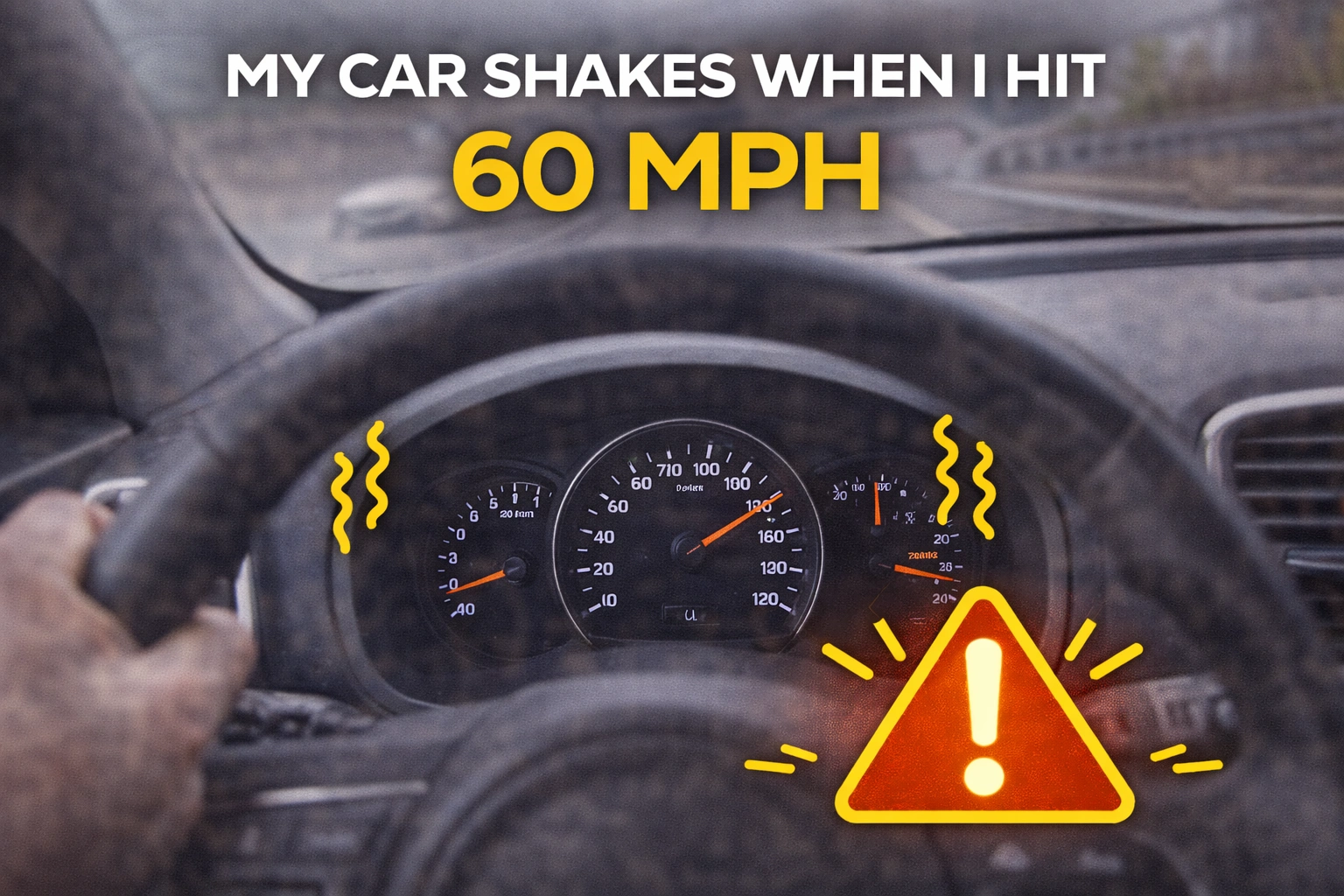
Highway speed reveals issues that city driving often hides. A vehicle may feel perfectly smooth at 30 or 40 mph, yet once the speedometer touches 60, a noticeable vibration appears. The steering wheel may tremble, the seat may buzz, or the entire cabin may feel unsettled. This type of shake rarely happens without reason.
Vehicles are engineered to remain stable at highway speeds. When shaking develops at a specific range like 55 to 70 mph, it usually points toward imbalance, alignment, suspension wear, or drivetrain irregularities. Ignoring the vibration may allow small issues to grow into larger mechanical problems.
Pinpointing the source requires careful observation. The location of the vibration, how it changes with braking, and whether it worsens during acceleration all provide clues. Addressing the issue early restores smooth performance and protects critical components from long-term damage.
Table of Contents
Tire And Wheel Related Causes Of Highway Vibration
Wheel Imbalance And Why It Appears Around 60 MPH
Wheel imbalance is one of the most common reasons a vehicle shakes at highway speeds. Tires and wheels rotate thousands of times per mile. Even slight uneven weight distribution creates centrifugal force. At lower speeds, that imbalance may be subtle. As speed increases, the force multiplies and becomes noticeable around 55 to 65 mph.
When balancing weights fall off or a new tire is installed without proper calibration, vibration develops. The steering wheel often shakes if the front wheels are affected. If the rear wheels are imbalanced, the vibration may be felt more in the seat or floor.
Balancing corrects the issue by redistributing weight evenly around the wheel assembly.
Tire Wear Patterns And Internal Damage
Uneven tread wear, flat spots, or internal belt separation can also trigger vibration. A tire with uneven tread depth does not roll smoothly. As it rotates, it creates repeated vertical motion that transfers into the suspension and cabin.
Internal belt damage may not always be visible from the outside. The tire can look inflated and intact, yet still cause shaking due to structural distortion.
Regular rotation and alignment help prevent uneven wear. Replacing damaged tires promptly restores stability and reduces stress on suspension components.
Bent Wheels Or Road Impact Damage
Potholes and curb strikes can bend wheels slightly. Even small bends disrupt balance and smooth rotation.
Aluminum wheels are especially vulnerable to impact damage. A bent rim may not cause immediate air loss but can create noticeable vibration at higher speeds.
Inspection on a balancing machine reveals whether the wheel itself is out of true. Repair or replacement eliminates the vibration source.
Suspension And Steering System Concerns
Worn Ball Joints And Tie Rod Ends
Suspension components maintain wheel alignment and stability. When ball joints or tie rod ends develop play, the wheel may not track straight at highway speed.
Loose steering parts allow minor oscillation, which becomes amplified as velocity increases. Drivers often describe this as a shimmy or wandering sensation.
Routine inspection of suspension joints helps detect wear before it becomes severe.
Wheel Bearings And Hub Assemblies
Wheel bearings support the wheel and allow it to spin smoothly. When bearings wear, they may create vibration along with a humming sound that increases with speed.
A failing hub assembly can also cause subtle wheel wobble. Over time, the vibration becomes more pronounced and may even affect braking performance.
Replacing worn bearings restores smooth rotation and prevents further drivetrain strain.
Alignment Issues And Camber Imbalance
Improper alignment can cause tires to contact the road unevenly. While alignment issues often show up as pulling to one side, they may also contribute to high-speed vibration.
Camber, toe, and caster angles must remain within manufacturer specifications. When these settings drift, tire wear accelerates and ride quality suffers.
Professional alignment ensures the wheels move in harmony at all speeds.
Drivetrain And Brake Related Sources Of Vibration
Warped Brake Rotors And Highway Speed Tremors
If the vibration intensifies during braking at 60 mph, warped brake rotors may be the cause. As the rotor rotates, uneven thickness creates pulsing through the brake pedal and steering wheel.
Brake-related vibration differs from constant shaking because it typically appears only while applying pressure to the pedal.
Resurfacing or replacing rotors resolves brake-induced vibration and restores smooth deceleration.
Driveshaft Imbalance In Rear Wheel Drive Vehicles
Rear-wheel-drive vehicles rely on a driveshaft to transfer power from the transmission to the rear axle. If the driveshaft becomes unbalanced or damaged, vibration may occur at certain speeds.
U-joint wear can also contribute. Loose universal joints create uneven rotation and shaking under acceleration.
Inspecting drivetrain components ensures power transfer remains stable at highway speeds.
Engine Mount Or Transmission Mount Wear
Worn mounts allow excessive movement of the engine or transmission. At certain speeds, this movement can transfer vibration into the cabin.
Although mounts primarily absorb engine vibration at idle, weakened rubber or hydraulic mounts may allow resonance during higher-speed cruising.
Replacing deteriorated mounts restores isolation and reduces cabin vibration.
Diagnostic Approach For Accurate Identification
Observing Where The Vibration Is Felt
Paying attention to vibration location helps narrow the cause. Steering wheel shake usually indicates front wheel or suspension issues. Seat or floor vibration often suggests rear wheel imbalance or drivetrain problems.
Noting whether vibration changes during braking or acceleration provides additional clues.
Careful observation prevents unnecessary part replacement and supports accurate diagnosis.
Road Testing And Professional Inspection
A controlled road test performed by a technician helps replicate the condition. Balancing equipment checks wheel distribution, while alignment racks confirm geometry settings.
If tire and suspension components test within specification, attention may shift toward drivetrain or brake inspection.
Systematic evaluation ensures the true cause is identified rather than guessing based on symptoms alone.
Repair Costs And Preventive Measures
Repair expenses depend on the specific component involved. Tire balancing typically costs less than replacing suspension parts. Wheel bearing replacement involves moderate labor depending on vehicle design. Driveshaft or hub assembly repair may require additional labor due to component access. Addressing minor imbalance early often prevents premature tire wear and further suspension damage later.
Maintaining Tire Health
Regular tire rotation, proper inflation, and periodic balancing reduce vibration risk. Maintaining recommended pressure ensures even contact with the road surface.
Monitoring tread depth helps identify irregular wear patterns before vibration becomes noticeable.
Scheduling Suspension Inspections
Annual inspections of steering and suspension components catch wear early. Replacing worn joints promptly protects alignment and prevents uneven tire wear.
Preventive maintenance keeps the vehicle stable at highway speeds and minimizes unexpected shaking.
Bottom Line
A vehicle that shakes at 60 mph signals imbalance, wear, or structural irregularity somewhere in the wheel, suspension, brake, or drivetrain systems. Tire imbalance remains the most common cause, yet worn suspension parts, bent wheels, or drivetrain issues may also contribute.
Identifying the exact source requires observation, professional testing, and careful inspection. Timely repair restores smooth operation, protects surrounding components, and ensures stable highway performance.

- How Families in UAE Manage Changing Vehicle Needs - March 4, 2026
- How Many Axles On A Car And What They Do - March 2, 2026
- Metal Shavings In Oil Causes And What It Means - March 2, 2026