
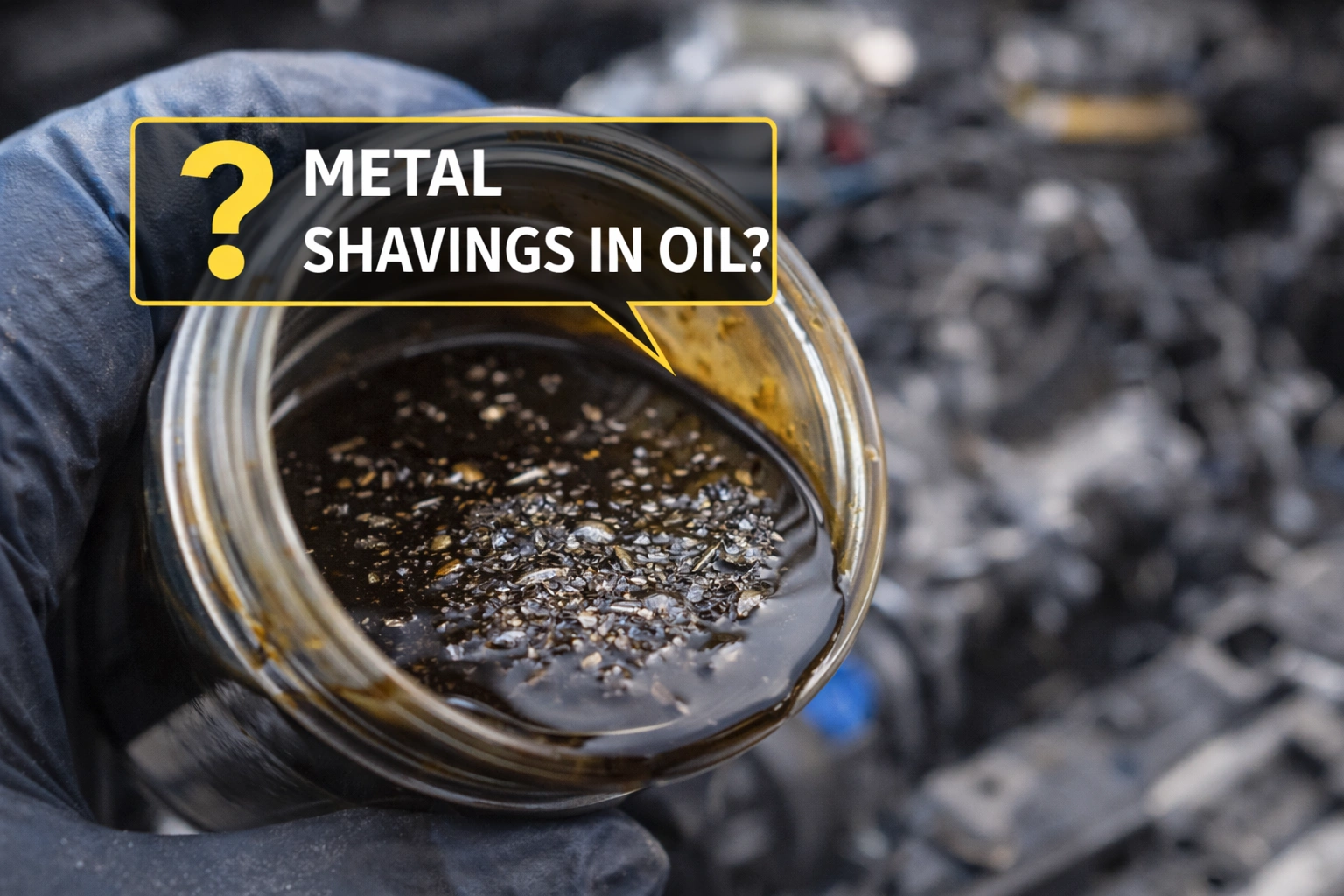
Engine oil is more than just a lubricant. It carries heat away from internal components, suspends contaminants, and forms a protective film between moving metal surfaces. During routine oil changes, most people expect to see darkened fluid due to normal combustion byproducts. However, finding metal shavings in oil can be alarming. Tiny metallic particles floating in the drained oil or caught in the oil filter often indicate internal engine wear.
Not all metal in oil signals catastrophic failure. Some fine metallic dust may appear during break-in periods of new engines or after major repairs. The concern grows when larger flakes or excessive glitter like particles become visible. The type, size, and quantity of metal fragments help determine whether the situation is minor or serious. Identifying the source early can prevent further damage and costly repairs.
Table of Contents
What Causes Metal Shavings In Engine Oil
Normal Break In Wear In New Or Rebuilt Engines
When an engine is new or recently rebuilt, internal components such as piston rings, camshafts, and bearings need time to seat properly. During this period, light friction between surfaces can produce fine metallic particles.
This break in wear typically appears as very small, almost powder like metallic dust in the oil. It should decrease significantly after the first few oil changes.
Vehicles like the Ford F-150 with newly installed crate engines may show slight metal content during initial service intervals.
Regular early oil changes during break in remove these particles and protect internal parts.
Excessive metal beyond early service intervals may signal a deeper issue.
Worn Bearings And Internal Engine Components
Engine bearings support the crankshaft and connecting rods. Over time, inadequate lubrication or contamination can cause bearing surfaces to wear.
When bearing material breaks down, it releases metal particles into the oil. These particles may appear as fine copper or silver colored flakes.
Worn camshafts or lifters can also shed metal under high stress conditions.
In vehicles such as the Chevrolet Silverado 1500, high mileage engines may develop bearing wear if oil changes were neglected.
Ignoring metal contamination increases the risk of severe engine damage.
Identifying The Type Of Metal In Oil
Fine Metallic Glitter Versus Large Flakes
The size of metal particles matters. Fine metallic shimmer may indicate early wear but not immediate failure.
Large chunks or sharp flakes, however, often suggest internal component breakdown.
Inspecting the oil filter can provide more information. Cutting open the filter allows examination of trapped debris.
Excessive metal accumulation inside the filter indicates significant internal wear.
Visual inspection helps determine urgency.
Color Differences And What They Suggest
Silver colored particles usually come from steel components such as crankshafts or camshafts.
Copper colored particles may originate from bearing layers, as many engine bearings contain copper alloys.
Magnetic particles can be tested using a small magnet. If the metal sticks, it likely comes from steel components.
Recognizing particle type aids in identifying the source of wear.
Professional oil analysis offers more precise results.
How Metal Shavings Affect Engine Performance
Increased Friction And Heat
Metal particles circulating in oil act as abrasives. Instead of protecting surfaces, contaminated oil may accelerate wear.
Increased friction generates additional heat, which can degrade oil quality further.
Over time, this cycle may lead to knocking sounds, reduced oil pressure, or engine misfire.
Vehicles such as the Toyota Camry may exhibit low oil pressure warnings if bearing wear becomes severe.
Timely detection prevents more extensive mechanical failure.
Risk Of Engine Seizure
If bearing failure progresses unchecked, the crankshaft may lose proper lubrication. This can cause the engine to seize.
Engine seizure occurs when internal components lock due to friction or overheating.
Repairing such damage often requires full engine replacement or major rebuilding.
Addressing metal contamination early significantly reduces this risk.
Routine oil inspection plays a critical role in prevention.
What To Do If You Find Metal In Oil
Start by assessing the amount and size of the particles. Minor shimmer in a new engine may not require immediate alarm.
For high mileage engines or large flakes, avoid extended driving. Schedule a professional inspection promptly.
Perform an oil change and replace the filter to remove contaminated oil.
An oil pressure test and diagnostic evaluation can identify internal wear.
In some cases, oil analysis laboratories provide detailed reports indicating metal type and concentration.
Taking action quickly prevents escalating damage.
Metal shavings in oil can range from normal break in wear to serious internal engine failure. The size, quantity, and color of the particles provide valuable clues about the source.
Routine oil changes, proper maintenance, and prompt inspection when abnormalities appear protect engine longevity. Clean oil supports smooth operation, while contaminated oil signals the need for careful attention and potential repair.

- How Families in UAE Manage Changing Vehicle Needs - March 4, 2026
- How Many Axles On A Car And What They Do - March 2, 2026
- Metal Shavings In Oil Causes And What It Means - March 2, 2026
