Modern engines rely on precise airflow control to remain stable at low speeds. When a vehicle is stopped at a signal or warming up in the driveway, the engine must keep running smoothly without help from the accelerator.
That balance is maintained by a small but critical component known as the idle air control valve. While most drivers never notice it during normal operation, its failure quickly becomes obvious.
Idle-related problems often feel unsettling. The engine may surge, dip, or shake without warning. In some cases, the vehicle may stall completely when coming to a stop. These behaviors are rarely random.
They usually reflect airflow that is no longer being managed correctly. Because idle speed is a sensitive operating state, even minor faults can cause noticeable symptoms.
Recognizing idle air control valve symptoms early prevents unnecessary strain on the engine and avoids costly secondary repairs.
Knowing how these symptoms appear, what causes them, and how they progress helps vehicle owners respond before a small airflow issue becomes a larger mechanical problem.
Table of Contents
How The Idle Air Control Valve Works
The idle air control valve manages airflow when the throttle is closed. Its job is simple in concept but precise in execution.
Role In Engine Idle Stability
When the accelerator pedal is not pressed, the throttle plate closes almost completely. Without an alternate airflow path, the engine would stall. The idle air control valve creates a controlled bypass, allowing a measured amount of air to enter the engine.
This airflow keeps the engine running at a steady idle speed. The engine control unit constantly adjusts the valve’s position to maintain balance, especially when load changes occur.
Interaction With Engine Loads
At idle, accessories such as air conditioning, power steering, and electrical systems increase engine load. The idle air control valve responds by allowing more air into the engine, preventing rpm drops.
When these systems disengage, the valve reduces airflow again. This constant adjustment happens in real time and usually goes unnoticed when functioning correctly.
Mechanical And Electronic Operation
Older systems use a stepper motor or solenoid to move the valve. Newer designs integrate idle control into electronic throttle systems.
Regardless of design, accurate movement is essential. Delayed or incorrect valve response leads directly to idle instability.
Common Idle Air Control Valve Symptoms
Symptoms related to idle air control valve failure often develop gradually. Paying attention to early signs prevents more severe issues later.
Rough Or Unstable Idle
One of the most noticeable symptoms is uneven idle speed. The engine may shake or feel unsteady while stopped.
Rpm may fluctuate without input from the driver. This occurs when the valve cannot regulate airflow consistently, causing the engine to alternate between too much and too little air.
Engine Stalling At Stops
Stalling is a common complaint when the idle air control valve sticks or responds slowly. When the vehicle slows down and the throttle closes, the engine depends entirely on controlled airflow.
If the valve fails to open as needed, the engine may stall during braking or when shifting into gear.
High Idle Speed
In some cases, the idle speed remains higher than normal. A valve stuck open allows excess air into the engine, causing elevated rpm even when the vehicle is stationary.
High idle can feel alarming and may increase fuel consumption unnecessarily.
Sudden Idle Changes When Accessories Engage
Turning on air conditioning or steering at low speed places additional load on the engine. A healthy idle control system compensates instantly.
When the valve fails, idle speed may drop sharply or surge unpredictably during these moments.
Secondary Signs That Often Accompany Idle Problems
Idle air control valve issues rarely appear in isolation. Several related symptoms often develop alongside idle instability.
Hard Starting In Cold Conditions
Cold starts require precise airflow control. A faulty valve may not allow enough air for proper combustion during startup.
This leads to extended cranking or repeated start attempts, especially in cooler temperatures.
Poor Fuel Efficiency
Improper idle control affects overall engine balance. When airflow fluctuates, fuel delivery adjusts constantly to compensate.
This inefficiency can reduce fuel economy over time, even if driving behavior remains unchanged.
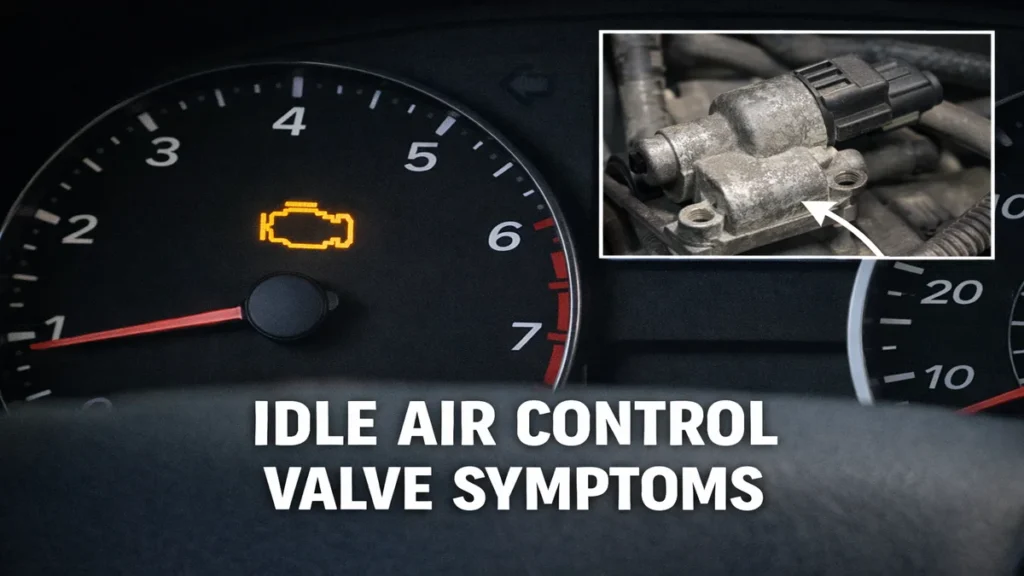
Check Engine Light Activation
Modern vehicles monitor idle control closely. When expected airflow values do not match actual readings, fault codes may be stored.
A check engine light often accompanies idle air control valve problems, even if drivability issues seem minor.
Increased Emissions Output
Unstable idle leads to incomplete combustion. This raises emissions levels and may cause inspection failures.
Emissions-related issues often prompt further diagnosis that reveals idle control faults.
Causes Behind Idle Air Control Valve Failure
Understanding why idle air control valves fail helps prevent repeat problems after repair.
Carbon And Dirt Buildup
Airflow passages gradually accumulate carbon deposits. Over time, these deposits restrict valve movement or block airflow channels.
Short trips, poor fuel quality, and infrequent maintenance accelerate buildup.
Electrical Faults
Idle air control valves rely on electrical signals for movement. Wiring damage, corrosion, or internal motor failure disrupts operation.
Electrical issues often produce intermittent symptoms that worsen over time.
Age And Heat Exposure
The valve operates in a high-temperature environment. Continuous exposure to heat and vibration degrades internal components.
Older vehicles are more susceptible simply due to long-term wear.
Vacuum Leaks Affecting Idle Control
While not a direct valve failure, vacuum leaks interfere with idle regulation. The engine receives unmetered air, forcing the idle control system to compensate.
This constant correction can mimic valve failure symptoms.
Risks Of Ignoring Idle Air Control Valve Symptoms
Continuing to drive with idle-related issues creates stress on multiple engine systems.
Increased Engine Wear
Repeated stalling and unstable idle place strain on internal components. Bearings, mounts, and accessories experience unnecessary stress.
Over time, this accelerates wear and reduces engine longevity.
Damage To Emissions Components
Incomplete combustion caused by unstable airflow allows unburned fuel into the exhaust system.
Catalytic converters and oxygen sensors are particularly vulnerable to damage from prolonged imbalance.
Reduced Reliability In Traffic Conditions
Stalling at intersections or during low-speed maneuvers creates safety concerns.
Loss of power steering or brake assist during stalls increases risk, especially in busy traffic.
Diagnosing Idle Air Control Valve Problems
Accurate diagnosis prevents unnecessary part replacement and speeds up repair.
Observing Idle Behavior Patterns
Idle issues often follow patterns. Rough idle when cold, stalling with accessories on, or high rpm after startup provide valuable clues.
Consistent patterns point toward airflow regulation rather than fuel or ignition faults.
Visual Inspection
Inspecting the valve and surrounding passages often reveals carbon buildup.
Disconnected hoses or damaged wiring near the valve should also be checked.
Diagnostic Scanning
Scan tools retrieve fault codes related to idle control. Live data helps determine whether the valve responds to engine load changes.
Lack of response usually confirms a malfunction.
Functional Testing
Technicians may command the valve open and closed to verify movement.
Valves that fail to respond or move erratically require cleaning or replacement.
Cleaning Versus Replacing The Idle Air Control Valve
Not every idle air control issue requires replacement.
When Cleaning Is Effective
If buildup is the primary issue, cleaning the valve and throttle body often restores normal operation.
Using proper cleaners and following correct procedures is essential to avoid damage.
When Replacement Is Necessary
Electrical failures, internal motor damage, or worn mechanisms require replacement.
Continued operation with a defective valve risks further engine problems.
Cost And Repair Time Considerations
Idle air control valve repairs are usually straightforward. Labor time is moderate, and parts costs vary by vehicle.
Addressing the issue early minimizes overall expense.
Preventive Maintenance For Idle Stability
Preventive care reduces the likelihood of idle control issues returning.
Regular Throttle And Air Intake Cleaning
Keeping airflow passages clean reduces carbon buildup.
Scheduled cleaning maintains smooth idle behavior.
Quality Fuel And Consistent Service Intervals
Using quality fuel reduces residue formation. Timely oil changes and inspections support overall engine health.
Preventive maintenance protects sensitive components like idle control systems.
Addressing Warning Lights Promptly
Ignoring early warning lights allows small problems to grow.
Prompt diagnosis preserves engine balance and reliability.
Final Thoughts
Idle air control valve symptoms often appear quietly, yet they signal an important imbalance in engine airflow. Rough idle, stalling, high rpm, and inconsistent behavior at stops are more than inconveniences. They indicate a system struggling to maintain stability during one of the engine’s most delicate operating states.
Addressing these symptoms early protects engine components, preserves emissions performance, and restores confidence at every stop. Whether the solution involves cleaning, repair, or replacement, timely action keeps the engine running smoothly and reliably. A stable idle reflects proper airflow control, balanced combustion, and long-term mechanical health.

- How Families in UAE Manage Changing Vehicle Needs - March 4, 2026
- How Many Axles On A Car And What They Do - March 2, 2026
- Metal Shavings In Oil Causes And What It Means - March 2, 2026