An engine is built around precision. Crankshafts rotate within microscopic clearances. Pistons travel thousands of times per minute inside finely honed cylinders. Camshafts open and close valves with exact timing. All of this movement depends on a thin, pressurized layer of oil separating metal from metal. Remove that protective film, and the entire balance begins to collapse.
Running without oil is one of the fastest ways to destroy an engine. Damage can begin in seconds and escalate rapidly if the engine continues operating. In some cases, the engine shuts down immediately. In others, it keeps running long enough to create hidden internal wear that shows up later as knocking, low compression, or persistent oil pressure problems.
The challenge is determining how severe the damage is after oil has been lost and restored. Some engines survive brief oil starvation with minimal harm. Others suffer internal scoring or bearing failure that requires major repair. Careful inspection, listening for mechanical changes, and performing targeted tests reveal whether the engine can recover or needs rebuilding.
Table of Contents
What Happens Inside An Engine When Oil Is Lost
Loss Of Lubrication And Immediate Friction
Oil forms a protective barrier between moving components. This barrier reduces friction and prevents direct metal contact. When oil pressure drops to zero, that protective layer disappears almost instantly. Bearings, crankshaft journals, cam lobes, and piston skirts begin touching metal-to-metal.
Friction increases dramatically. Heat builds quickly because oil also absorbs and carries away thermal energy. Without lubrication, surfaces start to score and overheat. Bearing material may smear or melt under extreme stress. Even a short period of operation without oil can begin this process.
The longer the engine runs dry, the greater the internal damage. Every additional second increases the risk of permanent wear.
Bearing Damage And Clearance Changes
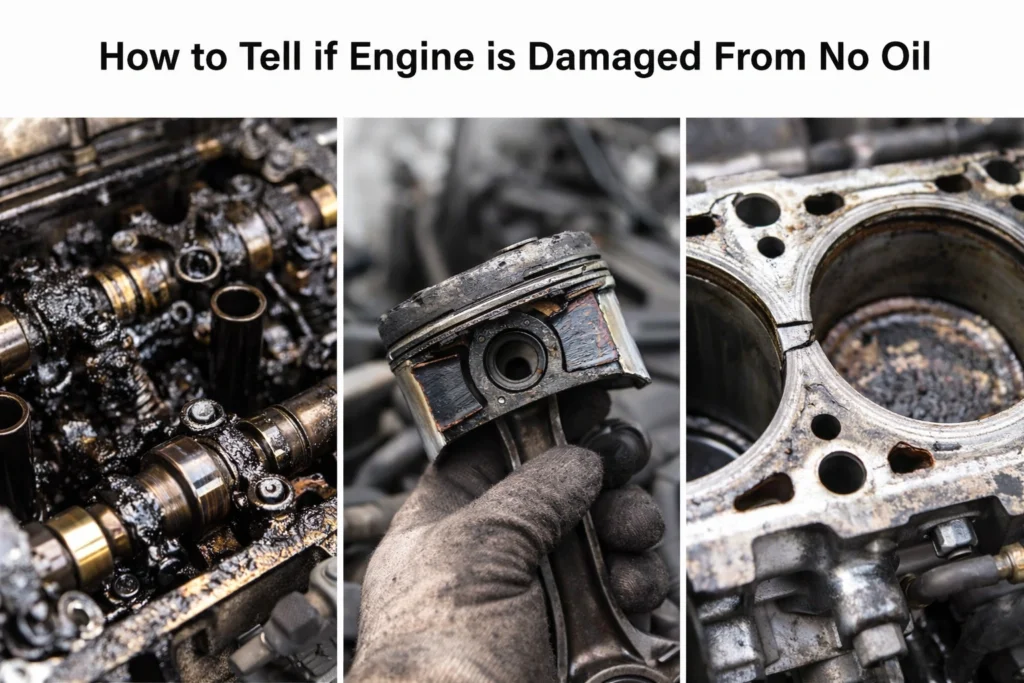
Engine bearings are thin metal shells designed to support rotating components. They depend entirely on oil pressure to float the crankshaft and connecting rods on a thin film. When oil is absent, those bearings no longer float. Instead, they grind.
As bearings wear, internal clearances increase. Larger gaps reduce oil pressure further once oil is reintroduced. This often leads to persistent low oil pressure readings after the incident.
Spun bearings, where the bearing shell rotates inside its housing, represent severe failure. This condition requires major disassembly and repair.
Cylinder Wall And Piston Scoring
Pistons move up and down thousands of times per minute. Oil coats cylinder walls to reduce friction and seal compression. Without that coating, piston skirts scrape against the cylinder walls. Scoring appears as vertical scratches along the bore.
Scoring reduces compression and increases oil consumption. Damaged cylinder walls may require honing, oversized pistons, or complete block replacement.
Internal wear in this area significantly affects engine longevity.
Warning Signs After An Engine Runs Without Oil
Persistent Knocking Or Tapping Sounds
A knocking sound from the lower engine area often indicates bearing damage. This noise becomes more noticeable as engine speed increases. It may sound like a rhythmic metallic tapping.
Top-end ticking noises may signal camshaft or lifter wear. Even after refilling oil, damaged surfaces continue making noise because material has already been removed.
Any new or louder mechanical sound following an oil-loss event should be taken seriously.
Low Oil Pressure Even After Refilling
If oil has been restored but the warning light remains on or pressure readings stay low, internal wear is likely present. Worn bearings allow oil to escape through enlarged clearances, reducing overall system pressure.
Testing with a mechanical gauge confirms whether the issue is electrical or mechanical.
Persistent low pressure after refilling oil often indicates internal damage rather than a simple oil level issue.
Smoke From Exhaust
Blue smoke from the exhaust may appear if piston rings or cylinder walls were damaged during oil starvation. Damaged rings allow oil to enter the combustion chamber and burn.
Excessive smoke following an oil incident points toward deeper internal wear.
Monitoring exhaust output provides clues about engine condition.
Diagnostic Tests To Confirm Internal Damage
Compression Testing
A compression test measures the sealing ability of each cylinder. Damaged piston rings or scored cylinder walls reduce compression.
Consistent readings across all cylinders suggest internal integrity remains intact. Large differences between cylinders signal localized damage.
This test requires minimal disassembly and provides valuable insight.
Leak Down Testing
A leak down test introduces compressed air into each cylinder and measures how much escapes. It helps pinpoint whether air escapes through rings, valves, or head gasket.
This method identifies specific internal failures more precisely than compression testing alone.
Combining both tests provides a clearer picture of engine health.
Inspecting Oil For Metal Particles
Draining the oil and examining it under good lighting may reveal metallic debris. Shiny flakes or fine glitter indicate internal wear.
Cutting open the oil filter and inspecting its contents offers further evidence. Significant metal presence suggests bearing or component failure.
Debris analysis often confirms mechanical damage.
Repair Options Based On Damage Severity
Minor Wear With Stable Oil Pressure
If the engine runs quietly and oil pressure returns to normal after refilling, damage may be minimal. In such cases, changing the oil again after a short interval helps remove contaminants.
Close monitoring is recommended. Regular checks ensure no delayed symptoms appear.
Minor incidents sometimes leave engines largely unaffected if addressed quickly.
Moderate Internal Damage
If compression is slightly reduced or faint knocking occurs, partial engine repair may be required. Replacing bearings or honing cylinders may restore function.
This involves removing the oil pan, inspecting crankshaft surfaces, and replacing worn components.
Repair cost depends on extent of damage and labor requirements.
Severe Failure And Engine Seizure
Complete seizure occurs when internal components lock due to overheating and friction. In these cases, rebuilding may be impractical. Installing a remanufactured engine often becomes the most efficient solution.
Severe damage may include warped crankshafts, cracked pistons, and destroyed bearings.
Replacement ensures reliability when rebuilding is not cost-effective.
Preventing Oil Related Engine Damage
Monitor Oil Level Frequently
Checking oil level regularly prevents unexpected depletion. Vehicles with high mileage may consume oil between changes.
Maintaining proper level protects bearings and internal surfaces.
Consistent checks reduce risk significantly.
Address Oil Leaks Promptly
Small leaks from gaskets or seals may seem minor but gradually reduce oil supply. Repairing leaks early prevents total loss.
Ignoring slow leaks increases the chance of severe engine damage.
Respond Immediately To Oil Warning Lights
Oil pressure warnings demand immediate action. Shutting off the engine as soon as safely possible prevents extended operation without lubrication.
Quick response often makes the difference between minor repair and full replacement.
Final Thoughts
Running an engine without oil creates rapid internal stress. Damage may affect bearings, pistons, cylinder walls, and camshafts. The severity depends on how long the engine operated without lubrication and how quickly corrective action was taken.
Clear warning signs include knocking sounds, persistent low oil pressure, reduced compression, and metal debris in drained oil. Diagnostic tests such as compression and leak down analysis confirm internal condition.
Minor incidents may allow recovery if addressed immediately. Severe cases require rebuilding or replacement. Preventive care, regular oil checks, and prompt attention to warning indicators remain the most effective ways to protect engine longevity.

- How Families in UAE Manage Changing Vehicle Needs - March 4, 2026
- How Many Axles On A Car And What They Do - March 2, 2026
- Metal Shavings In Oil Causes And What It Means - March 2, 2026