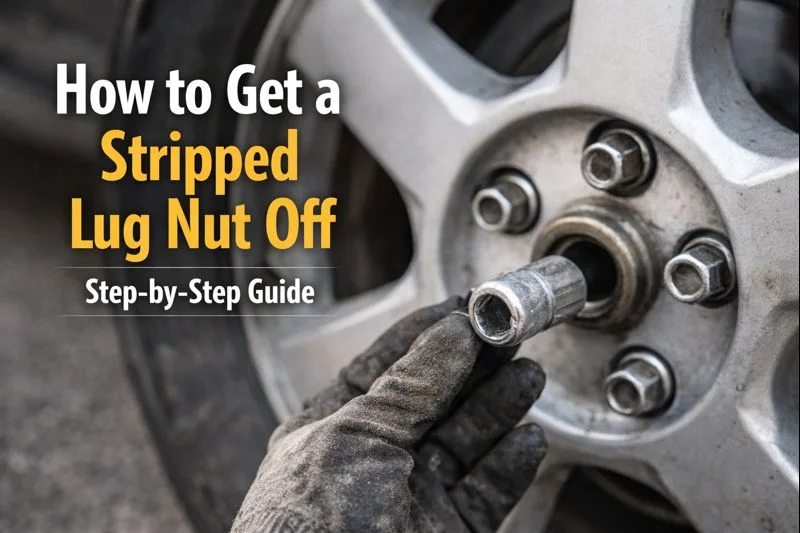
Lug nuts are small parts with a big responsibility. They hold the wheels securely against the hub, keeping everything stable while the vehicle moves over bumps, corners, and uneven roads. When one of these lug nuts becomes stripped, a simple task like changing a tire or rotating wheels can turn into a frustrating problem.
The rounded edges leave nothing for a wrench to grip, and applying more force often makes things worse instead of better.
This issue happens more often than people realize. Over-tightening, using the wrong socket, corrosion, or rushed work at a repair shop can all damage the nut’s shape. The good news is that a stripped lug nut does not mean the wheel is permanently stuck.
With patience, the right approach, and an understanding of how each method works, it can be removed safely. This article walks through practical techniques, explains why they work, and helps you choose the right solution without harming the wheel, studs, or yourself.
Table of Contents
Understanding What A Stripped Lug Nut Really Is
A stripped lug nut is one where the outer edges have been worn down or rounded off. Lug nuts are designed with sharp, defined corners so tools can grip them securely. When those corners are damaged, standard sockets slip instead of turning the nut.
Stripping usually occurs when the wrong socket size is used or when excessive force is applied. Impact tools used without care can also cause damage, especially on softer lug nuts.
Once the shape is compromised, the challenge becomes creating enough grip to turn the nut without causing further damage.
Why Stripped Lug Nuts Are So Common
Several factors contribute to this problem. One common reason is over-tightening. Lug nuts tightened beyond recommended torque levels become extremely difficult to remove later.
Corrosion is another factor. Rust forms between the nut and the wheel stud, increasing resistance and weakening the nut’s edges during removal.
Poor-quality lug nuts made from softer metals can also deform more easily, especially after repeated tightening and loosening.
Safety Comes First Before Any Removal Attempt
Before attempting removal, safety must be the top priority. The vehicle should be parked on level ground with the parking brake engaged. Wheel chocks should be placed to prevent rolling.
If the wheel is still on the vehicle, loosening lug nuts should be done before lifting the car. Using jack stands instead of relying solely on a jack is essential once the vehicle is raised.
Eye protection and gloves are also recommended, especially when using tools that involve hammering or cutting.
Starting With The Least Aggressive Method
The best approach is to begin with methods that cause minimal damage. Jumping straight to extreme techniques can damage the wheel or stud unnecessarily.
Sometimes, a slightly smaller socket can still grip enough material to turn the nut. A six-point socket is preferred because it grips flat surfaces rather than corners.
Tapping the socket onto the nut with a hammer can help it seat tightly and improve grip.
Using A Hammered-On Socket For Extra Grip
This method works well when the lug nut is partially stripped but still has some shape left. A socket slightly smaller than the nut is placed over it and hammered on firmly.
The tight fit allows the socket to bite into the metal, creating enough friction to turn the nut. Slow, steady pressure on the wrench increases the chance of success.
This technique is simple, inexpensive, and often effective when done carefully.
Applying Penetrating Oil To Reduce Resistance
Penetrating oil can make a significant difference, especially when corrosion is involved. Spraying the oil around the base of the lug nut allows it to seep into the threads.
Allowing time for the oil to work is important. Waiting several minutes or even longer improves results.
Reduced friction means less force is needed, lowering the risk of further damage.
Using Locking Pliers When Space Allows
Locking pliers can be effective if there is enough room to grip the nut from the outside. The jaws should be tightened as much as possible to prevent slipping.
Once locked in place, turning the pliers slowly can break the nut free. This method works best when the nut protrudes enough to allow a solid grip.
It may take patience, but it avoids damage to the wheel if done carefully.
Specialized Lug Nut Removal Sockets
Lug nut removal sockets are designed specifically for stripped nuts. These sockets have reverse spiral grooves inside that dig into the nut as it turns.
As torque is applied, the socket grips tighter instead of slipping. This makes them highly effective for severely rounded nuts.
These tools are widely available and often worth the investment if you encounter this issue more than once.
Heat As A Controlled Solution
Applying heat can help break the bond between the nut and stud caused by rust or corrosion. Heat causes metal to expand, loosening the grip.
A propane torch is commonly used, but caution is essential. Heat should be applied to the nut only, not the wheel or surrounding components.
Allowing the nut to cool slightly before attempting removal can also help as the metal contracts.
Cutting A Slot For A Chisel Or Flat Tool
When grip-based methods fail, cutting a slot across the nut can create a new turning surface. A rotary tool or small grinder is typically used.
Once a slot is cut, a hammer and chisel can be used to tap the nut counterclockwise. This method requires precision to avoid wheel damage.
It is more aggressive but can be effective as a last resort.
Breaking The Lug Nut Off Completely
In extreme cases, breaking the nut off may be the only option. This involves splitting the nut using a chisel or specialized tool.
Once the nut cracks, it can be removed without turning. The wheel stud may need replacement afterward.
This method should be used only when other options fail, as it increases repair work.
Protecting The Wheel During Removal
Wheels, especially alloy ones, are easily damaged. Using protective covers or layers of tape around the lug nut can help prevent scratches.
Careful tool placement and controlled force reduce the risk of cosmetic damage.
Protecting the wheel saves money and preserves appearance.
What To Do After The Lug Nut Is Removed
Once the stripped nut is off, inspection is important. The wheel stud should be checked for damage or thread wear.
If the stud shows signs of damage, replacing it prevents future issues. Installing a new lug nut of good quality is also essential.
Never reuse a stripped lug nut, even if it appears functional.
Proper Installation To Prevent Future Problems
Correct installation plays a major role in prevention. Using a torque wrench ensures lug nuts are tightened to manufacturer specifications.
Avoiding impact tools for final tightening reduces the risk of over-tightening.
Applying a light amount of anti-seize compound, when appropriate, can help prevent corrosion without affecting torque accuracy.
Common Mistakes That Make Things Worse
Applying excessive force too quickly often worsens stripping. Using adjustable wrenches instead of proper sockets also increases risk.
Ignoring early signs of resistance and continuing to force the nut damages both nut and stud.
Patience and proper tools make a significant difference.
When Professional Help Makes Sense
If tools are limited or the risk of damage feels high, professional help may be the better option. Tire shops and mechanics have specialized tools and experience.
The cost of professional removal may be lower than repairing damaged wheels or studs caused by improper attempts.
Knowing when to stop is part of a smart approach.
Cost Considerations And Tool Investment
Basic tools like penetrating oil, sockets, and locking pliers are affordable and useful for many tasks.
Specialized removal sockets cost more but often save time and frustration.
Comparing tool cost against potential repair bills helps justify the investment.
Building Confidence Through Experience
Successfully removing a stripped lug nut builds confidence and mechanical understanding. Each method teaches how force, grip, and friction interact.
With experience, future issues become easier to handle calmly and safely.
Knowledge turns a frustrating problem into a manageable task.
Final Thoughts
A stripped lug nut can feel like a roadblock, but it is rarely the end of the road. With the right approach, patience, and tools, it can be removed without damaging your wheel or compromising safety.
Starting with gentle methods and progressing carefully helps avoid unnecessary harm. Understanding why each technique works empowers you to choose the best solution for your situation. Once resolved, proper installation and maintenance ensure the problem does not return, keeping wheel service simple and stress-free in the future.

- How Families in UAE Manage Changing Vehicle Needs - March 4, 2026
- How Many Axles On A Car And What They Do - March 2, 2026
- Metal Shavings In Oil Causes And What It Means - March 2, 2026