
A modern vehicle depends on accurate information to operate smoothly, efficiently, and reliably. One small component plays a much bigger role than most drivers realize: the mass air flow sensor.
This sensor constantly measures how much air enters the engine and sends that data to the engine control unit, which then calculates the correct amount of fuel to inject.
When this information is accurate, the engine runs clean, responsive, and efficient. When it is not, problems slowly begin to appear.
Over time, dust, oil vapors, and microscopic debris can coat the sensing element inside the sensor. This contamination interferes with its ability to read airflow correctly. The result is an engine that may feel sluggish, consume more fuel than usual, or idle inconsistently.
Many people assume these symptoms automatically mean expensive repairs, but in many cases, a careful cleaning restores proper function. This guide explains the process in a clear, practical way, based on real workshop experience, so you can understand the job fully and do it with confidence.
Table of Contents
Understanding The Role Of The Mass Air Flow Sensor
The mass air flow sensor is part of the engine’s air intake system. It sits between the air filter and the intake manifold, monitoring the volume and density of incoming air. Using this data, the engine computer determines how much fuel is needed for efficient combustion.
Modern engines rely heavily on this sensor. Even a slight inaccuracy can upset the air-to-fuel ratio. Too much fuel leads to poor efficiency and carbon buildup, while too little fuel can cause hesitation, misfires, and increased engine temperatures. Because of this, a clean and properly functioning sensor is essential for overall engine health.
Why The Sensor Becomes Dirty Over Time
Even with regular maintenance, contamination is unavoidable. Air entering the engine always carries tiny particles with it. While the air filter captures most debris, extremely fine dust can still pass through. Additionally, oil vapors from the crankcase ventilation system often circulate through the intake, leaving residue on the sensor.
Vehicles driven in dusty environments, heavy traffic, or areas with poor air quality are especially prone to sensor contamination. Engines fitted with reusable oiled air filters also tend to accumulate residue faster if the filter is over-oiled. Over months or years, this buildup becomes enough to affect readings.
Common Symptoms Of A Dirty Sensor
The effects of a contaminated sensor usually develop gradually. Because of this, many drivers adjust to the changes without realizing something is wrong.
Common signs include:
- Rough or unstable idle
- Slower throttle response
- Reduced fuel economy
- Hesitation during acceleration
- Occasional stalling at low speeds
These symptoms can have multiple causes, but cleaning the sensor is one of the simplest and safest diagnostic steps to take early on.
Why Cleaning Is Often Better Than Immediate Replacement
Many people assume that once a sensor causes problems, it must be replaced. In reality, most sensors fail because of contamination rather than electrical damage. Cleaning removes the buildup and allows the sensor to function as designed.
Replacement should only be considered if cleaning has no effect or if the sensor shows signs of physical or electrical failure. Attempting cleaning first can save a significant amount of money and prevent unnecessary part replacement.
Tools And Supplies Required
One of the advantages of this task is that it requires very few tools. Preparation is simple, and no specialized equipment is needed.
You will need:
- A dedicated mass air flow sensor cleaning spray
- A screwdriver or socket that fits the mounting screws
- Clean hands or disposable gloves
- A clean, well-lit workspace
It is important to use only a cleaner specifically designed for sensors. Other chemicals may leave residue or damage sensitive components.
Safety Precautions Before Starting
Before beginning any work under the hood, basic safety steps should never be skipped.
Make sure to:
- Turn the engine completely off
- Allow the engine to cool
- Disconnect the battery if recommended by the manufacturer
- Work in a well-ventilated area
These precautions protect both you and the vehicle’s electronic components.
Finding The Mass Air Flow Sensor
The sensor is usually mounted on the intake duct between the air filter housing and the engine. It is typically secured with a small number of screws and has an electrical connector attached.
If you are unsure of its location, consult the vehicle’s service manual. Avoid guessing, as removing the wrong component can lead to unnecessary complications.
Removing The Sensor Carefully
Removal should always be done gently. The sensor housing and internal element are delicate.
Follow these steps:
- Unplug the electrical connector by pressing the release tab
- Remove the mounting screws using the correct tool
- Lift the sensor straight out without twisting or forcing it
- Place it on a clean, stable surface
If resistance is felt, double-check for additional fasteners rather than pulling harder.
Inspecting The Sensor Before Cleaning
Before applying any cleaner, take a moment to inspect the sensor. Look inside the housing and observe the sensing element.
You may notice:
- Dust or discoloration
- Oily residue
- A dull or cloudy appearance
Even if contamination is subtle, cleaning can still improve accuracy.
Proper Cleaning Technique
This step requires patience rather than physical effort.
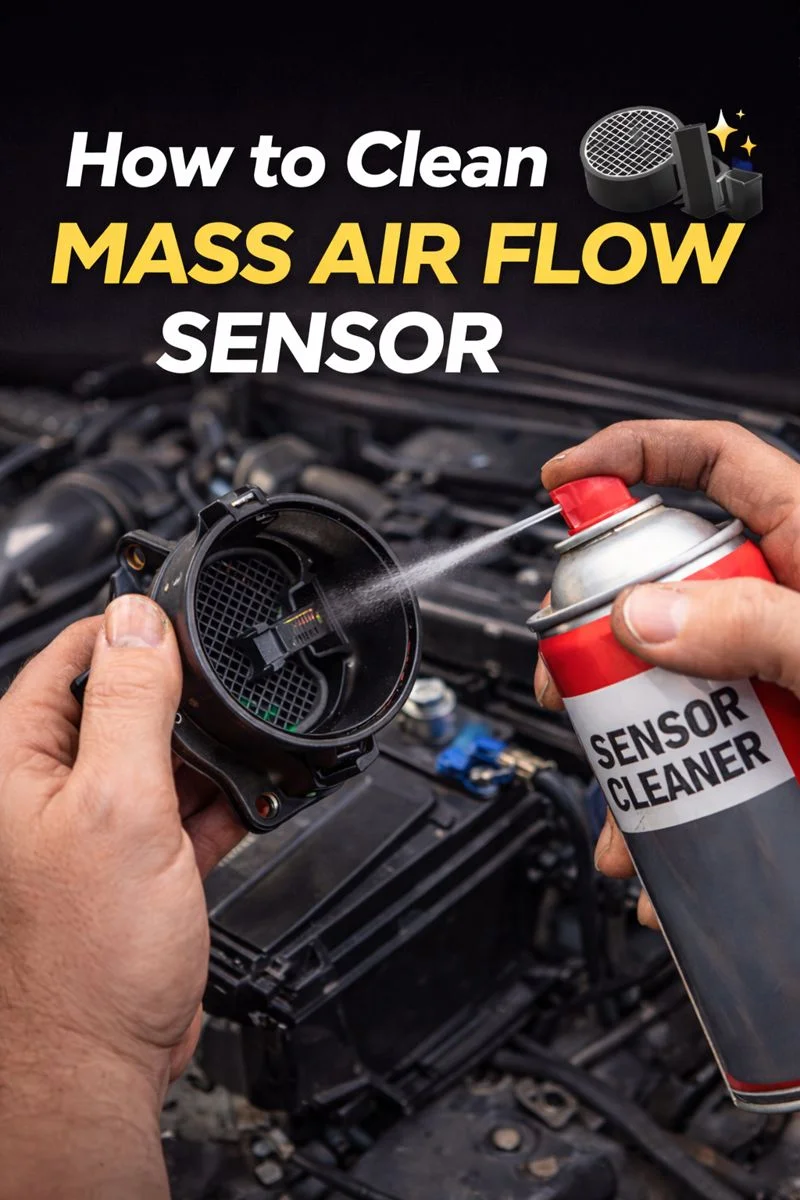
Hold the sensor so the sensing element is visible. Spray the cleaner directly onto the element using short, controlled bursts. Allow the liquid to flow over the surface and carry contaminants away naturally.
Never touch the sensing element with fingers, cloths, or tools. Do not attempt to wipe or scrub it. The cleaner is designed to evaporate without leaving residue, making physical contact unnecessary and risky.
Repeat the spraying process until the surface appears clean.
Allowing Proper Drying Time
After cleaning, place the sensor in a clean, dust-free area. Allow it to air-dry completely. Most cleaners evaporate quickly, but waiting at least ten to fifteen minutes ensures no moisture remains.
Reinstalling the sensor while wet can damage electronics or cause incorrect readings. Patience at this stage prevents avoidable problems.
Reinstalling The Sensor Correctly
Once the sensor is fully dry, carefully reinstall it into the intake housing.
Steps to follow:
- Align the sensor properly with its mounting position
- Tighten the screws evenly without over-tightening
- Reconnect the electrical connector securely
- Reassemble any intake components removed earlier
Everything should fit smoothly. If something does not line up, stop and check orientation.
What Happens After Cleaning
When the engine is started, it may idle slightly differently for a short time. This is normal as the engine control unit adjusts to accurate airflow data again.
After a brief drive, many drivers notice:
- Smoother engine operation
- Improved throttle response
- More stable idle
- Better fuel efficiency
Results may vary, but noticeable improvement is common when contamination was the main issue.
How Often Cleaning Should Be Done
There is no universal schedule, but general experience suggests cleaning every 20,000 to 30,000 kilometers for most vehicles. Those driven in dusty environments or using oiled air filters may benefit from more frequent inspection.
Regular cleaning is a preventive measure that helps avoid performance issues before they become noticeable.
Mistakes That Commonly Cause Damage
Many sensor failures occur due to improper handling rather than age.
Avoid these mistakes:
- Touching the sensing element
- Using non-approved cleaning chemicals
- Blowing compressed air directly onto the sensor
- Attempting to scrub or wipe residue
The sensor is designed to be cleaned chemically, not mechanically.
How A Dirty Sensor Affects Engine Health Over Time
Ignoring contamination for long periods can lead to broader engine issues. Incorrect airflow readings affect fuel delivery, which can result in inefficient combustion.
Over time, this may cause:
- Increased fuel consumption
- Carbon buildup on internal engine components
- Premature wear on spark plugs
- Added strain on emissions-related parts
Regular attention to the sensor helps maintain long-term engine reliability.
Practical Advice From Workshop Experience
Based on hands-on experience, a few simple habits make a significant difference:
- Replace or clean the air filter regularly
- Avoid over-oiling reusable filters
- Ensure intake hoses are sealed properly
These small steps reduce contamination and extend sensor life.
Cleaning Versus Replacement: Making The Right Choice
Cleaning should always be the first step when symptoms suggest airflow issues. Replacement becomes necessary only when cleaning produces no improvement or when internal electronics fail.
Choosing maintenance before replacement reflects a practical and cost-effective approach to vehicle care.
Final Thoughts
Cleaning a mass air flow sensor is one of the most effective yet overlooked maintenance tasks. It requires minimal tools, basic care, and a bit of patience. When done correctly, it restores accurate airflow readings, improves engine response, and helps maintain fuel efficiency.
More importantly, understanding the process empowers vehicle owners to take proactive control of maintenance rather than reacting to problems after they appear. A clean sensor supports balanced combustion, smoother operation, and long-term engine health. That makes this simple task an essential part of responsible vehicle ownership.

- How Families in UAE Manage Changing Vehicle Needs - March 4, 2026
- How Many Axles On A Car And What They Do - March 2, 2026
- Metal Shavings In Oil Causes And What It Means - March 2, 2026