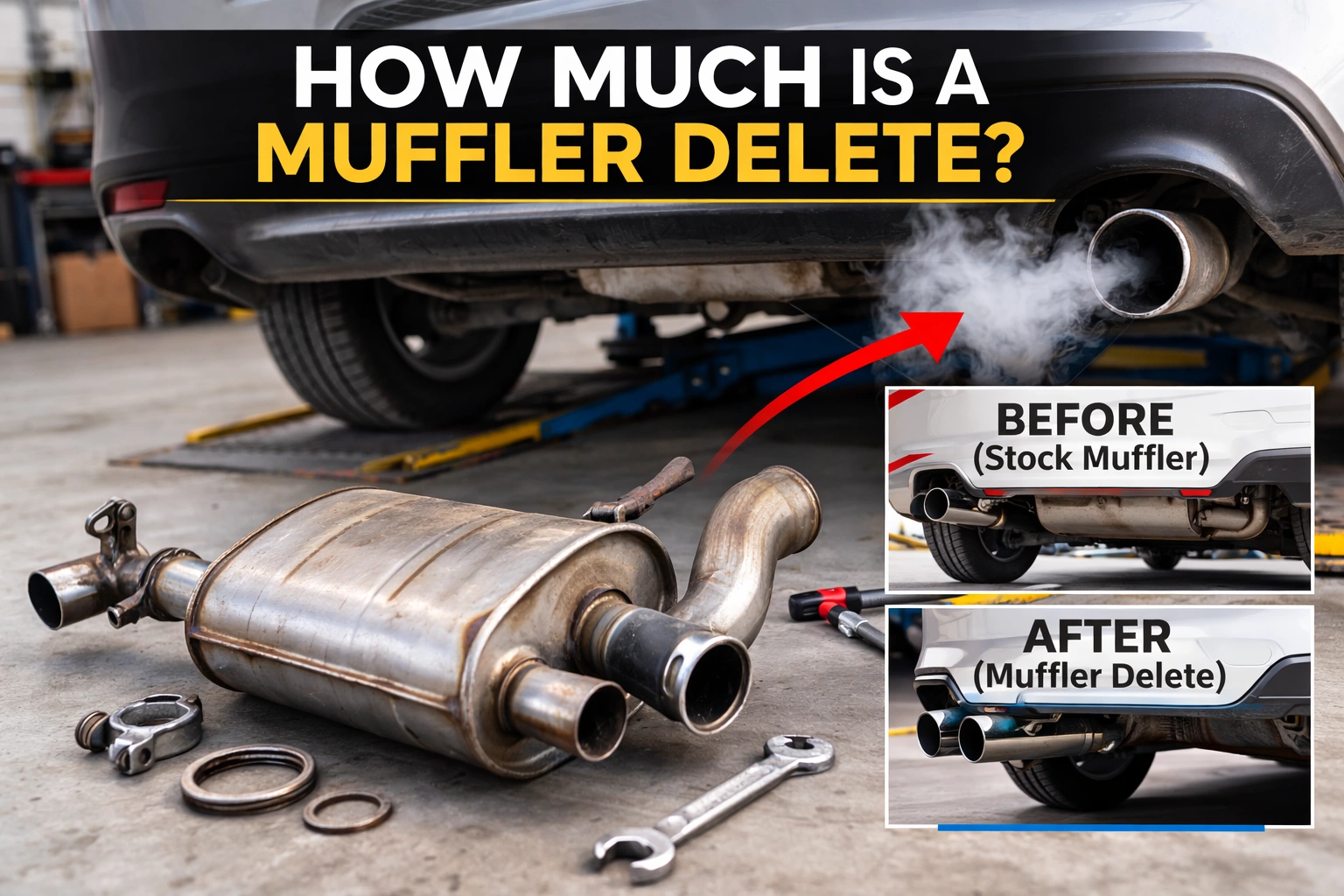
Exhaust sound plays a powerful role in how a vehicle feels. For some drivers, a quiet factory setup feels too restrained. For others, a louder and more aggressive exhaust tone adds personality. One of the simplest modifications people consider is a muffler delete. Instead of replacing the entire exhaust system, the muffler is removed and replaced with straight piping.
At first glance, the modification seems straightforward and inexpensive. The muffler is cut out, a pipe section is welded or clamped in place, and the vehicle produces a deeper, louder tone. However, the decision involves more than sound preference. Cost, legality, inspection requirements, performance changes, and long-term impact must all be evaluated carefully.
A muffler delete is often marketed as a budget-friendly modification. In reality, the final cost depends on labor, vehicle design, exhaust configuration, and regional regulations. Evaluating these factors before committing ensures the modification aligns with both expectations and local laws.
Table of Contents
Average Cost Of A Muffler Delete
Labor And Installation Expenses
The primary cost of a muffler delete comes from labor. Most exhaust shops charge for cutting the existing muffler and welding in a straight pipe section. Depending on the vehicle layout and shop rates, labor typically ranges from moderate to higher pricing brackets.
Simple rear-wheel-drive vehicles with easy access to the exhaust system cost less because technicians can complete the work quickly. Vehicles with complex routing or limited access may require additional time.
If welding is involved, professional installation ensures secure connections and leak prevention. Clamp-on installations may reduce labor time but can compromise long-term durability.
Labor costs vary by location. Urban areas generally charge more than rural regions.
Parts And Materials Cost
The actual piping material is usually inexpensive compared to labor. Straight pipe sections, clamps, or welding supplies represent a relatively small portion of total expense.
However, some owners choose stainless steel piping instead of standard steel. Stainless steel increases corrosion resistance but raises cost.
Optional additions such as new exhaust tips or custom bends also add expense. While the muffler itself is removed, some owners upgrade other components at the same time.
Material choice and customization significantly influence final pricing.
Factors That Affect Total Muffler Delete Cost
Vehicle Type And Exhaust Layout
Compact cars often have simpler exhaust systems compared to large trucks or performance vehicles. Dual exhaust systems require additional piping and labor.
Trucks with extended wheelbases may require longer pipe sections. Performance vehicles may have tightly packed exhaust routing that complicates installation.
Vehicles with active exhaust systems or electronic valves may require additional modifications to prevent warning lights.
Each vehicle platform influences cost differently.
Regional Pricing Differences
Labor rates vary widely by region. Areas with higher cost of living typically have higher shop hourly rates.
Additionally, local regulations may require specific inspection procedures after exhaust modification. Compliance checks can increase overall expense.
Before scheduling work, requesting quotes from multiple shops provides realistic cost comparison.
Transparent pricing avoids unexpected charges.
Quality Of Workmanship
Choosing a reputable exhaust shop may cost more initially but reduces the risk of leaks or poor welds. Low-quality installation can lead to rattling, vibration, or premature pipe failure.
Proper alignment ensures exhaust gases flow smoothly and avoids contact with underbody components.
Quality workmanship protects against future repair costs.
Sound Changes And Performance Impact
Exhaust Tone After Muffler Removal
The primary motivation behind a muffler delete is sound. Removing the muffler reduces sound dampening, resulting in a louder and deeper exhaust note.
Four-cylinder engines may produce a sharper tone, while V6 and V8 engines often generate a more aggressive rumble.
However, sound can become excessively loud at highway speeds. Drone inside the cabin may occur during steady cruising.
Personal tolerance for increased noise should be considered before modification.
Impact On Engine Performance
A muffler delete does not typically provide significant horsepower gains. Modern exhaust systems are designed to balance sound control and flow efficiency.
In some cases, minor improvements in exhaust flow may slightly affect throttle response. However, noticeable power increases usually require full exhaust upgrades rather than simple muffler removal.
Engine tuning is rarely required for a basic delete, but performance gains are modest.
Sound changes often outweigh measurable performance differences.
Legal And Inspection Considerations
Noise Regulations And Fines
Many regions enforce noise regulations limiting exhaust sound levels. A muffler delete may exceed legal limits, resulting in fines or inspection failure.
Local laws vary significantly. Some states or countries prohibit removal of factory-installed mufflers entirely.
Checking regulations before modification prevents legal complications.
Non-compliant vehicles may require restoration to pass inspection.
Emissions Testing Implications
A muffler delete does not directly remove catalytic converters. However, exhaust system alterations may attract closer inspection during emissions testing.
While emissions output remains largely unaffected, visual inspection rules may differ by jurisdiction.
Maintaining compliance protects against penalties and repair costs.
Long Term Effects And Ownership Considerations
Cabin Comfort And Daily Usability
Increased exhaust volume may become tiring during daily commuting. Highway drone can reduce comfort, particularly in vehicles without sound insulation upgrades.
Long-term ownership satisfaction depends on personal noise tolerance.
Considering how often the vehicle is used for long trips helps determine suitability.
Resale Value Impact
Modifications can influence resale value. Some buyers prefer stock configurations. Others may value enhanced sound.
Returning the vehicle to factory condition before sale may require reinstalling a muffler.
Keeping the original muffler allows flexibility later.
Insurance And Warranty Concerns
Certain warranties may be affected by exhaust modifications. Insurance policies may also require disclosure of modifications.
Reviewing coverage terms avoids complications during claims.
Clear communication with providers ensures compliance.
Cost Comparison With Alternative Exhaust Upgrades
A muffler delete represents one of the least expensive exhaust modifications. However, cat-back exhaust systems provide improved sound and flow while maintaining balanced acoustics.
Aftermarket mufflers offer deeper tone without excessive drone.
Though more expensive, full systems often deliver higher quality sound and refined performance.
Weighing budget against long-term satisfaction guides decision making.
The Practical Bottom Line
A muffler delete typically costs less than a full exhaust replacement, with most expense tied to labor and installation. The modification primarily changes exhaust sound rather than significantly increasing performance.
Factors such as vehicle type, regional labor rates, material choice, and legal regulations influence total cost. While the upfront price may seem attractive, long-term considerations including noise comfort, legality, and resale value should be evaluated carefully.
For some drivers, the deeper tone enhances enjoyment. For others, the increased noise may outweigh benefits. Careful planning ensures the modification aligns with both expectations and practical realities.

- How Families in UAE Manage Changing Vehicle Needs - March 4, 2026
- How Many Axles On A Car And What They Do - March 2, 2026
- Metal Shavings In Oil Causes And What It Means - March 2, 2026