
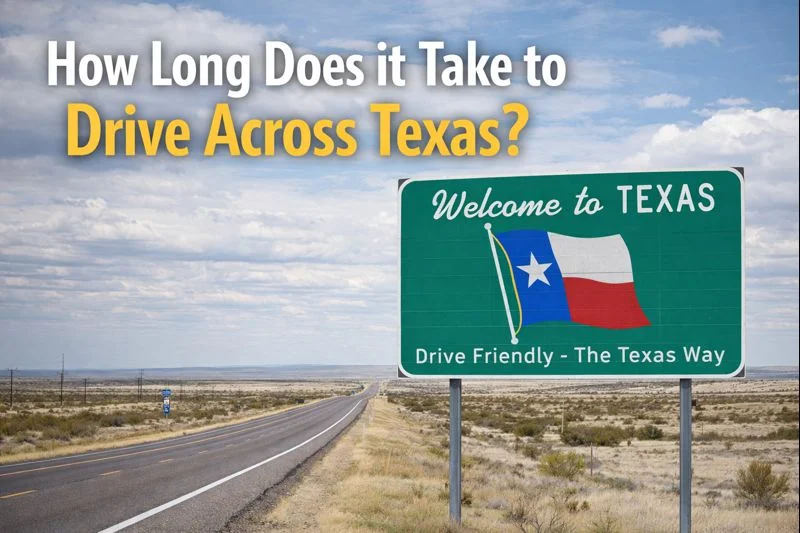
Texas is not just big in reputation; it is genuinely massive in real-world scale. For anyone planning a long road trip, relocating, or simply curious, the question of how long it takes to drive across Texas often comes up with a sense of disbelief.
Many first-time travelers underestimate the sheer size of the state, assuming it can be crossed in a single relaxed day. The reality is more complex and far more interesting.
Driving across Texas is not a single experience but many different ones depending on direction, route choice, traffic conditions, and personal travel style. Flat plains stretch endlessly in some areas, while cities, deserts, forests, and rolling hills define others. The journey can feel quick in parts and surprisingly slow in others.
This article explores the true driving time across Texas in a clear, practical way. It breaks down distances, common routes, realistic travel times, and factors that influence the journey, helping you plan with confidence rather than guesswork.
Table of Contents
Understanding The Size Of Texas In Real Terms
Texas covers an enormous amount of land, spanning roughly 800 miles from east to west and about 900 miles from north to south at its longest points. To put that into perspective, driving across Texas can take longer than driving across several entire countries.
Because of its size, there is no single answer to how long it takes to drive across the state. The total time depends heavily on where you start, where you finish, and how you define “across.”
Some routes cut straight through open land with minimal stops, while others pass through major metropolitan areas that add time through congestion and slower speeds.
East To West Travel Time Across Texas
Driving from the eastern edge of Texas to the western border is one of the most common ways people think about crossing the state. This route often starts near the Louisiana border and ends near New Mexico.
The distance for this journey is roughly 800 miles, depending on the exact start and end points. Under ideal conditions, driving non-stop at highway speeds, this trip can take around 12 to 14 hours.
However, real-world driving includes fuel stops, food breaks, traffic delays, and fatigue. For most drivers, completing this route comfortably requires closer to 14 to 16 hours spread over one or two days.
North To South Travel Time Across Texas
Traveling from the northern part of Texas down to the southern tip presents a different experience. This route often begins near the Oklahoma border and ends near the Gulf Coast or the border with Mexico.
The distance is similar to east-to-west travel, often around 850 to 900 miles depending on the route. Driving time typically falls between 14 and 17 hours without extended stops.
This direction often includes more varied terrain and weather changes, which can influence driving speed and comfort.
Diagonal Routes And Their Impact On Time
Some drivers cross Texas diagonally, such as from the northeast corner to the southwest or vice versa. These routes are often the longest in terms of distance.
A diagonal drive can exceed 900 miles and may take 15 to 18 hours or more. These routes usually require overnight stops unless the driver is highly experienced and prepared for long-distance travel.
Diagonal travel often passes through multiple climate zones and population centers, adding to the variety but also the complexity of planning.
How Highway Choice Affects Driving Time
Texas has an extensive highway system, but not all highways offer the same experience. Major interstates allow higher speeds and smoother travel, while smaller highways may slow progress.
Routes that pass through large cities such as Dallas, Houston, or San Antonio can add significant time during peak traffic hours. Choosing bypass routes or timing travel outside rush hours can save hours.
Long stretches of rural highways allow steady speeds but offer fewer services, requiring more careful fuel and rest planning.
Speed Limits And Realistic Average Speeds
Texas is known for having some of the highest speed limits in the United States, with certain highways allowing speeds up to 75 or even 80 miles per hour.
Despite high posted limits, average speeds are often lower due to traffic, construction, weather, and enforcement zones. A realistic long-distance average speed is closer to 60 to 65 miles per hour.
Using realistic averages provides more accurate travel time estimates and helps avoid rushed driving.
Fuel Stops And Rest Breaks Add Up
Even the most efficient long-distance drive requires regular stops. Fuel stops alone can add 15 to 30 minutes every few hours, depending on efficiency and planning.
Rest breaks are essential for safety, especially on drives exceeding 10 hours. Stretching, meals, and hydration all add time but reduce fatigue-related risks.
Over a full-day drive across Texas, stops can easily add two to three extra hours to total travel time.
Traffic Conditions In Major Metro Areas
Texas is home to several large metropolitan regions, each with its own traffic challenges. Passing through or near these areas during busy periods can slow progress significantly.
Morning and evening rush hours are the most impactful. Accidents, road work, and weather events can further complicate timing.
Planning routes to avoid peak congestion or traveling through cities during off-peak hours can make a noticeable difference.
Weather And Seasonal Influences
Weather plays a larger role than many drivers expect. Heavy rain, fog, or strong winds can reduce visibility and require slower speeds.
Summer heat can increase vehicle strain and driver fatigue, while winter conditions in northern regions may introduce ice or freezing rain.
Checking forecasts along the entire route is essential because weather can vary dramatically across the state on the same day.
Terrain And Landscape Variations
Texas landscapes change significantly from region to region. Flat plains allow steady speeds, while hilly or desert areas may require more cautious driving.
Mountainous areas in the west can include winding roads and elevation changes that reduce speed.
These variations add interest to the journey but also influence total travel time.
Driving Non-Stop Versus Splitting The Trip
While it is technically possible to drive across Texas in one long day, many drivers choose to split the trip into two days.
Breaking the drive reduces fatigue, improves safety, and allows time to rest properly. It also makes the journey more enjoyable and manageable.
For most people, dividing the drive into two segments of seven to nine hours is the most practical approach.
Planning Overnight Stops Strategically
If the trip is split, choosing overnight stops carefully matters. Stopping near major highways with good services saves time the next day.
Avoiding dense city centers for overnight stays can reduce morning delays.
Planning rest stops in advance helps maintain momentum without unnecessary detours.
Vehicle Preparation Before A Long Texas Drive
Long-distance driving puts stress on vehicles. Ensuring proper tire pressure, fluid levels, and brakes improves safety and efficiency.
Fuel efficiency becomes more important on long stretches with limited services.
A well-prepared vehicle reduces unexpected delays and keeps the schedule predictable.
Driver Endurance And Realistic Limits
No estimate is complete without considering the driver. Fatigue reduces reaction time and concentration, especially after many hours behind the wheel.
Regular breaks and shared driving responsibilities improve safety.
Pushing beyond personal limits to save time often leads to longer delays due to mistakes or unplanned stops.
How Time Of Day Changes The Experience
Driving at night can reduce traffic but increases fatigue and limits visibility. Wildlife crossings are more common in rural areas after dark.
Daytime driving offers better visibility and access to services but comes with traffic in urban zones.
Balancing daylight and rest is key for long Texas drives.
Technology And Navigation Tools
Modern navigation apps help estimate travel time more accurately by accounting for traffic and road conditions.
Real-time updates allow route adjustments that save time and reduce stress.
Relying on technology while staying alert to surroundings creates a smoother experience.
Mental Expectations Versus Reality
Many travelers expect Texas to feel endless, while others underestimate its scale. Setting realistic expectations improves patience and enjoyment.
Understanding that progress may feel slow despite covering long distances helps reduce frustration.
Accepting the journey as part of the experience makes the drive more rewarding.
Cost Considerations During The Drive
Fuel costs add up quickly due to distance. Budgeting for fuel, food, and lodging avoids surprises.
Prices vary by region, especially in remote areas.
Planning ahead helps keep expenses predictable.
Why Texas Drives Feel Different From Other States
The combination of size, speed limits, and landscape creates a unique driving experience. Long, straight highways can feel deceptively simple while demanding focus.
Cities appear far apart, and distances between services can be greater than expected.
These factors shape how time is perceived during the journey.
Final Thoughts
Driving across Texas is not just about covering miles; it is about understanding scale, planning wisely, and respecting both time and endurance. Depending on direction and route, the journey can take anywhere from 12 to 18 hours of driving, with real-world conditions often pushing total travel time even longer.
By accounting for stops, traffic, weather, and personal limits, the drive becomes manageable rather than overwhelming. Whether completed in a single long push or spread over multiple days, crossing Texas is a memorable experience that rewards preparation and patience.

- How Families in UAE Manage Changing Vehicle Needs - March 4, 2026
- How Many Axles On A Car And What They Do - March 2, 2026
- Metal Shavings In Oil Causes And What It Means - March 2, 2026