Building a Jeep rarely starts with a plan to build a Jeep. It usually begins with a simple idea that feels harmless. Bigger tires for looks. A lift kit for stance. Maybe a bumper for style. Each change feels small, reasonable, and easy to justify.
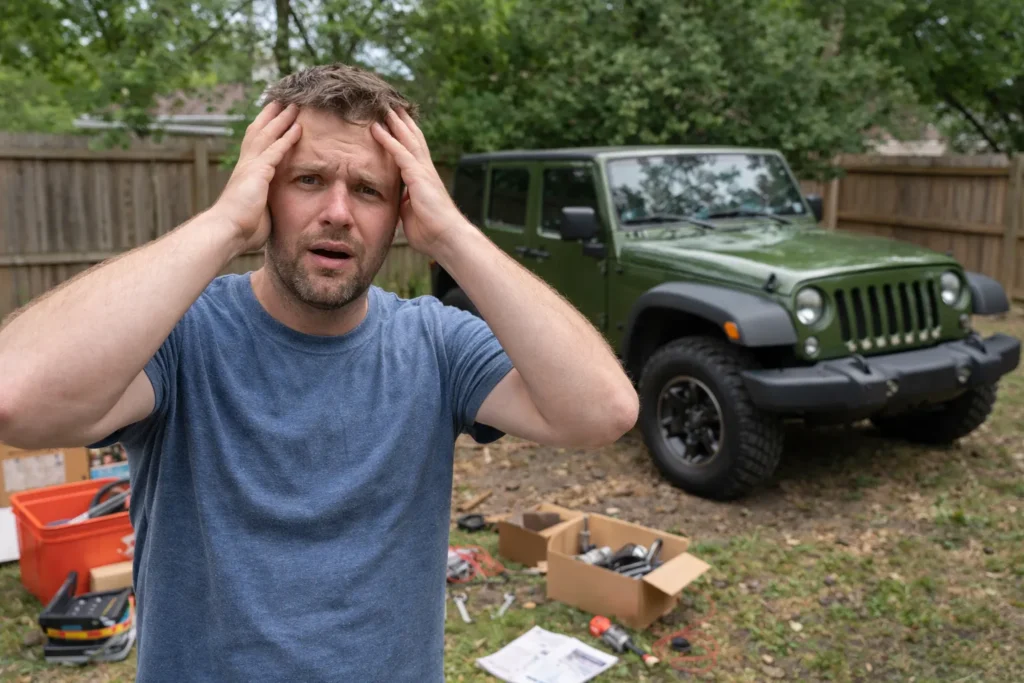
Before long, the vehicle in the driveway no longer resembles what rolled off the lot. Somewhere between late-night research, weekend wrenching, and endless boxes arriving at the door, the realization hits: a Jeep has been built.
The phrase “help I accidentally built a Jeep” has become a shared joke among owners, but there is truth behind the humor. Jeep builds have a way of snowballing.
Every upgrade unlocks another need. Every trail inspires another modification. What starts as personalization slowly becomes a full mechanical evolution.
This guide looks at how accidental Jeep builds happen, why they feel inevitable, what they cost in time and money, and how to enjoy the process without losing control. It treats the experience honestly, with clarity rather than hype.
Table of Contents
How A Simple Jeep Turns Into A Full Build
Jeep ownership encourages modification almost by design. The platform invites changes, and the aftermarket supports it aggressively.
The First Upgrade Is Never The Last
Most Jeep builds begin with one practical change. Larger tires promise better grip. A mild lift improves clearance. Rock rails offer protection. Each upgrade solves a problem, but also exposes new limitations.
Bigger tires reveal weak gearing. Added weight demands stronger brakes. Increased height calls for suspension tuning. The build grows organically, not recklessly, which is why it feels accidental.
The Aftermarket Makes It Easy
Few vehicles enjoy aftermarket support like a Jeep. Parts exist for every purpose, style, and budget. Bolt-on upgrades create the impression that everything is modular and reversible.
This ease removes hesitation. When parts look accessible, adding “just one more” feels reasonable.
Community Influence And Inspiration
Online forums, social media, and trail groups shape expectations. Seeing capable builds creates inspiration. Stock vehicles begin to feel unfinished rather than complete.
This influence is rarely negative, but it accelerates progression from ownership to full build.
The Emotional Shift From Owner To Builder
The transition from driver to builder happens quietly. The mindset changes before the vehicle does.
Personal Identity Becomes Tied To The Jeep
As modifications accumulate, the Jeep reflects personal taste and effort. Each upgrade carries a memory of research, installation, or learning. The vehicle stops being transportation and starts feeling like a project.
This emotional investment deepens commitment and reduces willingness to revert changes.
The Satisfaction Of Solving Problems
Every build stage presents challenges. Clearance issues, noise, alignment, or fitment problems require solutions. Solving them brings satisfaction that reinforces the build process.
The Jeep becomes a platform for learning rather than a finished product.
When Stock Feels Incomplete
Once modified, returning to stock feels limiting. Capabilities expand, and expectations follow. Trails once avoided now feel accessible. Comfort with complexity grows.
At this stage, the build no longer feels accidental, but it did not feel intentional either.
The Real Cost Of Accidentally Building A Jeep
Costs extend beyond parts. Time, maintenance, and long-term ownership expenses change significantly.
Initial Modifications Add Up Quickly
Small upgrades feel manageable individually. Together, they add up. Tires, suspension, armor, wheels, and accessories often exceed initial expectations.
Many owners underestimate cumulative cost because purchases happen gradually.
Supporting Mods Multiply Expenses
Primary upgrades often require secondary changes. Lifts need alignment components. Larger tires need recalibration. Added weight affects braking and steering.
These supporting modifications are necessary, not optional, to maintain safety and reliability.
Maintenance Becomes More Involved
Modified Jeeps require more frequent inspections. Joints, bushings, bolts, and fluids face increased stress. Maintenance shifts from routine to attentive.
This does not mean unreliable, but it demands engagement.
Fuel And Wear Costs Increase
Larger tires, heavier setups, and altered aerodynamics affect fuel usage. Wear on components increases, shortening service intervals.
Owners often accept these trade-offs as part of the experience.
Where Most Accidental Builds Go Wrong
Not every Jeep build stays enjoyable. Problems arise when upgrades outpace planning.
Skipping The Purpose Question
Many builds grow without a clear goal. Trail use, daily comfort, overlanding, and aesthetics pull in different directions. Without purpose, upgrades may conflict.
A Jeep built for everything often excels at nothing.
Chasing Trends Instead Of Needs
Popular parts are not always appropriate. Installing upgrades because others use them can introduce unnecessary complexity.
Needs should guide decisions more than visibility.
Ignoring Geometry And Balance
Suspension, steering, and driveline geometry work as systems. Changing one element without addressing others leads to vibrations, wear, and poor handling.
Balanced builds last longer and feel better.
How To Regain Control Without Undoing The Build
Accidental does not mean irreversible. Control comes from clarity and restraint.
Define The Jeep’s Primary Role
Trail rig, daily vehicle, weekend explorer, or showpiece. One primary role simplifies decisions. Secondary roles become compromises rather than goals.
Clear purpose reduces impulsive upgrades.
Pause Between Modifications
Driving the Jeep after each change reveals real needs. Immediate stacking of upgrades hides cause-and-effect.
Time provides perspective.
Prioritize Reliability Over Capability
Capability without reliability limits enjoyment. Strengthening known weak points often brings more satisfaction than adding features.
Reliability preserves confidence.
When Accidentally Building A Jeep Becomes A Positive Thing
Despite the warnings, many owners embrace the journey.
Skill Development And Knowledge
Jeep builds teach mechanical awareness. Owners learn suspension theory, gearing basics, and torque principles. This knowledge carries value beyond the vehicle.
Confidence grows with competence.
Community And Shared Experience
Jeep culture thrives on shared challenges. Builds spark conversations, trail support, and friendships.
Accidental builds often connect people more than planned ones.
A Vehicle That Feels Earned
A built Jeep feels earned. Every rattle understood. Every limitation known. Trust builds through familiarity.
This connection cannot be purchased.
Is It Possible To Stop Building A Jeep
The honest answer varies.
Some owners reach a stable point where function matches need. Others continuously refine. The platform encourages evolution.
Stopping does not mean failure. It means satisfaction has been reached.
For many, the Jeep is never “done,” only paused.
Practical Advice For New Jeep Owners
Accidental builds are not mistakes. They become problems only when unmanaged.
Start slow. Research deeply. Drive often. Upgrade with intention. Budget realistically. Accept trade-offs.
Most importantly, enjoy the process rather than racing toward an imagined finish line.
Backed by decades of design philosophy from Jeep, these vehicles are meant to be used, adapted, and personalized. The build culture exists because the platform invites it.
Final Thoughts
“Help I accidentally built a Jeep” is funny because it is true. Jeep ownership blurs the line between driving and building in a way few vehicles do. What begins as customization often becomes transformation.
The key is awareness. Knowing how and why the build grows allows owners to steer the process rather than be dragged by it. When guided by purpose and balance, even an accidental Jeep build becomes something to be proud of.
In the end, the Jeep in the driveway reflects choices, learning, and time invested. Accidental or not, that story matters more than the parts list.

- How Families in UAE Manage Changing Vehicle Needs - March 4, 2026
- How Many Axles On A Car And What They Do - March 2, 2026
- Metal Shavings In Oil Causes And What It Means - March 2, 2026