
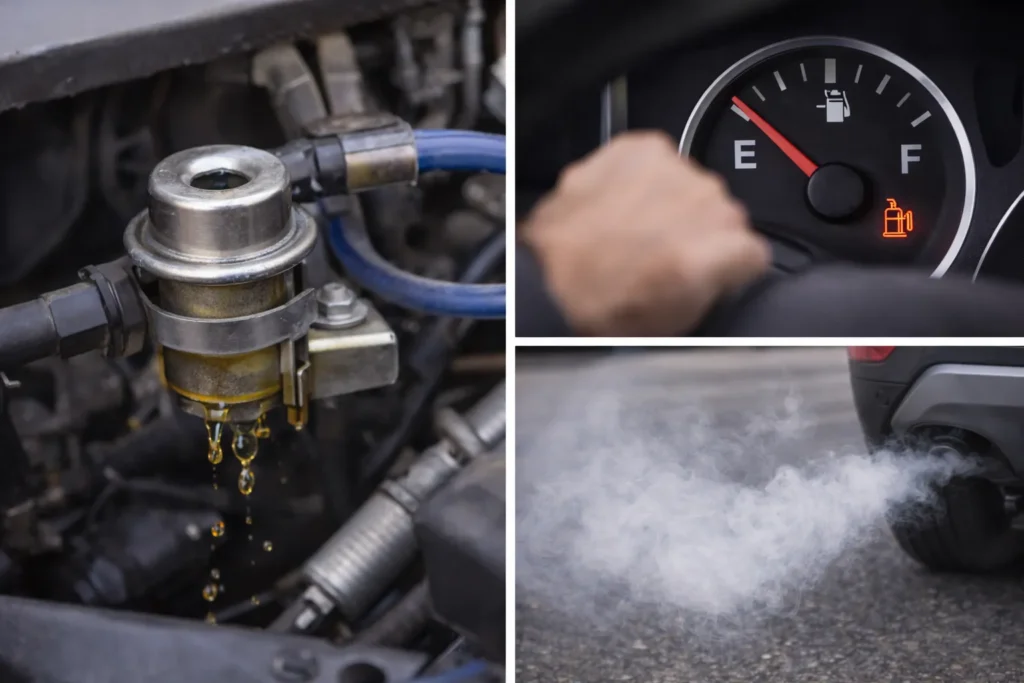
Fuel delivery inside a modern engine works on balance. Too little fuel and the engine starves. Too much fuel and combustion becomes inefficient, dirty, and unpredictable.
One small component plays a major role in keeping that balance steady: the fuel pressure regulator. It rarely gets attention until something goes wrong, yet its influence is felt across starting behavior, idle quality, throttle response, and even fuel economy.
When a fuel pressure regulator begins to fail, the symptoms can feel confusing. Some problems mimic ignition issues, others resemble sensor faults, and a few even look like transmission or exhaust trouble.
Because the regulator operates quietly in the background, many drivers replace other parts first, wasting time and money.
Clear knowledge helps avoid that trap. Recognizing fuel pressure regulator symptoms early allows quick correction before poor fuel control causes damage to injectors, spark plugs, catalytic converters, or the engine itself.
This guide explains what the fuel pressure regulator does, how failure affects engine behavior, the most common warning signs, and how to confirm the problem accurately.
Table of Contents
What A Fuel Pressure Regulator Does In An Engine
The fuel pressure regulator controls how much pressure builds in the fuel rail before fuel reaches the injectors. Injectors are designed to spray fuel at a specific pressure. Any variation changes how much fuel enters the engine.
Maintaining Consistent Fuel Pressure
Fuel pumps supply more fuel than the engine needs at most times. The regulator bleeds off excess pressure and sends unused fuel back to the tank or manages it electronically, depending on design.
This ensures injectors receive fuel at a stable pressure regardless of engine speed or load.
Responding To Engine Demand
In vacuum-controlled systems, the regulator adjusts pressure based on engine load. At idle, lower pressure is required. Under acceleration, pressure increases to meet demand.
Electronic regulators achieve the same result through sensors and control modules.
Protecting Injectors And Combustion Quality
Correct pressure prevents injectors from flooding or under-delivering fuel. This keeps air-fuel mixtures balanced and combustion clean.
Once regulation fails, everything downstream is affected.
Most Common Fuel Pressure Regulator Symptoms
Fuel pressure regulator problems show up in several ways. The exact symptoms depend on whether pressure is too high, too low, or fluctuating.
Hard Starting Or Extended Cranking
A failing regulator may allow fuel pressure to drop when the engine is off. When starting, the system must rebuild pressure before injectors can operate correctly.
This causes long cranking, especially after sitting overnight.
Rough Idle And Engine Stalling
Incorrect fuel pressure disrupts combustion stability. At idle, the engine is most sensitive to mixture imbalance.
Symptoms may include:
- Shaking or vibrating at idle
- Engine stalling when stopping
- Idle speed hunting up and down
These issues often worsen when the engine warms up.
Poor Acceleration And Hesitation
When fuel pressure drops under load, the engine cannot receive enough fuel during acceleration. This leads to hesitation, stumbling, or flat spots when pressing the throttle.
In severe cases, the engine may feel weak or unresponsive.
Decreased Fuel Economy
A regulator stuck in a high-pressure condition sends too much fuel into the engine. Excess fuel reduces efficiency and increases consumption.
Drivers may notice frequent refueling without changes in driving habits.
Black Smoke From Exhaust
Too much fuel creates a rich mixture. Unburned fuel exits through the exhaust, producing black smoke and strong fuel odor.
This condition can damage emissions components quickly.
Fuel Smell Around The Vehicle
A ruptured regulator diaphragm may leak fuel into the vacuum line or intake. This creates a noticeable gasoline smell, especially near the engine bay.
Fuel odor should never be ignored.
Engine Misfires And Check Engine Light
Incorrect pressure causes incomplete combustion. Misfires may trigger warning lights and store fault codes related to fuel mixture or injector performance.
These codes often mislead diagnosis if pressure is not checked.
Symptoms Based On High Vs Low Fuel Pressure
Understanding the difference helps pinpoint the failure type.
Symptoms Of Excessive Fuel Pressure
- Rich running condition
- Poor fuel economy
- Black exhaust smoke
- Fouled spark plugs
- Strong fuel odor
Excess pressure overwhelms injectors and floods the engine.
Symptoms Of Low Fuel Pressure
- Hard starting
- Hesitation during acceleration
- Engine stalling
- Loss of power at higher speeds
Low pressure starves injectors, especially under load.
Causes Of Fuel Pressure Regulator Failure
Regulators fail for several reasons, often related to age or contamination.
Internal Diaphragm Wear
Vacuum-operated regulators use rubber diaphragms that degrade over time. Once torn, fuel pressure becomes uncontrollable.
Fuel may enter vacuum lines, causing multiple symptoms at once.
Spring Fatigue Or Internal Valve Failure
The internal spring and valve control pressure release. Wear or sticking prevents proper regulation.
This may cause pressure spikes or drops.
Fuel Contamination
Dirty or low-quality fuel introduces debris that damages internal regulator components. Contamination accelerates wear and sticking.
Electrical Or Sensor Issues In Electronic Systems
Electronic regulators rely on control signals. Wiring faults, sensor errors, or control module issues can prevent correct pressure adjustment.
How Fuel Pressure Regulator Problems Affect Other Parts
Fuel pressure issues rarely stay isolated.
Injector Damage
Excess pressure forces injectors to work outside design limits. This causes leaks, poor spray patterns, and early failure.
Spark Plug Fouling
Rich mixtures coat spark plugs in carbon or fuel residue, reducing spark strength and causing misfires.
Catalytic Converter Damage
Unburned fuel entering the exhaust overheats the catalytic converter. Replacement costs are high.
Engine Oil Contamination
Excess fuel may wash past piston rings into the oil, thinning lubrication and increasing engine wear.
How To Test A Fuel Pressure Regulator Properly
Accurate testing prevents unnecessary part replacement.
Fuel Pressure Gauge Testing
Connecting a pressure gauge to the fuel rail reveals whether pressure matches specifications at idle, under load, and after shutdown.
Sudden pressure drops or excessive readings indicate regulation issues.
Vacuum Line Inspection
On vacuum-controlled systems, removing the vacuum hose should not release fuel. Fuel presence confirms diaphragm failure.
Pressure Drop Test After Shutdown
Pressure should hold for a specified time after the engine is turned off. Rapid drop suggests regulator or injector leakage.
Scan Tool Analysis
In electronic systems, scan data may show fuel trim values compensating for pressure errors. Extreme trim readings point toward regulation issues.
Common Misdiagnoses Related To Regulator Failure
Fuel pressure regulator symptoms often overlap with other faults.
Ignition coils, oxygen sensors, mass airflow sensors, and fuel pumps are frequently blamed first. While these components can fail, replacing them without pressure testing wastes money.
Fuel pressure verification should always come early in diagnosis.
Repair And Replacement Considerations
Replacing a fuel pressure regulator varies by design.
Vacuum Operated Regulators
These are often externally mounted and relatively easy to replace. Care must be taken to relieve fuel pressure safely.
Integrated Or Electronic Regulators
Some modern vehicles integrate the regulator into the fuel pump assembly. Replacement may require fuel tank access.
This increases labor cost but restores proper pressure control.
After Replacement Checks
After installation, pressure should be rechecked and the engine monitored for leaks, proper idle, and smooth acceleration.
How Long A Fuel Pressure Regulator Typically Lasts
Regulator lifespan depends on fuel quality, maintenance, and driving conditions. Many last well over 100,000 miles, but degradation can begin earlier.
Ignoring early symptoms shortens lifespan of surrounding components.
Preventing Fuel Pressure Regulator Problems
Simple habits extend regulator life.
Use quality fuel. Replace fuel filters on schedule. Avoid running the tank extremely low, which draws debris into the system. Address fuel smells or starting issues promptly.
These steps reduce stress on the regulator.
When Professional Diagnosis Is Recommended
If pressure readings are inconsistent, fuel odors are present, or electronic control systems are involved, professional testing is advised. Specialized tools ensure safe and accurate diagnosis.
Delayed diagnosis increases repair scope.
Final Thoughts
The fuel pressure regulator plays a quiet but critical role in engine performance. When it fails, symptoms ripple across starting behavior, idle quality, acceleration, fuel economy, and emissions. Because these symptoms overlap with many other issues, the regulator is often overlooked.
Recognizing the signs early and confirming pressure behavior prevents damage to injectors, spark plugs, and exhaust components. A properly functioning regulator restores balance to the fuel system and allows the engine to operate smoothly under all conditions.
Fuel delivery depends on precision. When pressure stays where it belongs, the engine responds with reliability, efficiency, and consistent performance mile after mile.

- How Families in UAE Manage Changing Vehicle Needs - March 4, 2026
- How Many Axles On A Car And What They Do - March 2, 2026
- Metal Shavings In Oil Causes And What It Means - March 2, 2026