
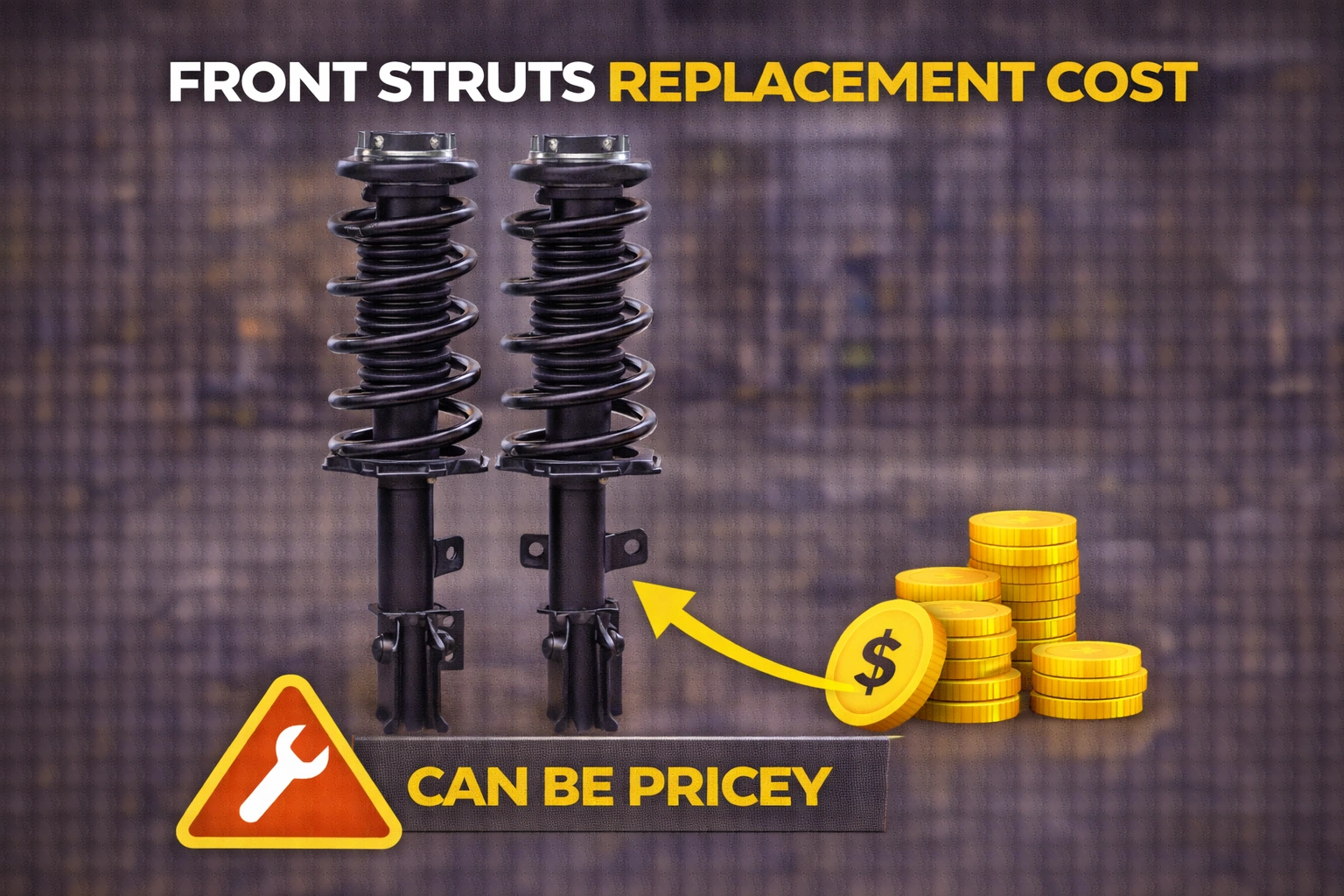
A vehicle’s suspension system quietly absorbs bumps, controls body movement, and keeps tires planted on the road. Among its key components are the front struts. These parts combine a shock absorber and structural support into one assembly, helping maintain stability during braking, turning, and uneven surfaces. Over time, struts wear out due to constant motion, heat, and road impact. When that happens, comfort decreases and handling becomes less predictable.
Many drivers do not think about suspension maintenance until noticeable symptoms appear. Excessive bouncing, uneven tire wear, nose-diving during braking, or knocking noises over bumps often point to worn front struts. Replacement restores proper ride control and safety.
However, cost varies based on vehicle type, labor rates, and part selection. A clear understanding of pricing factors and service steps helps vehicle owners prepare financially and make informed decisions before scheduling repairs.
Table of Contents
Average Front Struts Replacement Cost
Typical Price Range For Parts And Labor
Front strut replacement typically costs between $400 and $1,200 for both sides combined. The total depends on the make and model, quality of parts, and local labor rates. Most repair shops recommend replacing struts in pairs to maintain balanced handling.
Parts alone may range from $100 to $400 per strut depending on brand and vehicle type. Labor usually accounts for a significant portion of the bill because the suspension assembly must be disassembled carefully. Replacing struts involves removing wheels, disconnecting suspension components, compressing springs, and reinstalling everything to precise specifications.
Vehicles such as the Toyota Camry generally fall toward the lower end of the price range due to straightforward suspension design. Luxury SUVs like the BMW X5 often cost more because of advanced suspension components and higher labor complexity.
These estimates include both parts and installation but may not include alignment service.
Additional Alignment And Related Costs
After replacing front struts, a wheel alignment is strongly recommended. Struts influence suspension geometry, and removing them can alter wheel angles. Alignment services typically cost between $80 and $150.
Failing to align the vehicle after strut replacement may result in uneven tire wear and reduced stability. Some shops include alignment in the total repair package, while others charge separately.
Additional components such as strut mounts, bearings, or sway bar links may also require replacement if worn. Inspecting these parts during service prevents repeated labor costs later.
Budgeting for potential extras ensures a smoother repair experience.
Factors That Affect Replacement Cost
Vehicle Type And Suspension Design
Vehicle design significantly impacts repair pricing. Compact sedans often use simpler MacPherson strut systems that are relatively easy to service. Larger SUVs and trucks may feature heavier components requiring more labor time.
Performance or luxury vehicles sometimes use adaptive suspension systems with electronic damping control. These struts contain sensors and wiring, increasing part cost and installation complexity.
Hybrid and electric vehicles may also have unique suspension setups designed to handle battery weight. This can affect both part pricing and labor requirements.
Choosing original equipment manufacturer parts typically costs more than aftermarket options but may offer longer lifespan and warranty coverage.
Labor Rates And Geographic Location
Labor rates vary widely depending on region and repair facility type. Dealerships often charge higher hourly rates compared to independent shops. However, dealerships may provide brand-specific expertise and warranty-backed parts.
Urban areas tend to have higher labor costs than rural locations. Shop overhead expenses and technician experience also influence pricing.
Requesting written estimates from multiple repair shops helps compare costs. Ensure estimates clearly outline parts, labor, and alignment charges to avoid surprises.
Transparent pricing supports confident decision-making.
Signs That Front Struts Need Replacement
Handling And Ride Symptoms
Worn struts often reveal themselves through noticeable changes in handling. Excessive bouncing after hitting a bump suggests weakened damping capability. The vehicle may dip forward sharply during braking or lean more than usual while turning.
Uneven tire wear patterns, especially cupping on the front tires, often indicate suspension problems. Steering may feel less responsive, particularly at highway speeds.
Clunking or knocking noises from the front suspension when driving over uneven roads can signal internal strut wear or failing mounts.
Addressing these symptoms promptly helps prevent further suspension damage.
Mileage And Inspection Guidelines
Most manufacturers recommend inspecting struts around 50,000 miles and replacing them between 75,000 and 100,000 miles depending on driving conditions.
Vehicles driven frequently on rough roads may require earlier replacement. Regular inspection during routine maintenance allows early detection of fluid leaks or worn bushings.
Visual inspection may reveal oil leakage around the strut body. This indicates seal failure and reduced damping performance.
Following manufacturer guidelines ensures suspension reliability and safety.
Is It Worth Replacing Front Struts
Safety And Long Term Value
Front struts contribute directly to braking stability and steering precision. Driving with worn suspension increases stopping distance and reduces control during emergency maneuvers.
Replacing struts restores proper tire contact with the road surface. This improves overall stability and reduces wear on other suspension components.
Although replacement can be costly, delaying service may lead to additional repairs such as worn tires or damaged ball joints.
Investing in timely replacement supports long-term vehicle reliability.
Choosing Between Quick Struts And Component Replacement
Some repair shops offer complete strut assemblies known as quick struts. These units include the spring, mount, and bearing preassembled. Quick struts reduce labor time and eliminate the need for spring compression.
While slightly more expensive for parts, quick struts often save labor cost and improve efficiency. For high-mileage vehicles, replacing the full assembly can be beneficial.
Traditional strut replacement retains the existing spring but requires additional labor and careful handling.
Selecting the right option depends on vehicle age and budget considerations.
Front struts play a vital role in maintaining stability, comfort, and tire longevity. Replacement cost generally ranges from several hundred to over a thousand dollars depending on vehicle type and service provider.
Timely replacement prevents uneven tire wear, restores predictable handling, and enhances overall safety. Considering part quality, labor expertise, and alignment needs ensures a successful repair.
With proper maintenance and inspection, suspension components deliver reliable performance over many miles.

- How Families in UAE Manage Changing Vehicle Needs - March 4, 2026
- How Many Axles On A Car And What They Do - March 2, 2026
- Metal Shavings In Oil Causes And What It Means - March 2, 2026
