
The Ford 302 engine holds a special place in automotive history. Known for its compact size, strong torque, and versatility, it powered everything from classic muscle cars to pickup trucks and performance builds. Proper ignition timing plays a critical role in how this small block V8 performs, and that begins with the correct firing order.
Firing order determines the sequence in which each cylinder receives spark. When arranged correctly, it balances engine operation, reduces vibration, and delivers smooth power. An incorrect sequence can cause misfires, rough idle, and even internal damage. Over the years, the 302 engine appeared in different variations, and some versions use slightly different firing patterns. Whether working on a carbureted classic or a later fuel-injected model, knowing the correct firing order ensures reliable operation and consistent performance from this iconic Ford engine.
Table of Contents
Understanding The 302 Ford Engine Layout
Cylinder Numbering And Engine Configuration
The 302 Ford is part of the small block Windsor family. It features a 90-degree V8 configuration with two cylinder banks. When facing the engine from the front, cylinders on the passenger side are numbered 1, 2, 3, and 4 from front to rear. On the driver’s side, cylinders are numbered 5, 6, 7, and 8 from front to rear.
This numbering pattern is essential for correctly routing spark plug wires. Misidentifying cylinder positions can lead to incorrect ignition timing and unstable operation. The distributor sends spark to each cylinder in a specific sequence based on crankshaft rotation.
Vehicles such as the Ford Mustang and Ford F-150 have used variations of the 302 engine over the years. Despite different applications, the basic cylinder layout remains consistent across most models.
Knowing cylinder location simplifies distributor cap wiring and timing adjustments.
Distributor Rotation And Timing Basics
The 302 Ford engine uses a distributor that rotates counterclockwise. This rotation direction determines how spark plug wires are arranged around the distributor cap.
When installing wires, begin at the number one cylinder terminal on the cap. From there, follow the firing order while moving counterclockwise around the cap. Maintaining proper direction prevents cross-firing and misfires.
Initial timing settings typically range around 6 to 12 degrees before top dead center depending on model year and configuration. Always confirm timing specifications for the specific engine build.
Correct timing ensures proper combustion sequence and stable idle performance.
Standard Firing Order For The 302 Ford
Traditional 302 Firing Order
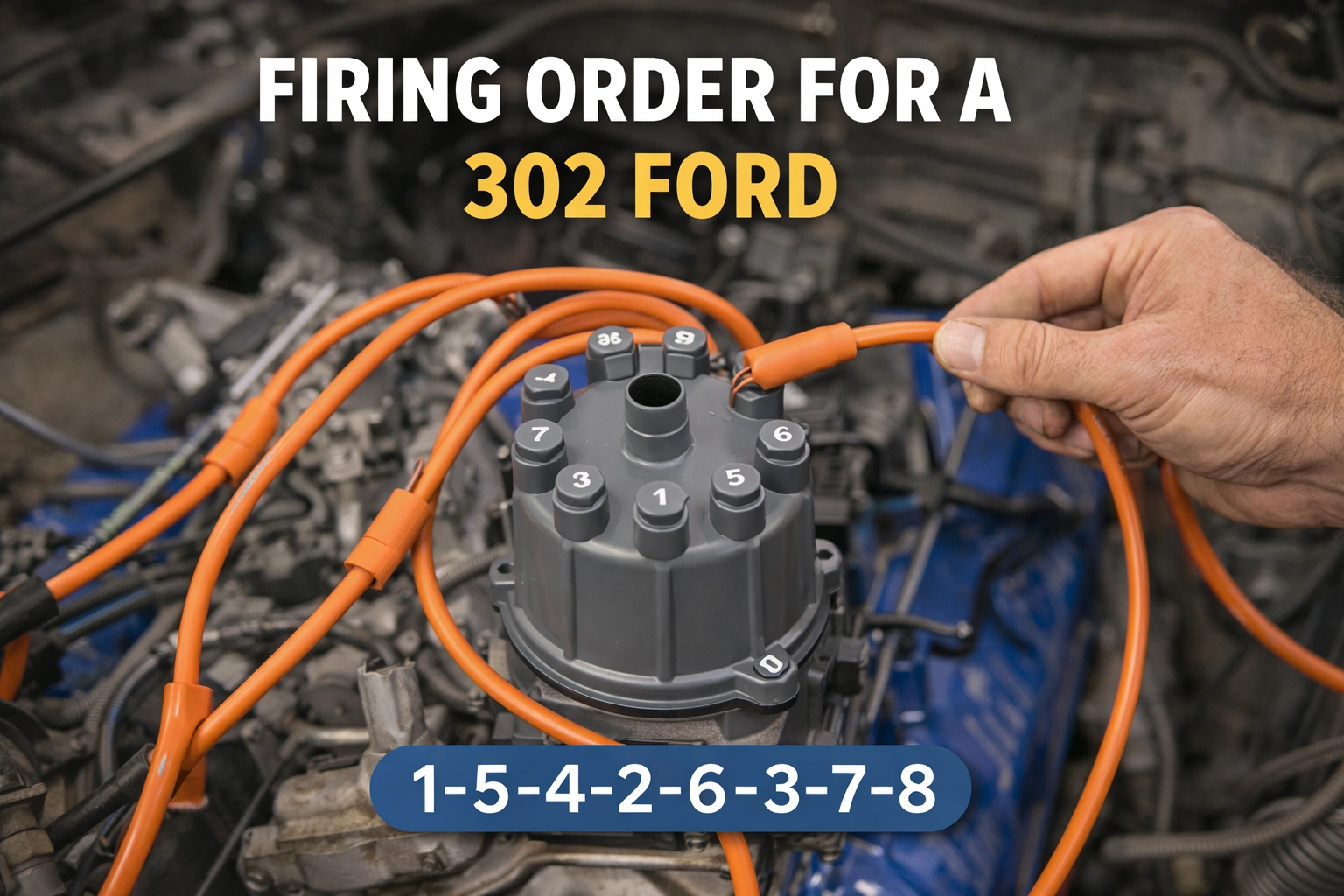
The most common firing order for a standard 302 Ford engine is:
1-5-4-2-6-3-7-8
This sequence applies to many carbureted and early fuel-injected models. It balances crankshaft load and maintains smooth power delivery.
Routing spark plug wires in this order while following counterclockwise distributor rotation ensures correct ignition sequence. Many factory 302 engines from the 1970s and early 1980s use this firing order.
Improper wire routing often results in popping sounds through the intake or exhaust. Double-checking cylinder numbering and distributor rotation resolves most wiring errors quickly.
Understanding this sequence remains crucial when servicing older 302 engines.
High Output 302 Firing Order Variation
Later versions of the 302, particularly high-output models used in performance vehicles, adopted a different firing order:
1-3-7-2-6-5-4-8
This firing pattern originated from the 351 Windsor camshaft design and was applied to certain 302 high-output engines. It improves balance and reduces crankshaft stress.
For example, high-output versions used in later Ford Mustang GT models often follow this alternate firing order.
Before installing spark plug wires, verify whether the engine uses the traditional or high-output sequence. Camshaft type determines which order applies.
Confusion between these two firing patterns is a common cause of misfiring after engine work.
Why Firing Order Matters
Engine Balance And Vibration Control
Firing order affects how evenly combustion forces distribute across the crankshaft. A well-designed sequence reduces vibration and prevents excessive stress on bearings and connecting rods.
The 302’s firing order was engineered to maintain smooth operation across varying engine speeds. Changing camshaft designs altered the order slightly to improve performance and durability.
Balanced firing reduces harmonic vibration and supports long engine life. Using the incorrect sequence disrupts this balance and can cause noticeable shaking.
Precision in spark timing protects internal components and ensures reliable output.
Impact On Performance And Fuel Efficiency
Proper ignition sequence supports efficient combustion. When cylinders fire in the intended order, the engine produces consistent power strokes.
Misfires caused by incorrect wiring lead to incomplete combustion, wasted fuel, and increased emissions. Performance suffers noticeably, especially under load.
Accurate firing order contributes to throttle response and steady idle quality. Even small wiring mistakes can reduce horsepower and torque output.
Maintaining correct ignition sequence ensures optimal engine operation.
Step By Step Guide To Installing Spark Plug Wires
Begin by identifying cylinder number one at the front passenger side. Rotate the engine to top dead center on the compression stroke for cylinder one. Confirm rotor position inside the distributor.
Locate the number one terminal on the distributor cap. Attach the spark plug wire from that terminal to cylinder one.
Moving counterclockwise, connect remaining wires according to the appropriate firing order for your engine version.
Ensure wires are securely seated on both the distributor cap and spark plugs. Avoid crossing wires tightly, as this may cause interference.
Double-check routing before starting the engine.
Common Mistakes To Avoid
One frequent mistake is mixing up the traditional and high-output firing orders. Always confirm camshaft type and engine build before wiring.
Another common issue involves reversing distributor rotation direction. The 302 rotates counterclockwise, and following the wrong direction will result in misfiring.
Using incorrect spark plug wire lengths may cause wires to stretch or rest against hot exhaust components.
Careful attention during installation prevents troubleshooting headaches later.
The firing order for a 302 Ford engine depends on whether it uses the traditional or high-output camshaft configuration. Most standard engines follow 1-5-4-2-6-3-7-8, while high-output versions use 1-3-7-2-6-5-4-8.
Understanding cylinder numbering, distributor rotation, and camshaft design ensures accurate spark plug wire installation. Proper firing sequence supports smooth engine operation, balanced performance, and long-term durability.
Attention to detail during ignition setup preserves the strength and reliability that made the 302 Ford engine legendary.

- How Families in UAE Manage Changing Vehicle Needs - March 4, 2026
- How Many Axles On A Car And What They Do - March 2, 2026
- Metal Shavings In Oil Causes And What It Means - March 2, 2026