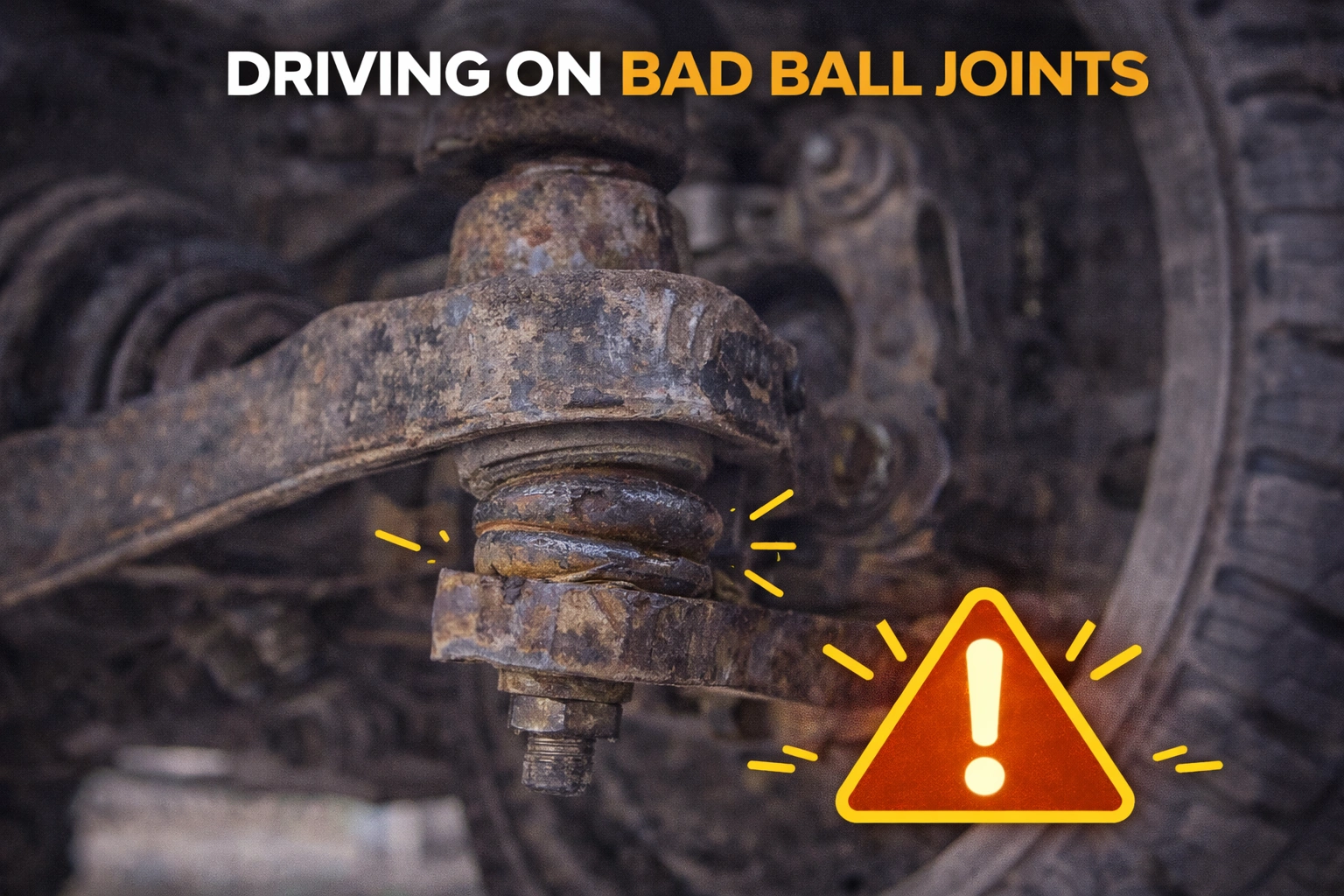
Suspension components rarely get attention until something feels wrong. A vehicle may begin to wander slightly on the highway, produce a faint clunk over bumps, or cause uneven tire wear. Many drivers dismiss these changes at first. However, beneath the vehicle, small metal joints carry enormous responsibility. Ball joints connect control arms to steering knuckles, allowing the wheels to move up and down while also turning left and right.
Because they support weight and maintain wheel alignment, ball joints play a critical role in stability and safety. When they begin to wear, the effects can range from minor steering looseness to complete suspension separation. Driving on worn ball joints is not just a comfort issue—it becomes a structural concern.
Recognizing early symptoms and addressing them promptly prevents steering instability, tire damage, and costly suspension repairs.
Table of Contents
What Ball Joints Do And Why They Matter
Structural Role In Suspension Geometry
Ball joints function as pivot points within the suspension system. Each joint consists of a metal stud enclosed in a lubricated socket, allowing controlled articulation as the wheel moves. On most vehicles, at least two ball joints are present per front wheel—an upper and a lower, depending on suspension design.
As the vehicle encounters bumps or uneven pavement, the suspension compresses and rebounds. Ball joints allow this motion while keeping the wheel aligned with the steering system. Without proper articulation, steering precision would suffer significantly.
Because these joints bear substantial weight, especially in trucks and SUVs, they endure constant stress during acceleration, braking, and cornering.
Connection Between Steering And Suspension
Ball joints link the steering knuckle to the control arm. When the steering wheel turns, that motion transfers through tie rods and into the knuckle. The ball joint allows the wheel assembly to pivot smoothly without binding.
If a ball joint wears excessively, the connection loosens. That looseness can cause steering play, vibration, and uneven tire contact with the road surface.
Maintaining tight ball joints ensures stable directional control and predictable handling under load.
Warning Signs Of Worn Ball Joints
Clunking Or Knocking Sounds
One of the earliest signs is a clunking noise when driving over bumps or rough pavement. The sound typically comes from the front suspension and may become more noticeable during low-speed turns.
As the internal socket wears, the stud moves excessively inside its housing. This movement creates noise when the suspension shifts under weight transfer.
Ignoring these sounds can allow wear to progress to a dangerous level.
Uneven Tire Wear
Worn ball joints can alter wheel alignment. When a joint develops play, the wheel may tilt slightly inward or outward. This misalignment causes uneven tread wear, particularly along inner or outer edges.
Irregular tire wear reduces traction and shortens tire lifespan. Even after replacing ball joints, alignment correction is usually required to restore proper geometry.
Addressing suspension wear early preserves tire investment and improves stability.
Steering Vibration Or Wandering
Loose ball joints may cause the steering wheel to feel unstable, especially at highway speeds. The vehicle might drift slightly and require frequent correction.
Because ball joints support vertical load, looseness can change how the tire contacts the road surface.
Steering vibration combined with noise often signals advancing wear that requires immediate inspection.
Risks Of Driving On Bad Ball Joints
Progressive Wear And Structural Failure
Ball joints rarely fail instantly without prior symptoms. Wear increases gradually as protective grease escapes and contaminants enter the socket.
Once internal tolerances exceed safe limits, the joint may separate. Complete separation allows the wheel assembly to collapse outward or inward.
At highway speeds, this scenario can result in loss of control. Even at low speeds, suspension collapse can damage the fender, axle, brake components, and control arms.
Increased Strain On Other Components
When ball joints loosen, other suspension parts compensate. Control arm bushings, tie rods, and wheel bearings experience additional stress.
This chain reaction accelerates wear across the front end. Repair costs rise as multiple components degrade simultaneously.
Timely replacement prevents compounded mechanical damage.
Safety And Liability Concerns
Driving with severely worn ball joints poses safety risks to occupants and other road users. If a wheel separates or steering control diminishes, accident potential increases.
From a legal perspective, operating a vehicle known to have critical suspension defects may raise liability concerns after a collision.
Prioritizing suspension health protects both mechanical integrity and road safety.
Inspection And Diagnosis
Visual And Physical Inspection
Technicians typically inspect ball joints by raising the vehicle and checking for vertical and horizontal play in the wheel assembly. Excessive movement indicates wear beyond acceptable limits.
Some ball joints include grease fittings, while others are sealed units. Torn rubber boots allow debris to enter, accelerating wear.
Visible rust, cracked boots, or leaking grease warrant closer examination.
Professional Testing Methods
Using pry bars to apply leverage helps measure joint movement. Some manufacturers specify maximum allowable play measurements.
A suspension alignment check may also reveal geometry deviations consistent with ball joint wear.
Accurate diagnosis ensures replacement targets the correct component rather than masking symptoms.
Repair Process And Cost Factors
Repair expenses depend on the suspension design and component accessibility. Press-in ball joints require specialized tools, while control arm assemblies with integrated joints may involve full arm replacement. Labor complexity influences overall cost. Addressing minor play early often prevents additional suspension damage that would increase repair bills.
Replacement Procedures
Replacement typically involves separating the steering knuckle from the control arm. Press tools remove the worn joint and install the new one securely.
In some cases, replacing the entire control arm proves more efficient. After installation, a wheel alignment ensures correct geometry.
High-quality replacement parts extend service life and restore stability.
Post Repair Considerations
Following replacement, drivers should monitor steering feel and tire wear patterns. Proper alignment helps maintain even tread contact and predictable handling.
Regular suspension inspections during routine service appointments prevent unnoticed deterioration.
Maintaining lubrication in serviceable joints extends durability.
Preventive Maintenance And Longevity
Driving Habits That Reduce Wear
Avoiding potholes and rough terrain minimizes stress on suspension joints. Sudden impacts place heavy loads on ball joints and control arms.
Gradual braking and smooth cornering reduce abrupt weight transfer that accelerates wear.
While normal use will eventually cause degradation, careful operation prolongs component life.
Routine Inspection Intervals
Ball joints should be inspected during tire rotations or brake service appointments. Early detection of torn boots or minor play allows preemptive replacement.
Lubricating serviceable joints during oil changes helps maintain smooth articulation.
Preventive attention ensures the suspension system remains reliable for years.
Bottom Line
Driving on bad ball joints compromises steering precision, tire wear, and overall safety. Early symptoms such as clunking sounds, vibration, or uneven tread patterns signal the need for inspection.
Because ball joints support vehicle weight and steering articulation, advanced wear can lead to suspension separation. Prompt replacement restores stability and prevents damage to surrounding components.
Regular inspection and responsible maintenance keep suspension systems dependable and protect both vehicle occupants and others on the road.

- How Families in UAE Manage Changing Vehicle Needs - March 4, 2026
- How Many Axles On A Car And What They Do - March 2, 2026
- Metal Shavings In Oil Causes And What It Means - March 2, 2026