
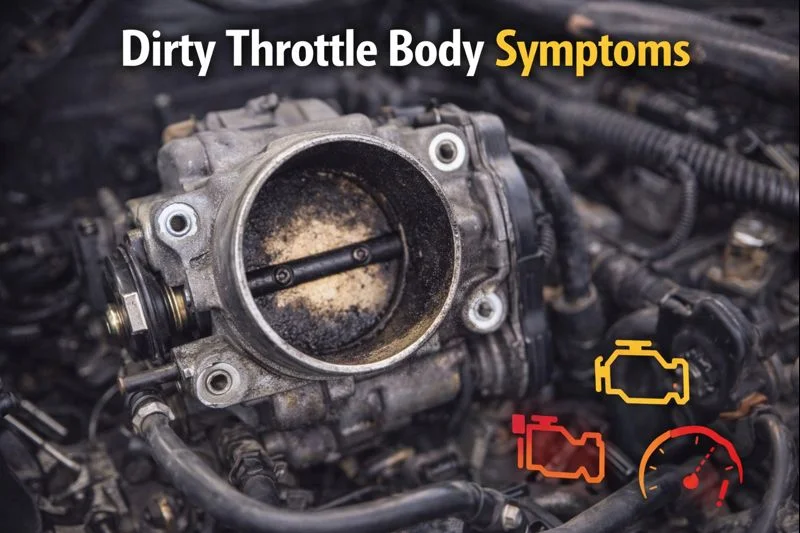
Modern engines rely on precise airflow control to run smoothly, respond quickly, and meet emissions standards. At the center of that airflow control sits the throttle body. It may look like a simple metal housing with a butterfly valve, but its role is critical.
Every time the accelerator pedal is pressed, the throttle body regulates how much air enters the engine. Over time, carbon deposits, oil vapors, and dust slowly build up inside this component.
The process is gradual, which is why many drivers do not notice a problem until symptoms become hard to ignore.
A dirty throttle body does not usually cause sudden failure. Instead, it creates small changes in airflow that confuse the engine computer. Idle speed becomes unstable, throttle response feels inconsistent, and fuel delivery no longer matches airflow as accurately as it should.
These issues can mimic other engine problems, leading to unnecessary part replacements if the root cause is overlooked. Knowing the symptoms associated with throttle body contamination helps drivers identify problems early and restore normal engine behavior before drivability and efficiency suffer.
Table of Contents
What A Throttle Body Does And Why It Gets Dirty
Airflow Control And Engine Management
The throttle body controls how much air enters the intake manifold. When the throttle plate opens, more air flows in, allowing the engine to produce more power. Sensors monitor throttle position and airflow, allowing the engine control unit to adjust fuel delivery and ignition timing.
Even small changes in airflow can disrupt this balance.
Sources Of Buildup Inside The Throttle Body
Most throttle body contamination comes from oil vapors routed back into the intake through the crankcase ventilation system. Exhaust gas recirculation systems also introduce carbon particles.
Over time, these substances coat the throttle plate and inner walls, restricting airflow and altering throttle behavior.
Why Modern Engines Are Sensitive
Electronic throttle control systems rely on precise calibration. Unlike older cable-driven setups, modern throttle bodies adjust electronically based on sensor input.
Any buildup that interferes with plate movement or airflow can cause noticeable symptoms.
Common Dirty Throttle Body Symptoms
Rough Or Unstable Idle
One of the earliest signs of throttle body contamination is an unstable idle. The engine may idle too low, too high, or fluctuate between speeds.
This happens because restricted airflow prevents the engine from maintaining a steady idle, especially when the throttle plate is nearly closed.
Hesitation During Acceleration
Delayed response when pressing the accelerator is another frequent symptom. The engine may hesitate briefly before accelerating.
Carbon buildup makes it harder for the throttle plate to open smoothly, causing delayed airflow increase.
Stalling At Stops
In more advanced cases, the engine may stall when coming to a stop. This is common when airflow at idle becomes insufficient.
The problem is more noticeable with accessories running, such as air conditioning or power steering.
Surging Or Jerky Throttle Response
Some drivers experience uneven acceleration, where the vehicle surges or jerks at steady speeds.
This occurs when airflow fluctuates unpredictably due to deposits interfering with throttle movement.
Check Engine Light Activation
A dirty throttle body can trigger warning lights. Fault codes related to idle control, airflow, or throttle position may appear.
These codes often lead to misdiagnosis if the throttle body is not inspected.
How A Dirty Throttle Body Changes Engine Performance
Disrupted Air And Fuel Balance
Engines rely on a precise air-to-fuel ratio. Restricted airflow forces the engine computer to compensate by adjusting fuel delivery.
This compensation has limits, and when exceeded, drivability issues emerge.
Reduced Fuel Efficiency
Poor airflow control leads to inefficient combustion. Fuel economy often drops as the engine struggles to maintain stable operation.
Drivers may notice more frequent refueling without changes in driving habits.
Increased Emissions Output
Incomplete combustion caused by airflow issues increases emissions. This can lead to failed emissions testing in some regions.
Throttle body cleanliness plays a direct role in emissions compliance.
Strain On Related Components
When airflow is inconsistent, components such as idle air control systems and sensors work harder to compensate.
Over time, this added strain can shorten component lifespan.
Symptoms That Are Often Mistaken For Other Problems
Confusion With Vacuum Leaks
Rough idle and stalling are commonly blamed on vacuum leaks. While leaks cause similar symptoms, throttle body contamination is often the real issue.
A visual inspection helps distinguish between the two.
Misdiagnosis As Sensor Failure
Throttle position sensors and mass airflow sensors are frequently replaced when symptoms appear. In many cases, these sensors are functioning correctly.
Cleaning the throttle body often restores proper sensor readings.
Fuel System Misinterpretation
Hesitation and surging can resemble fuel delivery problems. Dirty injectors or weak fuel pumps are sometimes suspected incorrectly.
Airflow restrictions can produce nearly identical behavior.
How Driving Conditions Influence Throttle Body Contamination
Short Trips And Stop-And-Go Driving
Frequent short trips prevent the engine from reaching optimal temperature. This increases moisture and residue buildup.
Urban driving accelerates throttle body contamination.
Oil Consumption And Blow-By
Engines with higher oil consumption introduce more oil vapor into the intake. This increases deposit formation.
High-mileage engines are more prone to this issue.
Environmental Factors
Dusty environments contribute to intake contamination. Even with a clean air filter, fine particles can enter over time.
Environmental exposure affects buildup rate.
How To Confirm A Dirty Throttle Body
Visual Inspection
Removing the intake hose allows direct inspection of the throttle plate and housing. Dark residue around the plate edges is a clear sign.
A clean throttle body should appear mostly metallic with minimal deposits.
Observing Idle Behavior
Unstable idle that improves temporarily after engine restart often points to airflow issues rather than mechanical failure.
Patterns matter more than isolated incidents.
Diagnostic Scan Results
Scan tools may show idle control values at extreme limits. This indicates the engine computer is compensating for restricted airflow.
These readings support visual findings.
Cleaning Versus Replacing The Throttle Body
Benefits Of Cleaning
In most cases, cleaning restores normal operation. Removing deposits allows the throttle plate to move freely and airflow to stabilize.
Cleaning is far less expensive than replacement.
When Replacement Is Necessary
If the throttle body has electrical failures, damaged motors, or worn shafts, cleaning may not solve the issue.
Electronic faults require component replacement.
Relearning Procedures After Cleaning
Some vehicles require a throttle relearn process after cleaning. This allows the engine computer to recalibrate idle settings.
Skipping this step can cause temporary idle issues.
Preventive Maintenance And Best Practices
Regular Inspection Intervals
Inspecting the throttle body every 30,000 to 50,000 miles helps prevent severe buildup.
Early cleaning avoids noticeable symptoms.
Air Filter Maintenance
A clean air filter reduces contaminant entry. Regular replacement supports intake cleanliness.
Neglected filters accelerate buildup.
Oil Quality And Engine Health
Using proper oil grades and maintaining engine condition reduces blow-by vapors.
Healthy engines stay cleaner internally.
How Long Dirty Throttle Body Symptoms Take To Appear
Symptoms develop gradually. Many drivers adapt subconsciously until performance degradation becomes obvious.
This slow progression explains why throttle body issues often go unnoticed for long periods.
Why Ignoring These Symptoms Can Lead To Bigger Problems
Prolonged airflow restriction stresses engine management systems. Sensors operate at compensation limits, increasing failure risk.
Ignoring symptoms can also lead to stalling in unsafe situations, such as intersections or traffic.
Early attention prevents escalation.
Common Myths About Throttle Body Issues
Some believe throttle bodies never need cleaning. In reality, modern emissions systems increase contamination.
Another myth is that cleaning always causes problems. Proper cleaning methods restore performance safely.
Accurate information prevents unnecessary worry.
Professional Service Versus DIY Cleaning
Cleaning can be performed carefully with proper tools and cleaners. However, electronic throttle bodies require caution.
Professional service ensures correct procedure and relearn steps are followed.
Choosing the right approach depends on experience and comfort level.
Final Thoughts
Dirty throttle body symptoms often appear slowly, beginning with subtle idle changes and progressing into hesitation, stalling, and reduced efficiency. These symptoms are easy to mistake for more serious engine problems, yet the cause is often simple contamination restricting airflow.
The throttle body plays a central role in engine operation, and even minor buildup can disrupt how smoothly a vehicle runs.
Addressing throttle body cleanliness restores proper airflow, improves throttle response, and reduces strain on engine components. Regular inspection and maintenance keep symptoms from returning and help preserve fuel efficiency and emissions performance.
Paying attention to early signs allows drivers to resolve issues quickly, avoiding unnecessary repairs and keeping the engine operating as intended.

- How Families in UAE Manage Changing Vehicle Needs - March 4, 2026
- How Many Axles On A Car And What They Do - March 2, 2026
- Metal Shavings In Oil Causes And What It Means - March 2, 2026