
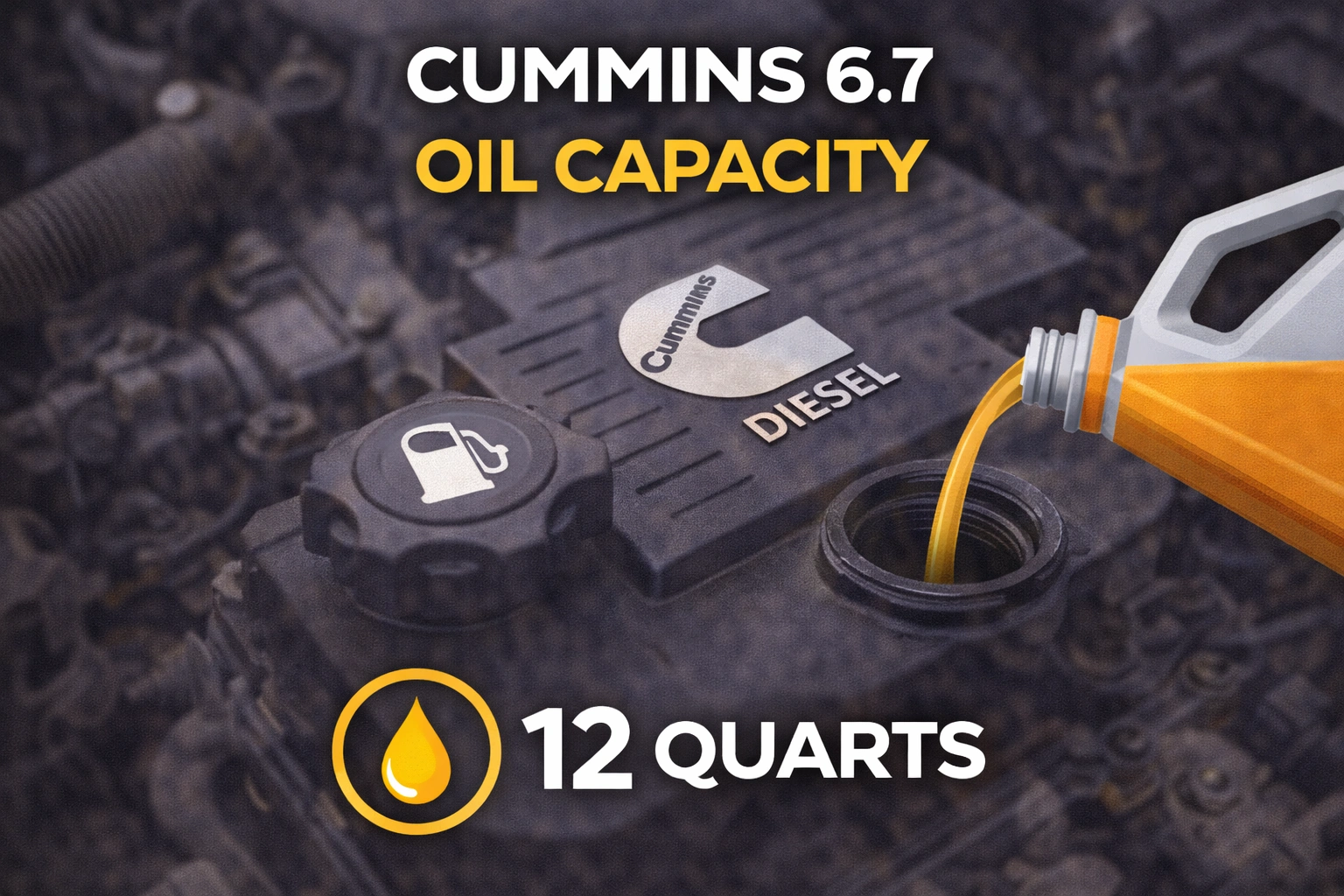
The Cummins 6.7-liter diesel engine has earned a reputation for durability, torque output, and long service life. Found in heavy-duty Ram trucks and various commercial applications, this inline-six turbo diesel is built to handle demanding workloads. Towing large trailers, hauling equipment, or covering high mileage under load all place serious stress on internal components.
Engine oil plays a critical role in protecting those components. It lubricates bearings, cools pistons, reduces friction, and suspends contaminants until they are filtered out. Because the 6.7 Cummins operates under high compression and heavy load, maintaining proper oil level and quality is essential.
Oil capacity is not simply a number to remember during service. It directly affects lubrication pressure, cooling efficiency, and engine longevity. Accurate capacity knowledge, along with correct oil type and filter selection, ensures consistent performance and long-term reliability.
Table of Contents
Cummins 6.7 Oil Capacity Specifications
Standard Oil Capacity With Filter Change
For most Ram trucks equipped with the 6.7 Cummins engine, oil capacity is approximately 12 quarts when performing an oil and filter change. This specification applies to many model years, though minor variations may exist depending on oil pan design and emission system updates.
Always verify the exact capacity in the owner’s manual for the specific model year. Some applications may require slightly more or less depending on production revisions.
Filling to the correct level ensures adequate lubrication without overfilling, which can create excessive crankcase pressure or aeration.
Why Capacity Is Higher Than Gasoline Engines
Diesel engines like the Cummins 6.7 require more oil than typical gasoline engines. Several factors contribute to this larger capacity.
First, diesel engines operate under higher compression ratios, generating greater internal heat. Additional oil volume helps absorb and dissipate that heat.
Second, heavy-duty engines are designed for extended service intervals and towing demands. Increased oil capacity allows better contaminant suspension and cooling under sustained load.
The larger sump also improves lubrication consistency during steep inclines or aggressive acceleration.
Oil Type And Viscosity Requirements
Recommended Oil Grades
Cummins generally recommends heavy-duty diesel engine oils meeting current API specifications. Common viscosity grades include 15W-40 for warmer climates and 5W-40 synthetic for colder environments.
Selecting the appropriate viscosity ensures proper flow during cold starts while maintaining film strength at operating temperature.
Using oil that meets diesel performance standards protects against soot buildup, oxidation, and wear under high combustion pressures.
Conventional Versus Synthetic Oil
Both conventional and synthetic diesel oils can meet factory requirements, provided they carry proper certifications. Synthetic oil typically offers improved cold-weather flow and greater resistance to thermal breakdown.
For trucks operating in extreme climates or towing frequently, synthetic formulations often provide additional protection.
Choosing high-quality oil contributes to stable lubrication pressure and longer service intervals.
Importance Of Proper Oil Maintenance
Role Of Oil In Turbocharged Diesel Engines
The Cummins 6.7 engine uses a turbocharger to increase airflow and boost power output. The turbocharger spins at extremely high speeds and relies on engine oil for lubrication and cooling.
Insufficient oil level or degraded oil quality can damage turbo bearings quickly.
Maintaining correct oil capacity protects not only internal engine components but also turbocharger longevity.
Contaminant Control And Filtration
Diesel engines produce soot during combustion. Engine oil suspends these particles until they are captured by the oil filter.
Over time, soot concentration increases and reduces oil effectiveness. Regular oil changes prevent excessive buildup that could thicken the oil and reduce lubrication efficiency.
Using a high-quality oil filter ensures contaminants are properly removed during circulation.
Performing An Oil Change On The Cummins 6.7
Step By Step Oil Change Overview
Changing oil in a Cummins 6.7 involves draining the old oil, replacing the filter, and refilling with the correct amount. The vehicle should be parked on level ground to ensure accurate measurement.
After draining, install the new filter according to manufacturer instructions. Lubricating the filter gasket before installation helps achieve a proper seal.
Refill with approximately 12 quarts, then start the engine briefly to circulate oil. After shutting down and allowing a short rest period, check the dipstick and adjust if necessary.
Avoiding Overfill And Underfill
Overfilling can cause crankshaft aeration, leading to reduced lubrication effectiveness. Underfilling risks inadequate oil pressure and component wear.
Always rely on the dipstick reading rather than adding oil blindly.
Precise filling protects engine internals and prevents oil consumption irregularities.
Service Intervals And Operating Conditions
Standard Oil Change Intervals
Service intervals vary based on usage. For normal driving conditions, many manufacturers recommend oil changes between 7,500 and 15,000 miles depending on oil type and driving patterns.
Heavy towing, frequent idling, or dusty environments may require shorter intervals.
Monitoring oil life indicators and following maintenance schedules supports engine longevity.
Severe Duty Considerations
Trucks used for towing heavy trailers or operating in extreme temperatures experience greater stress.
Under these conditions, oil degrades faster due to higher thermal load and soot production.
Reducing interval mileage helps maintain protective properties and ensures consistent lubrication.
Monitoring Oil Level Between Services
Checking Oil Correctly
To check oil accurately, park on a level surface and allow the engine to cool slightly after operation. Remove the dipstick, wipe clean, reinsert fully, then check the level.
Oil should sit within the designated range markings.
Regular monitoring prevents unexpected low oil situations that could compromise engine protection.
Signs Of Oil Related Issues
Excessive oil consumption, visible leaks, or unusual exhaust smoke may signal underlying problems.
Addressing leaks promptly prevents contamination of other components and ensures lubrication stability.
Keeping oil within recommended capacity protects against premature wear.
Long Term Engine Protection
Impact Of Proper Oil Capacity
Maintaining the correct oil capacity ensures consistent lubrication pressure throughout the engine.
Adequate oil volume helps cool pistons, protect bearings, and maintain hydraulic lifter function.
Stable lubrication reduces friction and supports long-term durability.
Preventing Costly Repairs
Repair expenses depend on the specific component involved. Replacing engine oil and filters typically costs far less than repairing turbochargers or rebuilding internal engine parts. Neglecting oil maintenance can lead to bearing damage or turbo failure, which significantly increases repair costs. Addressing routine maintenance early often prevents major mechanical issues later.
Consistent oil care remains one of the most effective ways to protect the Cummins 6.7 engine.
Bottom Line
The Cummins 6.7 engine typically requires about 12 quarts of oil during a complete oil and filter change. This higher capacity supports cooling, lubrication, and contaminant control under heavy-duty conditions.
Using the correct oil type, maintaining proper level, and following recommended service intervals ensures stable operation and long-term reliability.
Accurate oil management plays a vital role in preserving engine performance and protecting valuable components from premature wear.

- How Families in UAE Manage Changing Vehicle Needs - March 4, 2026
- How Many Axles On A Car And What They Do - March 2, 2026
- Metal Shavings In Oil Causes And What It Means - March 2, 2026