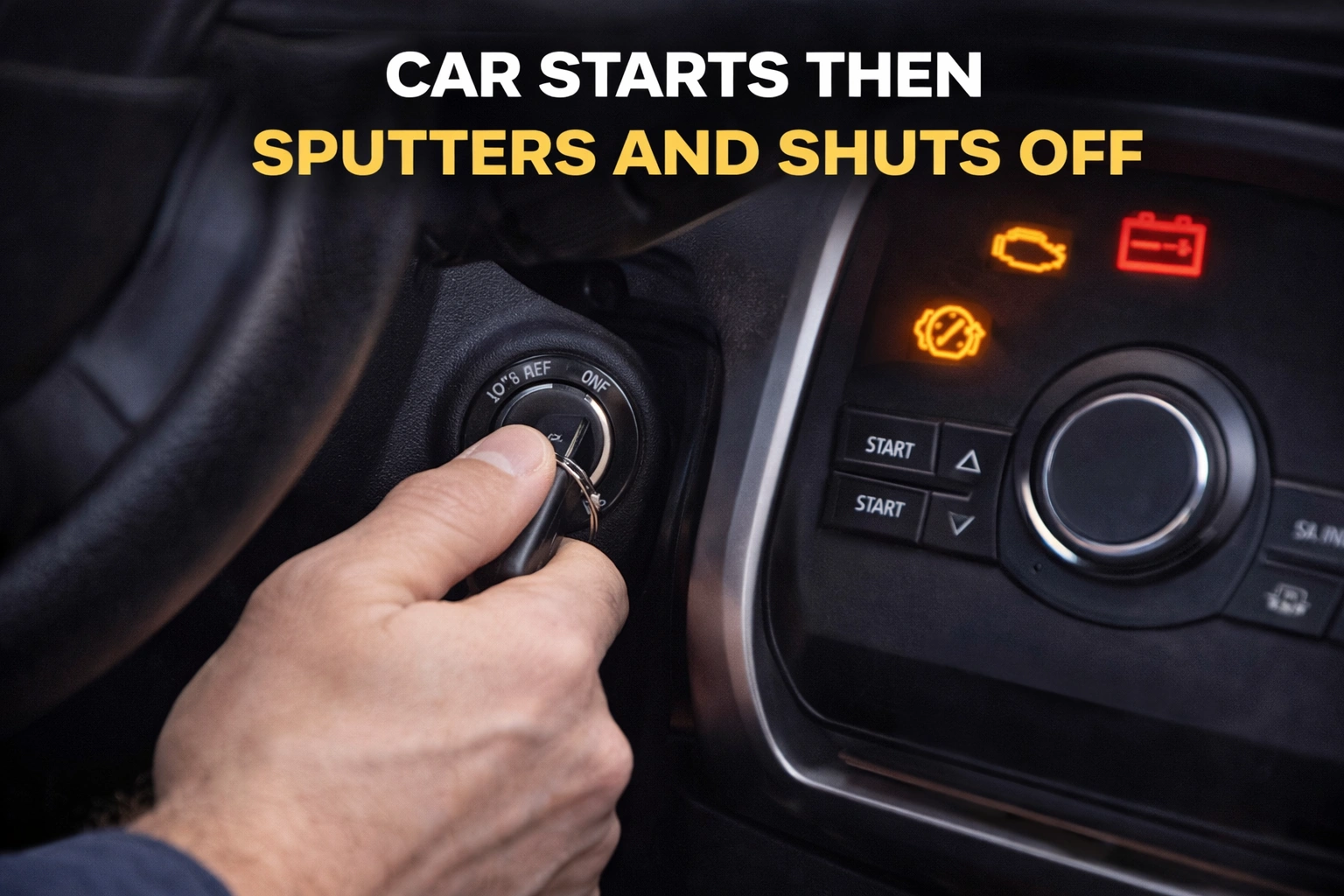
An engine that fires up normally but then begins to sputter before shutting off can leave anyone frustrated. The starter works. The battery appears strong. The engine briefly comes to life. Then it stumbles, shakes, and dies. That sequence often points to a problem beyond basic starting components.
Starting an engine requires a precise balance of air, fuel, spark, and timing. The initial ignition may occur successfully, but once the system transitions from startup mode to normal operation, weaknesses in fuel delivery, airflow measurement, or sensor input can interrupt combustion.
Modern vehicles rely on electronic control modules to manage that transition. If critical signals are missing or inconsistent, the system may shut down to prevent damage. In older vehicles, mechanical fuel or ignition faults may produce similar behavior.
Pinpointing the cause requires careful observation. Does the engine stall immediately or after a few seconds? Does it restart easily? Does it idle roughly before cutting out? Each detail narrows the possible source of the problem.
Table of Contents
Fuel Delivery Problems That Cause Immediate Stall
Weak Or Failing Fuel Pump
A failing fuel pump often allows enough pressure for the engine to start but cannot sustain pressure under running conditions. During startup, the fuel pump primes the system briefly. If internal components are worn, pressure may drop moments after ignition.
The engine may sputter as fuel flow becomes inconsistent. Eventually, it stalls because the injectors cannot deliver adequate fuel.
Testing fuel pressure with a gauge provides clear evidence. If pressure falls rapidly after startup, the pump or fuel pressure regulator may be at fault.
Replacing a weak pump restores consistent flow and prevents repeated stalling.
Clogged Fuel Filter Restricting Flow
A severely clogged fuel filter restricts gasoline reaching the engine. At idle, limited flow may allow temporary combustion. As the engine attempts to stabilize, restricted supply causes hesitation and shutdown.
Fuel filters trap debris and contaminants over time. When neglected, they create bottlenecks that mimic pump failure.
Replacing the filter is inexpensive compared to pump replacement and should be considered during diagnosis.
Consistent maintenance prevents this issue from developing.
Fuel Injector Malfunction
Injectors must deliver precise fuel quantities to each cylinder. If injectors become clogged or fail electrically, combustion becomes uneven.
An engine may start briefly on initial fuel delivery but stall when injectors fail to maintain spray patterns.
Listening for injector clicking sounds or performing balance testing helps confirm injector operation.
Cleaning or replacing faulty injectors resolves fuel imbalance problems.
Airflow And Idle Control Issues
Dirty Or Faulty Mass Air Flow Sensor
The mass air flow sensor measures incoming air volume. After startup, the engine control module adjusts fuel mixture based on airflow readings.
If the sensor sends incorrect data, the mixture may become too lean or too rich. This imbalance causes sputtering and stalling.
Cleaning the sensor with proper cleaner may restore function. Severe contamination or internal failure requires replacement.
Accurate airflow measurement ensures smooth idle transition.
Idle Air Control Valve Failure
Older vehicles with idle air control valves rely on this component to regulate idle speed. If the valve sticks or becomes clogged, the engine may fail to maintain idle after startup.
The engine may start normally but stall once initial throttle input ends.
Cleaning or replacing the valve restores proper idle regulation.
Electronic throttle bodies in newer vehicles perform similar functions and may also require cleaning.
Vacuum Leaks Affecting Air Fuel Ratio
Vacuum leaks allow unmetered air into the engine. During startup, enrichment strategies may compensate briefly. Once enrichment tapers, excess air disrupts mixture balance.
The result is rough running followed by shutdown.
Inspecting vacuum hoses, intake manifold gaskets, and brake booster lines helps locate leaks.
Repairing leaks restores proper mixture control.
Ignition System And Sensor Failures
Crankshaft Position Sensor Problems
The crankshaft position sensor monitors engine rotation. Without accurate input, the engine control module cannot maintain ignition timing.
A failing sensor may allow startup but lose signal as temperature rises or RPM changes. The engine then sputters and stalls.
Diagnostic codes often reveal sensor malfunction.
Replacing the sensor restores timing stability.
Faulty Ignition Coils Or Spark Plugs
Weak ignition components may produce spark initially but fail under load. Misfires disrupt combustion, causing sputtering.
Inspecting spark plugs for fouling and testing coils for consistent output helps confirm ignition health.
Replacing worn components ensures stable combustion.
Strong spark delivery is essential for sustained engine operation.
Security System And Electronic Interference
Immobilizer System Blocking Fuel Delivery
Modern vehicles include anti-theft systems that disable fuel or spark if unauthorized keys are detected.
The engine may start briefly but stall once the system cuts fuel supply.
A flashing security light often accompanies this issue.
Replacing key fob batteries or reprogramming keys may resolve communication problems.
Security-related shutdown differs from mechanical failure and requires electronic diagnosis.
Engine Control Module Malfunctions
Although rare, internal control module faults may interrupt communication between sensors and actuators.
Voltage irregularities or software errors can cause unstable idle followed by shutdown.
Professional scanning and reprogramming may be required.
Electrical stability ensures consistent engine control.
Tracing The Root Of The Failure
Observe Start And Stall Timing
Note how long the engine runs before stalling. Immediate stall suggests fuel delivery interruption or security issues. Longer run time may indicate airflow or sensor calibration problems.
Careful observation guides diagnostic direction.
Avoid replacing parts without confirming symptoms.
Check For Diagnostic Trouble Codes
Using an OBD-II scanner reveals stored codes related to sensors, fuel pressure, or ignition faults.
Codes provide a roadmap rather than guesswork.
Clearing codes without repair leads to recurring issues.
Test Fuel Pressure And Spark Output
Confirm consistent fuel pressure during startup and idle. Verify spark strength on multiple cylinders.
Testing both systems isolates the problem area.
Accurate measurement prevents unnecessary expenses.
The Practical Conclusion
An engine that starts then sputters and shuts off indicates interruption in the balance of fuel, air, or ignition timing. Common causes include weak fuel pumps, clogged filters, faulty sensors, vacuum leaks, or ignition component wear. In modern vehicles, security systems may also cut fuel delivery.
Careful symptom observation combined with methodical testing identifies the underlying issue. Replacing parts without confirmation often wastes time and money.
Addressing the root cause restores stable idle and reliable performance. With systematic diagnosis and proper repair, this frustrating problem can be resolved effectively and permanently.

- How Families in UAE Manage Changing Vehicle Needs - March 4, 2026
- How Many Axles On A Car And What They Do - March 2, 2026
- Metal Shavings In Oil Causes And What It Means - March 2, 2026