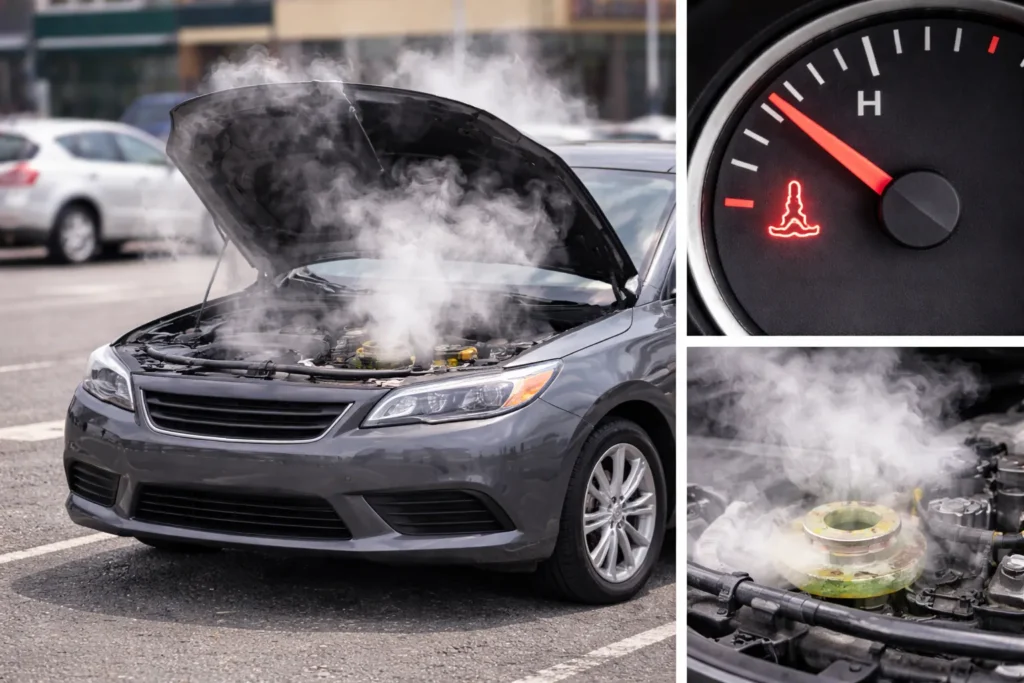
An engine is designed to manage heat under all conditions, whether the car is moving fast on a highway or sitting still at a traffic light. When a vehicle begins to overheat only while idling, it often confuses owners because the problem disappears as soon as the car starts moving again.
This pattern feels strange, but it is actually one of the most revealing clues in cooling system diagnosis.
Overheating at idle points toward airflow, circulation, or heat management issues rather than major internal engine failure. At low speeds, the engine relies heavily on cooling fans, proper coolant flow, and pressure control. When any of these elements fall out of balance, heat builds rapidly even though the engine load is minimal.
Ignoring this condition is risky. What starts as a mild temperature rise at idle can progress into severe overheating, engine damage, or roadside breakdowns.
Knowing why this happens, what symptoms appear early, and how to correct the issue restores confidence and protects long-term engine health. Clear explanations and practical steps make it easier to act before the problem becomes expensive.
Table of Contents
Why A Car Overheats Only When Idling
Idle overheating follows a clear mechanical logic. When the vehicle is not moving, several cooling processes change.
Reduced Natural Airflow
At speed, air flows naturally through the radiator, removing heat efficiently. At idle, that airflow disappears. The cooling system must rely entirely on electric or mechanical fans.
If fans fail to activate or move enough air, heat accumulates quickly.
Lower Coolant Circulation Speed
Engine speed affects how fast coolant circulates. At idle, coolant moves more slowly. Any restriction, air pocket, or pump inefficiency becomes more noticeable under these conditions.
Once engine speed increases, circulation improves and temperatures may stabilize temporarily.
Higher Heat Retention Around The Engine
When stationary, heat lingers around the engine bay. Components such as hoses, sensors, and the radiator absorb and retain heat rather than shedding it efficiently.
This environment exposes weaknesses in the cooling system faster than highway driving.
Common Causes Of Car Overheating When Idle
Several components work together to keep temperatures stable at idle. Failure in any one of them can trigger overheating.
Cooling Fan Not Operating Properly
One of the most common causes is a cooling fan that does not turn on when needed.
Possible reasons include:
- Faulty fan motor
- Blown fuse or bad relay
- Failed temperature sensor
- Wiring issues
Without fan assistance, the radiator cannot release heat at idle.
Low Or Contaminated Coolant
Coolant transfers heat from the engine to the radiator. Low levels reduce heat capacity, while contaminated coolant loses efficiency.
At idle, reduced circulation magnifies the problem.
Air Pockets In The Cooling System
Trapped air blocks coolant flow and creates hot spots. Air expands when heated, pushing coolant away from critical areas.
Idle conditions make air pocket symptoms more noticeable.
Thermostat Stuck Closed Or Partially Open
The thermostat controls coolant flow based on temperature. If it fails to open fully, coolant circulation remains limited.
At higher speeds, pressure may force some flow, masking the issue temporarily.
Radiator Blockage Or Internal Restriction
Debris, corrosion, or mineral buildup inside the radiator reduces heat transfer. Externally, dirt or bent fins restrict airflow.
Idle operation depends heavily on a clean, efficient radiator.
Weak Or Failing Water Pump
A worn water pump may move coolant adequately at higher speeds but struggle at idle.
This uneven performance causes temperature rise when the engine slows.
Faulty Radiator Cap Or Pressure Loss
Cooling systems rely on pressure to raise boiling point. A weak cap allows coolant to boil at lower temperatures.
Boiling creates vapor pockets that worsen idle overheating.
Early Symptoms That Appear Before Severe Overheating
Idle-related overheating rarely happens without warning signs.
Temperature Gauge Rising While Stopped
The most obvious sign is a temperature gauge that climbs during stops but drops once the car moves.
This pattern points strongly toward airflow or circulation issues.
Cooling Fan Noise Or Lack Of It
Fans may run loudly and constantly, indicating the system is struggling. Alternatively, complete silence when the engine is hot suggests fan failure.
Weak Or Inconsistent Cabin Heat
The heater relies on hot coolant flow. Air pockets or low coolant often reduce heater performance.
This symptom often appears alongside idle overheating.
Coolant Smell Or Steam Under The Hood
Overheating at idle may cause coolant to vent through the overflow or leak onto hot surfaces.
Sweet smells or light steam signal pressure problems.
Repeated Coolant Loss Without Visible Leaks
Boiling coolant may escape without leaving clear puddles. This leads to gradual loss that worsens the condition.
How To Diagnose Idle Overheating Step By Step
Systematic checks help identify the root cause accurately.
Step One Observe Fan Operation
With the engine warm and idling, check whether the cooling fan activates. It should turn on automatically as temperature rises.
No fan activity points to electrical or sensor issues.
Step Two Inspect Coolant Level And Condition
Check coolant level only when the engine is cold. Low level or rusty, sludgy coolant indicates maintenance problems.
Correct level and clean fluid are essential.
Step Three Check For Air Pockets
Listen for gurgling sounds and watch for bubbling in the reservoir. These signs suggest trapped air.
Bleeding the system may resolve the issue.
Step Four Monitor Hose Temperatures
Upper and lower radiator hoses should warm gradually. A cool lower hose while overheating indicates restricted flow.
This often points to thermostat or radiator problems.
Step Five Pressure Test The System
A pressure test reveals leaks, weak caps, and internal issues that reduce boiling resistance.
Stable pressure is critical at idle.
Fixes For Car Overheating When Idle
Solutions depend on the diagnosed cause, but most repairs are straightforward when addressed early.
Repair Or Replace Cooling Fan Components
Replacing a fan motor, relay, or sensor restores airflow at idle. This fix often resolves the issue immediately.
Electrical repairs should be done carefully to avoid repeat failures.
Refill And Bleed The Cooling System
Proper bleeding removes air pockets and restores consistent circulation.
Using the correct coolant mixture improves heat transfer.
Replace A Faulty Thermostat
Thermostats are inexpensive and critical. Installing a quality replacement restores proper coolant flow.
Skipping this step often leads to repeated overheating.
Clean Or Replace The Radiator
External cleaning improves airflow. Internal blockage may require professional flushing or radiator replacement.
A clean radiator dramatically improves idle cooling.
Address Water Pump Issues
If the pump shows signs of leakage, noise, or poor circulation, replacement is necessary.
Ignoring pump issues risks sudden overheating.
Replace A Weak Radiator Cap
A new cap restores proper system pressure and prevents boiling.
This small part has a large impact.
Long Term Risks Of Ignoring Idle Overheating
Allowing overheating to continue causes cumulative damage.
Cylinder heads can warp, head gaskets may fail, hoses degrade faster, and sensors provide inaccurate readings. Repeated heat stress shortens engine life even if full overheating events are avoided.
Early action saves major repair costs.
Prevention Tips To Avoid Idle Overheating
Preventive care reduces risk significantly.
Maintain coolant on schedule. Inspect fans and wiring periodically. Replace aging hoses and caps. Bleed the system after any coolant-related service. Keep the radiator clean.
These habits keep idle temperatures stable.
Idle Overheating Vs Overheating While Driving
Understanding the difference helps diagnosis.
Idle overheating points to airflow and circulation. Overheating at speed often points to radiator blockage or coolant loss. Both require attention, but the causes differ.
Correct interpretation prevents misdiagnosis.
When Professional Help Is Necessary
If idle overheating persists after basic checks, professional inspection is recommended. Advanced diagnostics may be needed for electronic controls, internal blockages, or sensor calibration.
Delaying professional help increases risk.
Final Thoughts
Overheating while idling is a warning sign that the cooling system is struggling under low-airflow conditions. It does not mean the engine is failing, but it does mean something essential is not working as intended.
Cooling fans, coolant flow, pressure control, and circulation must work together when the vehicle is stationary. When one component falls behind, heat builds quickly. Recognizing the symptoms early and addressing the cause restores stable temperatures and protects the engine.
A car that stays cool at idle stays reliable everywhere else. Timely diagnosis and proper maintenance ensure the cooling system does exactly what it was designed to do, even when the car is not moving at all.

- How Families in UAE Manage Changing Vehicle Needs - March 4, 2026
- How Many Axles On A Car And What They Do - March 2, 2026
- Metal Shavings In Oil Causes And What It Means - March 2, 2026