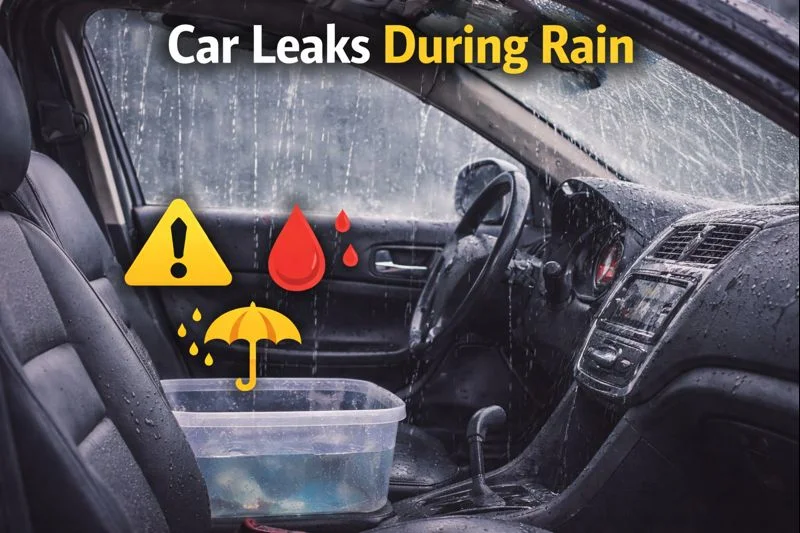
Water inside a car is never a good sign, especially when it only appears after rainfall. Many drivers first notice damp carpets, foggy windows, or a musty smell without realizing how long the moisture has been building up.
Rainwater leaks often develop slowly, starting as a minor drip and gradually turning into soaked interiors and hidden damage. Because the engine usually runs fine, the problem is easy to ignore until it becomes severe.
Modern vehicles are designed to handle rain, car washes, and wet roads without letting water inside the cabin. When leaks appear, it means seals, drains, or body panels are no longer doing their job correctly. Sometimes the cause is as simple as a clogged drain hole.
Other times, it involves worn seals or body damage that allows water to travel into areas it should never reach. Identifying where the water enters and why it happens is the key to preventing interior damage, electrical issues, and long-term corrosion.
Table of Contents
Common Areas Where Cars Leak During Rain
Door Seals And Weatherstripping
Door seals are among the most common leak sources. Over time, rubber weatherstripping dries out, cracks, or loses flexibility. When rain hits the side of the vehicle, water can slip past damaged seals and drip onto door panels or carpets.
Even slightly misaligned doors can break the seal.
Windshield And Rear Glass Seals
Windshields and rear windows are bonded to the body with sealant. If that sealant fails, water can seep inside during heavy rain. Leaks may appear at the dashboard edges, headliner, or trunk area.
Poor-quality glass replacement increases leak risk.
Sunroof Drains And Seals
Sunroofs are designed to allow small amounts of water past the glass and then drain it safely. When drain tubes clog with dirt or debris, water backs up and spills into the cabin.
Wet headliners or pillars often point to this issue.
Trunk And Tail Light Seals
Water entering the trunk usually comes from worn trunk seals or loose tail light housings. Rainwater runs down the rear body panels and finds gaps around these components.
Trunk leaks often go unnoticed until odors develop.
Less Obvious Leak Sources
Clogged Cowl Drains
The cowl area below the windshield collects rainwater and routes it away through drains. Leaves and debris can block these drains, forcing water into the cabin through vents or wiring openings.
This often causes passenger-side floor leaks.
Air Conditioning Drain Issues
Although not directly caused by rain, a clogged air conditioning drain can worsen water accumulation during wet weather. Moisture may appear under the dashboard or soak carpets.
Rain adds to existing drainage problems.
Floor Pan And Body Seams
Rust or seam separation in the floor pan allows water from wet roads to enter. This is more common in older vehicles or those driven in harsh climates.
Leaks may only appear after prolonged rain.
Hood And Firewall Grommets
Wiring and cables pass through rubber grommets in the firewall. If these grommets shrink or fall out, rainwater can follow wiring paths into the cabin.
These leaks are often hard to trace.
How To Identify The Source Of A Rain Leak
Visual Inspection Inside The Cabin
Look for water trails, stains, or damp areas on carpets, headliners, and door panels. Gravity usually shows the direction water traveled.
Start from the highest wet point.
Controlled Water Testing
Using a hose to spray specific areas helps isolate the leak. Test one section at a time rather than soaking the entire vehicle.
Patience improves accuracy.
Checking Drainage Points
Inspect sunroof drains, cowl drains, and door drain holes. Blockages are common and often overlooked.
Clearing drains may solve the issue instantly.
Removing Interior Trim If Necessary
In stubborn cases, removing trim panels allows direct observation of water entry paths.
This step reveals hidden leaks.
Problems Caused By Ignoring Rain Leaks
Interior Mold And Odor
Persistent moisture leads to mold growth under carpets and seats. Musty smells become difficult to eliminate.
Mold also affects air quality.
Electrical System Damage
Modern vehicles contain wiring and control modules beneath carpets and dashboards. Water exposure can cause corrosion and electrical failures.
Electrical repairs are expensive.
Rust And Structural Damage
Water trapped inside the vehicle promotes rust from the inside out. Floor pans and seat mounts are especially vulnerable.
Rust weakens structural integrity.
Reduced Resale Value
Water-damaged interiors significantly lower resale value. Evidence of leaks often scares buyers.
Early repair protects value.
Repair Options And Typical Costs
Simple Drain Cleaning
Clearing clogged drains is often inexpensive and quick. Many cases require only basic tools or compressed air.
Cost is minimal.
Seal And Weatherstrip Replacement
Replacing door, trunk, or sunroof seals ranges from affordable to moderate depending on vehicle design.
Labor increases cost more than parts.
Windshield Resealing Or Replacement
Resealing glass requires professional tools and expertise. Poor repairs can worsen leaks.
This repair costs more but solves persistent issues.
Body Seam And Rust Repair
Repairing rusted seams or floor pans is labor-intensive. Costs rise quickly if corrosion spreads.
Early detection saves money.
Preventing Rain Leaks In The Future
Regular Seal Inspection
Check rubber seals during routine maintenance. Replace hardened or cracked seals promptly.
Rubber degrades gradually.
Keep Drain Areas Clear
Remove leaves and debris from cowl panels and sunroof tracks. Clear drains before rainy seasons.
Clean drains prevent backups.
Avoid High-Pressure Car Wash Damage
High-pressure water can force past weak seals. Gentle washing reduces stress on aging weatherstrips.
Seal longevity improves with care.
Address Small Leaks Immediately
Minor dampness often signals early failure. Fixing it early avoids widespread damage.
Small repairs stay small.
Why Leaks Sometimes Only Appear During Heavy Rain
Light rain may not overwhelm compromised seals or drains. Heavy rain increases water volume and pressure, exposing weaknesses.
Vehicle angle also affects leak paths.
Parking on inclines can change where water enters.
Common Misconceptions About Rain Leaks
Many believe leaks only happen in old cars. Newer vehicles can leak due to assembly issues or clogged drains.
Another myth is that silicone sealant fixes everything. Improper sealing can trap water and worsen damage.
Temporary fixes often fail long-term.
When Professional Help Is Necessary
If the leak source remains unclear after basic inspection, professional diagnosis is recommended. Technicians use smoke tests and specialized equipment to trace water paths accurately.
Professional repair ensures proper sealing.
Repeated leaks often require expert attention.
Final Thoughts
Car leaks during rain are more than a comfort issue. They signal that water is entering areas meant to stay dry, risking interior damage, electrical problems, and corrosion. While some leaks come from simple issues like clogged drains or worn seals, others point to deeper body or glass sealing failures.
Taking the time to locate and repair leaks early prevents costly repairs later. Regular inspection, proper drainage maintenance, and prompt attention to moisture signs keep the interior dry and the vehicle protected. Rainwater should stay outside the car, and with the right approach, it can.

- How Families in UAE Manage Changing Vehicle Needs - March 4, 2026
- How Many Axles On A Car And What They Do - March 2, 2026
- Metal Shavings In Oil Causes And What It Means - March 2, 2026