
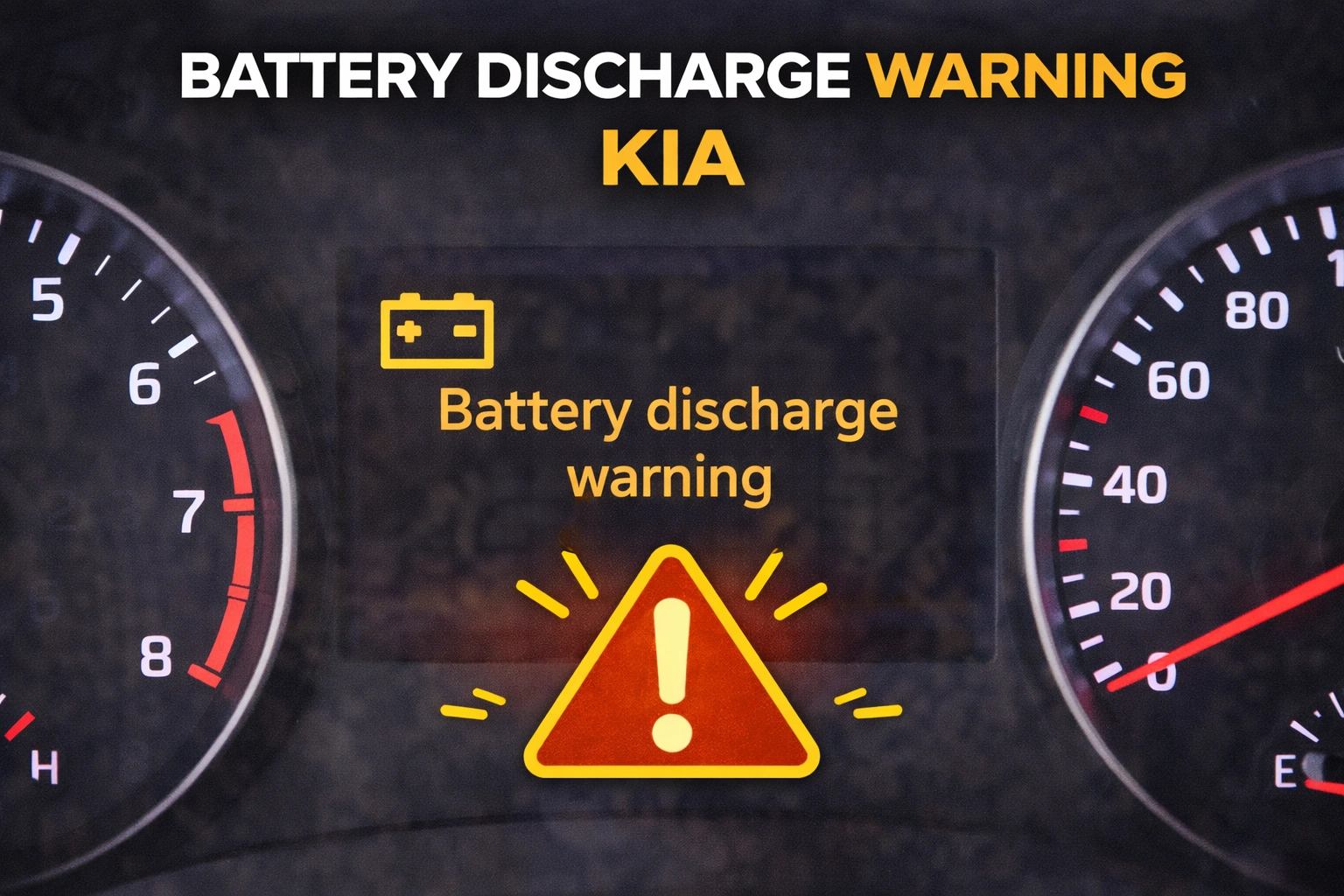
Modern Kia vehicles are packed with technology. From push-button start systems to touchscreen infotainment units and smart key access, these features depend heavily on a healthy electrical system. When a message such as “Battery Discharge Warning” appears on the dashboard screen, it often catches drivers off guard. The vehicle may still start normally, yet the warning suggests something in the system is drawing more power than it should.
Unlike a simple battery light that signals charging system failure, this message usually relates to excessive electrical load while the engine is off or during certain operating conditions. It can appear in models such as the Kia Optima, Sportage, Sorento, Forte, and Telluride.
Addressing the issue early protects the battery, prevents unexpected no-start situations, and avoids strain on the alternator and other electrical components.
Table of Contents
What The Battery Discharge Warning Means In A Kia
Difference Between Charging Light And Discharge Warning
The traditional red battery symbol on the instrument cluster typically indicates a charging system issue. That light often appears when the alternator is not supplying adequate voltage.
The “Battery Discharge Warning” message, however, usually relates to battery drain while the engine is off or when certain electronics remain active longer than intended. It can also appear when interior accessories consume more power than the battery can safely sustain.
Kia’s electrical monitoring system tracks voltage levels. When it detects abnormal discharge patterns, it triggers the warning to prevent full battery depletion. The message serves as an early alert rather than confirmation of complete failure.
Why Modern Kias Are More Sensitive To Battery Drain
Today’s vehicles rely on dozens of control modules. Even when parked, systems such as keyless entry, alarm modules, telematics units, and memory functions remain active.
Because of this constant background activity, the battery must maintain stable voltage even during inactivity. Short trips, extreme temperatures, or aging batteries reduce reserve capacity. Once voltage drops below a safe threshold, the vehicle may display the discharge warning message.
This sensitivity protects electronic systems from voltage instability, which could otherwise affect programming and performance.
Common Causes Behind The Warning Message
Interior Lights And Accessory Drain
One of the simplest causes involves interior lights remaining on after the engine is turned off. Dome lights, trunk lights, glove compartment lights, or vanity mirror lights may stay illuminated longer than expected.
Some Kia models display the warning when the ignition is in accessory mode for extended periods. Listening to music with the engine off or charging devices through USB ports can drain the battery faster than anticipated.
Although these drains seem minor, prolonged usage without engine charging can significantly lower voltage.
Weak Or Aging Battery
Batteries naturally degrade over time. Most automotive batteries last between three to five years depending on climate and usage. As internal plates wear, the battery’s ability to hold charge decreases.
An aging battery may still start the engine but struggle to maintain voltage during standby. The vehicle’s monitoring system may interpret this as abnormal discharge.
Testing battery health with a load tester provides a clearer picture of capacity and overall condition.
Faulty Alternator Or Charging System
While the discharge warning focuses on battery drain, a weak alternator can contribute indirectly. If the alternator does not fully recharge the battery during operation, the battery may remain partially depleted.
Over time, insufficient charging creates lower resting voltage. The monitoring system may then issue warnings during normal parking periods.
Checking charging voltage while the engine runs helps determine alternator performance.
Parasitic Electrical Draw
Certain components may continue drawing power when they should shut down. Examples include malfunctioning relays, aftermarket alarm systems, or defective control modules.
Parasitic draw testing involves measuring current flow after the vehicle enters sleep mode. Excessive draw beyond normal specifications indicates a circuit that remains active.
Identifying the exact source requires systematic isolation of fuses and circuits.
Diagnostic Process To Identify The Root Cause
Initial Visual Inspection And Battery Test
Begin by inspecting battery terminals for corrosion. Loose or corroded connections reduce voltage stability and may trigger warnings. Cleaning terminals and ensuring tight connections often resolves minor issues.
Next, perform a battery load test. This evaluates capacity under simulated demand. If voltage drops below acceptable levels during testing, replacement may be necessary.
Recording resting voltage after the vehicle sits overnight provides additional insight into discharge patterns.
Measuring Charging Voltage
With the engine running, voltage at the battery terminals should typically range between 13.5 and 14.7 volts. Readings below this range may indicate alternator inefficiency.
High voltage readings above normal limits may signal regulator issues. Both scenarios can affect battery longevity and contribute to warning messages.
Consistent monitoring ensures accurate diagnosis before replacing components unnecessarily.
Parasitic Draw Testing Procedure
After shutting off the vehicle and allowing modules to enter sleep mode, an ammeter can measure current draw. Acceptable parasitic draw typically falls within a low milliamp range.
If readings exceed normal levels, removing fuses one at a time helps isolate the circuit responsible. Once identified, further inspection of that system reveals the defective component.
This method prevents guesswork and avoids replacing parts without confirmation.
Repair Options And Cost Considerations
Repair expenses vary depending on the specific component involved. Replacing a battery generally costs less than alternator replacement, while diagnosing parasitic draw may require additional labor time. Sensor or module issues can increase costs depending on accessibility and part pricing. Addressing minor electrical drains early often prevents more extensive charging system repairs later.
Battery Replacement
Installing a new battery resolves many discharge warnings, particularly when the original unit approaches the end of its lifespan. Choosing a battery with correct cold cranking amps and reserve capacity ensures compatibility with Kia’s electrical system.
Professional installation includes system reset procedures in certain models, especially those equipped with battery management systems.
Alternator Repair Or Replacement
If charging output falls outside specification, alternator service may be necessary. Replacement involves removal of drive belts and electrical connectors. Labor intensity depends on engine layout.
Restoring proper charging voltage protects the new battery and stabilizes onboard electronics.
Electrical Component Repair
When parasitic draw testing identifies faulty modules or relays, targeted repair prevents recurring battery depletion.
Replacing only the defective component rather than multiple parts reduces unnecessary expense.
Preventive Measures To Avoid Recurring Battery Discharge
Smart Charging Habits
Limiting accessory usage while the engine is off helps maintain battery reserve. If extended audio use is necessary, starting the engine periodically allows alternator recharge.
Taking longer drives occasionally ensures the battery receives sufficient charging time, especially for vehicles frequently used for short trips.
Regular Battery Health Checks
Periodic voltage checks and annual load testing provide early detection of declining performance. Cleaning terminals and securing cables reduce resistance and maintain stable electrical flow.
Monitoring battery age and replacing proactively prevents unexpected warnings.
Software Updates And Dealer Inspections
Manufacturers occasionally release software updates addressing electrical sensitivity or module behavior. Visiting a dealership for technical service bulletins ensures the vehicle operates with the latest calibrations.
Professional inspections help confirm that no hidden electrical drains exist.
Long Term Impact Of Ignoring The Warning
Ignoring the battery discharge warning can lead to full battery depletion, leaving the vehicle unable to start. Repeated deep discharges shorten battery lifespan significantly.
Chronic low voltage may also affect sensitive modules, causing unpredictable electrical behavior. Addressing the issue promptly protects both reliability and electronic stability.
Maintaining a healthy charging system ensures consistent performance and reduces the likelihood of roadside inconvenience.
Bottom Line
The Kia battery discharge warning serves as an early alert that electrical demand exceeds safe limits or that charging performance may be declining. Common causes include accessory overuse, aging batteries, alternator inefficiency, or parasitic electrical draw.
Accurate diagnosis through voltage testing and systematic inspection prevents unnecessary part replacement. Timely repairs and preventive maintenance protect the battery, alternator, and onboard electronics.
Taking the warning seriously helps maintain dependable operation and prevents unexpected starting problems.

- How Families in UAE Manage Changing Vehicle Needs - March 4, 2026
- How Many Axles On A Car And What They Do - March 2, 2026
- Metal Shavings In Oil Causes And What It Means - March 2, 2026