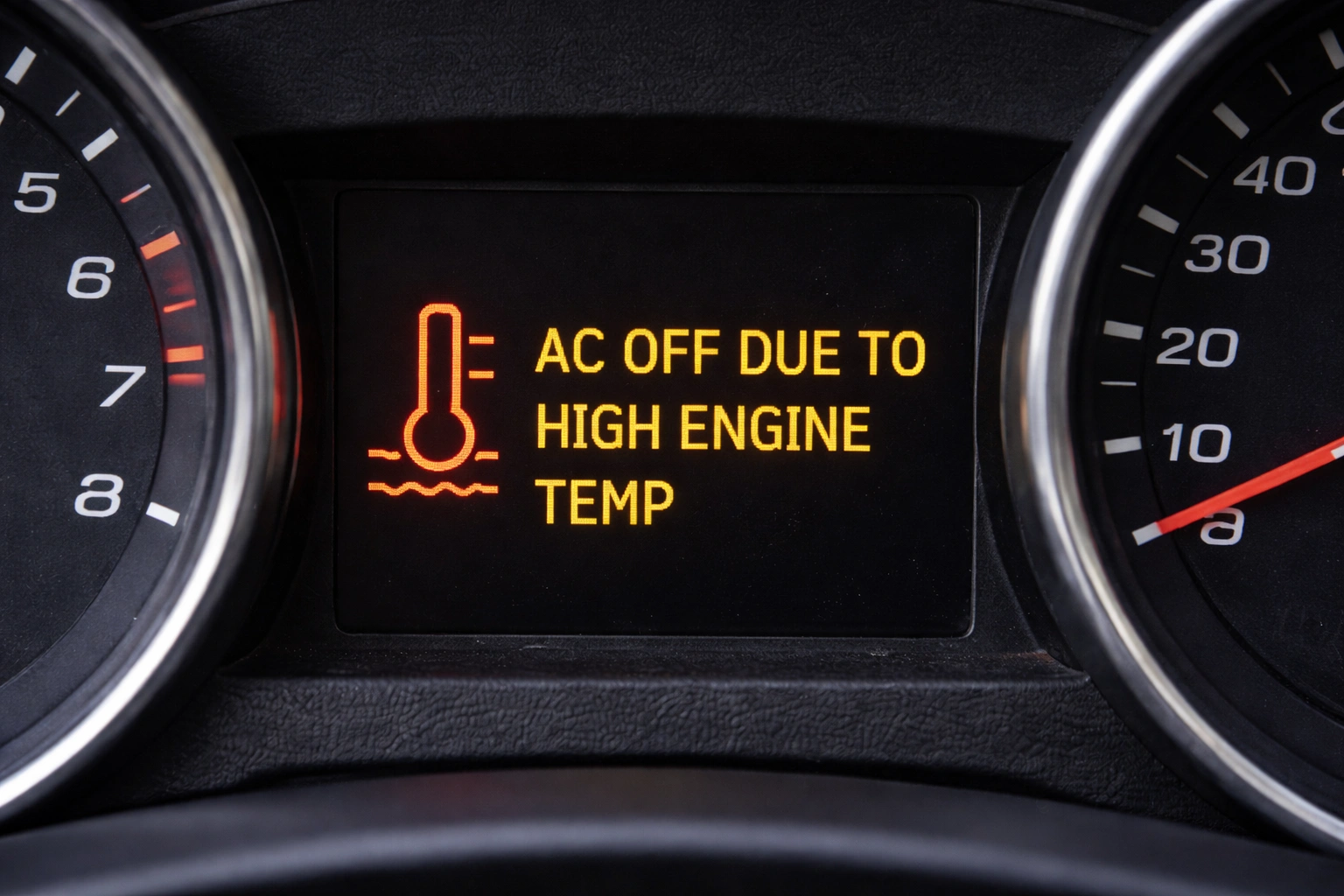
Modern vehicles are equipped with smart protection systems designed to prevent serious engine damage. One message that often surprises drivers is “AC Off Due To High Engine Temp.” It usually appears on the dashboard when engine temperature rises beyond normal operating range. At that moment, the air conditioning system shuts down automatically to reduce load on the engine and help it cool down.
The air conditioning compressor draws power directly from the engine. When the cooling system struggles to maintain safe temperature levels, the vehicle control module temporarily disables the AC. This is not a fault with the air conditioning unit itself. It is a warning that the engine is overheating or close to it. Ignoring this message can lead to severe mechanical damage. Identifying the root cause quickly helps protect internal components and restore normal operation.
Table of Contents
Why The AC System Shuts Off When Engine Temperature Rises
Engine Protection Strategy Built Into Modern Vehicles
Modern engines rely on precise temperature control. The cooling system maintains operating temperature within a narrow range to ensure proper combustion and lubrication. When sensors detect excessive heat, the vehicle computer initiates protective measures.
One of the first steps is disabling the air conditioning compressor. The compressor adds extra load to the engine and generates additional heat. Shutting it off reduces strain and allows more power to be directed toward cooling functions.
Vehicles such as the Chevrolet Malibu and Ford Escape use similar strategies to prevent overheating damage.
This automatic response helps avoid warped cylinder heads, blown head gaskets, and cracked engine blocks.
Relationship Between AC Compressor And Engine Load
The AC compressor operates using a belt connected to the engine crankshaft. When activated, it increases mechanical resistance. That additional load requires more fuel combustion and produces extra heat.
During high temperature conditions, every bit of cooling capacity matters. Disabling the compressor reduces workload and allows the radiator and cooling fans to focus entirely on engine temperature control.
This feature demonstrates how interconnected vehicle systems are. Cooling, air conditioning, and engine management operate together to maintain stability.
Recognizing this connection clarifies why the AC shuts off before more severe warnings appear.
Common Causes Of High Engine Temperature
Low Coolant Level Or Coolant Leaks
The cooling system relies on coolant to absorb and transfer heat away from the engine. If coolant levels drop due to leaks, the system cannot regulate temperature effectively.
Leaks may occur from hoses, radiator seams, water pump seals, or head gasket failure. A visible puddle under the vehicle or a sweet odor near the engine bay often indicates coolant leakage.
When coolant circulation becomes insufficient, temperature rises quickly, triggering the AC shutdown message.
Checking the coolant reservoir and inspecting for visible leaks should be the first step.
Driving with low coolant risks severe engine damage.
Faulty Thermostat Or Stuck Closed Valve
The thermostat controls coolant flow between the engine and radiator. It remains closed during cold startup and opens once the engine reaches operating temperature.
If the thermostat becomes stuck in the closed position, coolant cannot circulate through the radiator. Heat builds rapidly inside the engine.
This condition often causes temperature spikes within minutes of driving.
Replacing a faulty thermostat typically restores proper cooling flow and resolves overheating.
Timely replacement prevents long term damage.
Radiator Fan Or Cooling Fan Failure
Cooling fans pull air through the radiator to dissipate heat, especially during idle or slow traffic. If a fan motor fails or a relay malfunctions, airflow decreases significantly.
Without proper airflow, heat accumulates even if coolant levels are adequate.
In vehicles like the Toyota Camry, electric fans activate automatically based on temperature sensor signals.
A non functioning fan may cause overheating primarily in stop and go traffic.
Testing fan operation helps confirm whether this component contributes to the issue.
Warning Signs Beyond The Dashboard Message
Rising Temperature Gauge Reading
Most vehicles display engine temperature through a gauge or digital indicator. A rapid rise toward the red zone confirms overheating.
Steam from under the hood or coolant odor further indicates serious temperature elevation.
Ignoring gauge warnings can result in engine failure.
Pulling over safely and shutting off the engine prevents further heat buildup.
Allowing the engine to cool before opening the hood avoids burn injuries.
Reduced Engine Performance
When overheating occurs, engine control systems may reduce power to protect internal components.
Drivers may notice sluggish acceleration or limited speed. This protective mode prevents excessive strain while temperature remains high.
Once the root cause is corrected and the engine cools, performance typically returns to normal.
Addressing overheating promptly ensures long term reliability.
Steps To Diagnose And Fix The Problem
Begin by checking coolant levels once the engine cools completely. Never remove the radiator cap while the engine is hot.
Inspect hoses, radiator connections, and the water pump area for leaks.
Verify that cooling fans activate when the engine warms up. If not, inspect fuses and relays.
A pressure test can identify hidden coolant leaks. Diagnostic scanning tools may reveal sensor or thermostat related fault codes.
Repairing the underlying cause restores cooling efficiency and allows the AC system to function normally again.
Routine maintenance such as coolant flushes and hose inspection reduces future risk.
The “AC Off Due To High Engine Temp” message signals an overheating condition rather than an air conditioning malfunction. The system disables the compressor to reduce engine load and protect vital components.
Common causes include low coolant, thermostat failure, cooling fan malfunction, or leaks within the system. Prompt inspection and repair prevent severe mechanical damage and restore normal operation. Maintaining a healthy cooling system ensures both engine reliability and comfortable cabin temperature throughout the year.

- How Families in UAE Manage Changing Vehicle Needs - March 4, 2026
- How Many Axles On A Car And What They Do - March 2, 2026
- Metal Shavings In Oil Causes And What It Means - March 2, 2026