
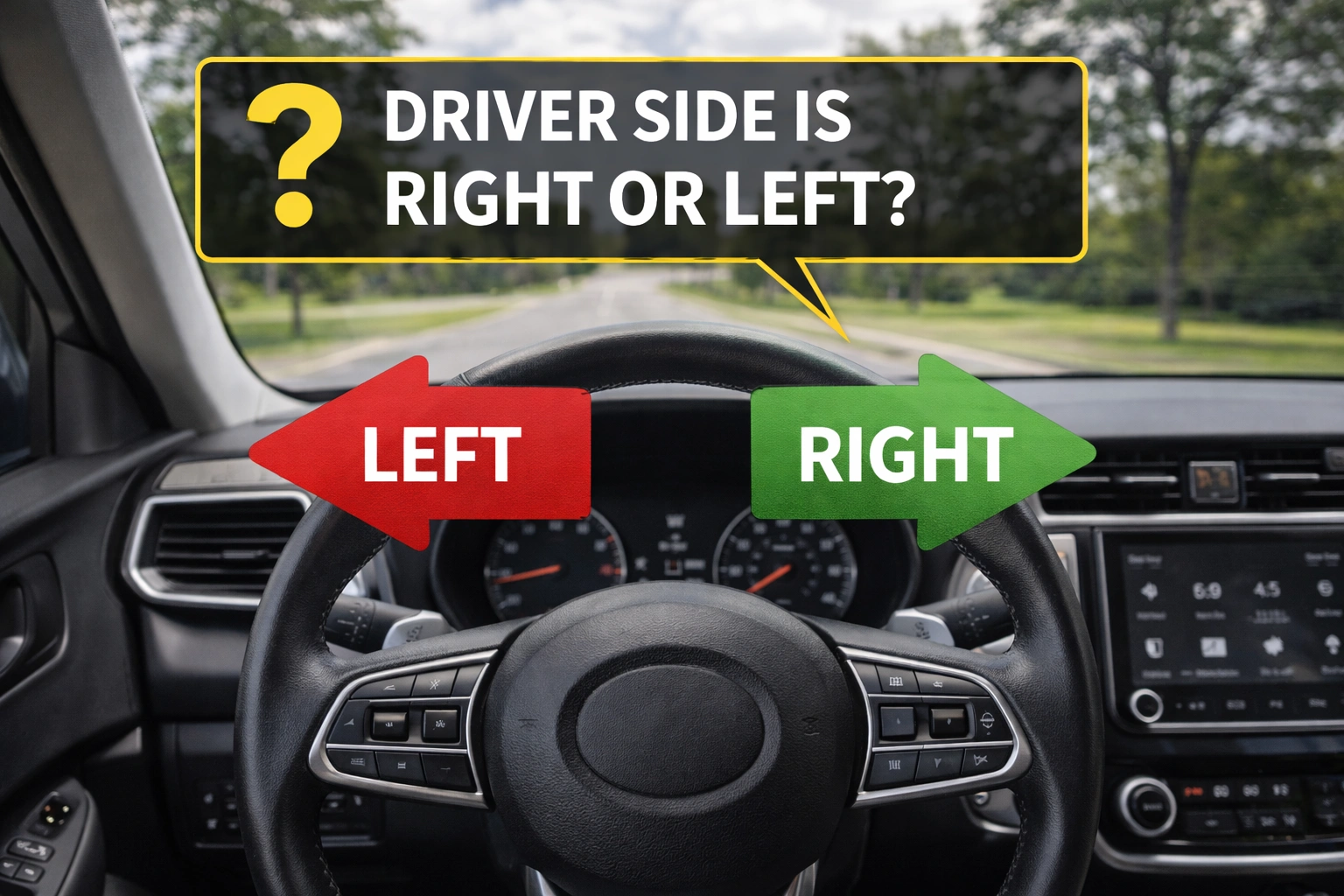
Vehicle orientation can seem simple at first glance, yet confusion often arises when identifying the driver side. Many drivers assume it is always the left side, while others encounter vehicles from different countries where the steering wheel sits on the opposite side. The answer depends on where the vehicle is designed to operate. In countries where traffic flows on the right side of the road, the driver sits on the left. In countries where traffic flows on the left side of the road, the driver sits on the right.
This difference affects more than just seating position. It influences mirror placement, control layout, headlight alignment, and even windshield wiper direction. Knowing which side is considered the driver side helps when ordering parts, performing repairs, or communicating with service professionals. Clear orientation avoids mistakes that can lead to incorrect installation or unsafe modifications.
Table of Contents
Understanding Driver Side Orientation By Country
Countries With Left Side Driver Position
In nations where vehicles drive on the right side of the road, the driver sits on the left side of the vehicle. This setup allows better visibility of oncoming traffic and improves judgment when passing.
Countries such as the United States and Canada follow this configuration. Vehicles like the Toyota Camry and Ford F-150 sold in these markets feature steering wheels on the left.
This layout provides clear visibility of center road lines and intersections.
Most vehicles in North America and continental Europe use this left side driver configuration.
Countries With Right Side Driver Position
In countries where traffic flows on the left side of the road, the driver sits on the right side of the vehicle. This allows the driver to remain closer to the center of the road.
Nations such as the United Kingdom, Japan, Australia, and India follow this system. Vehicles built for these markets, including models like the Honda Civic in Japanese specification, place the steering wheel on the right.
Right hand drive vehicles differ in dashboard layout and mirror positioning.
This configuration ensures safe lane positioning in countries with left side traffic rules.
How To Identify Driver Side Correctly
Using The Steering Wheel As Reference
The simplest way to determine the driver side is by locating the steering wheel. The side where the steering wheel is installed is always considered the driver side.
When ordering parts such as mirrors, door panels, or headlights, the driver side refers to the side where the steering wheel sits in that specific vehicle configuration.
Confusion often arises when parts are labeled based on vehicle orientation rather than viewer perspective.
Driver side always refers to the driver’s seating position, not the viewer’s viewpoint from outside the car.
Understanding Left And Right From Driver Perspective
Automotive terminology uses the driver’s perspective to define left and right. For example, the left headlight is the headlight on the driver’s left when seated inside the vehicle.
In a left hand drive vehicle, the driver side headlight is on the left. In a right hand drive vehicle, the driver side headlight is on the right.
Vehicles such as the Chevrolet Silverado 1500 follow this orientation based on market specification.
Using the driver’s perspective ensures accurate part identification and repair communication.
Why Driver Side Matters For Repairs And Safety
Ordering Correct Replacement Parts
Many automotive parts are side specific. Mirrors, doors, headlights, tail lights, and suspension components often differ between left and right sides.
Ordering a part labeled driver side without confirming vehicle configuration can result in receiving the wrong component.
International vehicle imports sometimes create confusion because driver orientation differs by market.
Confirming steering wheel position before purchasing parts prevents unnecessary delays and additional shipping costs.
Alignment, Headlight Aim, And Visibility
Headlights are designed differently for left and right traffic systems. Beam patterns are angled to avoid blinding oncoming drivers.
Installing headlights from a vehicle built for a different traffic system may reduce visibility and violate road regulations.
Windshield wipers are also designed to prioritize the driver’s side for maximum visibility.
Understanding orientation supports proper maintenance and safe operation.
Special Cases And Imported Vehicles
Imported vehicles sometimes retain their original right hand drive or left hand drive configuration even when used in a different country.
For example, a right hand drive Nissan Skyline imported into the United States will still have the steering wheel on the right side.
This may affect insurance, parts sourcing, and service procedures.
Owners of imported vehicles should verify orientation when ordering components.
Clear documentation prevents mistakes during maintenance.
The driver side refers to the side of the vehicle where the steering wheel is located. In countries with right side traffic, the driver sits on the left. In countries with left side traffic, the driver sits on the right.
Correctly identifying driver side orientation ensures accurate part selection, proper repairs, and safe vehicle operation. Always reference the steering wheel position and use the driver’s perspective when determining left and right sides.

- Broken Belt In Tire Symptoms Causes And Safe Fix - May 4, 2026
- Car Starts Sometimes And Sometimes It Doesn’t Causes And Fix - May 4, 2026
- Synthetic Oil Change Cost At Jiffy Lube In 2026 - May 4, 2026