
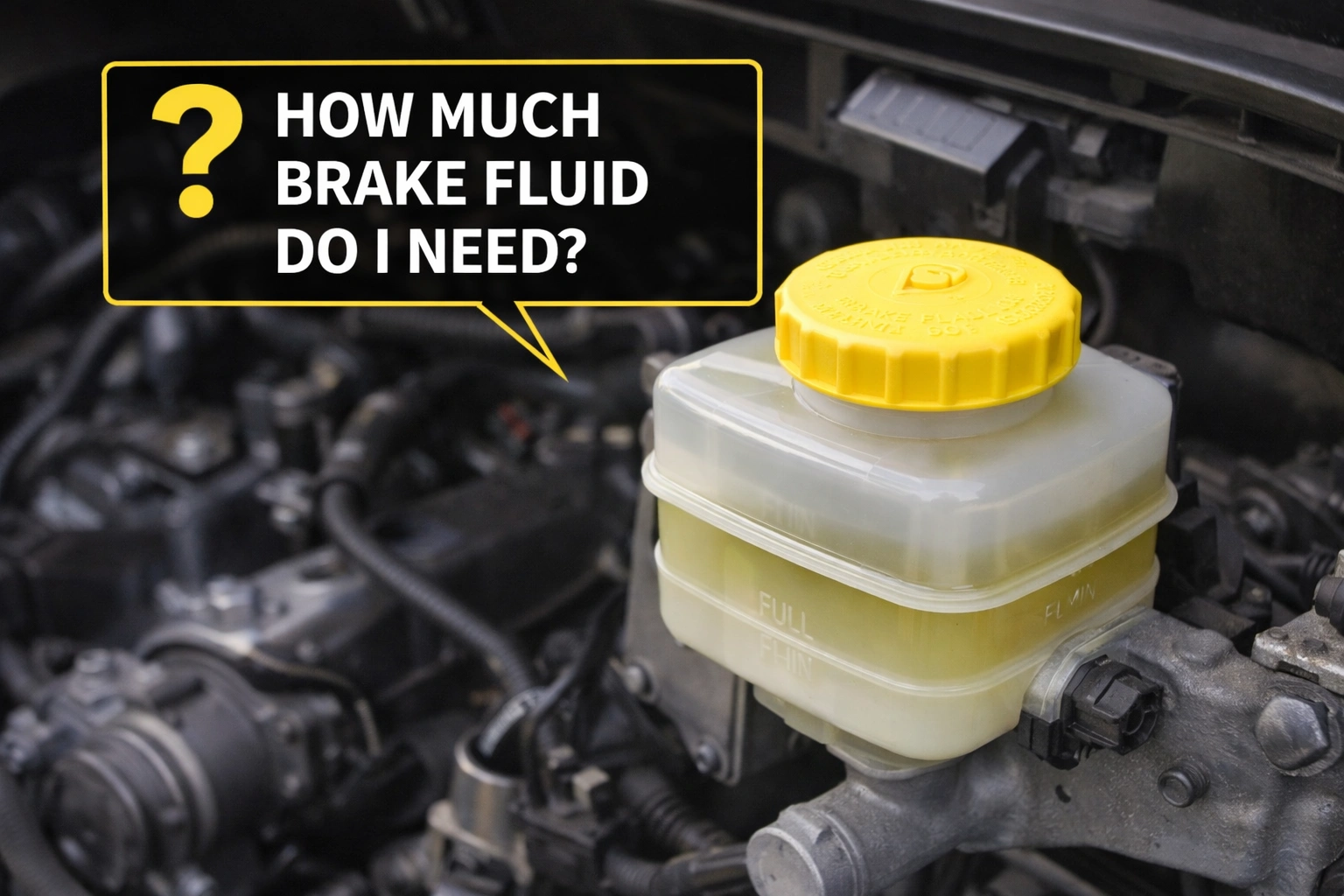
Brake fluid is one of the most overlooked yet essential fluids in any vehicle. Every time you press the brake pedal, hydraulic pressure travels through lines filled with brake fluid to activate the calipers or wheel cylinders. Without it, the system cannot function. Unlike engine oil, brake fluid does not get consumed during normal operation, but it can degrade over time and absorb moisture. When it becomes contaminated or when parts of the system are replaced, adding or flushing brake fluid becomes necessary.
A common question many vehicle owners ask is how much brake fluid they actually need. The answer depends on the size of the braking system, whether you are simply topping off the reservoir or performing a full brake fluid flush, and the type of vehicle you drive. Passenger cars, SUVs, and trucks each vary slightly in capacity. Having the right amount on hand prevents air from entering the system and ensures safe braking performance.
Table of Contents
Understanding Brake Fluid Capacity In Modern Vehicles
Typical Brake Fluid Capacity For Passenger Cars
Most standard passenger vehicles require between 0.5 to 1 liter of brake fluid for a complete flush. The brake fluid reservoir itself usually holds a much smaller amount, often between 200 to 400 milliliters. However, when flushing the entire system, additional fluid is needed to push old fluid out of brake lines and calipers.
Vehicles such as the Toyota Camry and Honda Civic generally fall within this typical range. Smaller compact cars may require slightly less fluid, while larger sedans may approach the higher end of the estimate.
If you are only topping off the reservoir after replacing brake pads, you may need less than half a bottle. For a full system bleed, purchasing at least one liter ensures sufficient supply.
Checking the owner’s manual provides the most accurate specification for your model.
Brake Fluid Requirements For SUVs And Trucks
Larger vehicles with extended brake lines and bigger calipers often require more fluid. Full size SUVs and pickup trucks may need 1 to 1.5 liters for a complete flush.
For example, a Ford F-150 or Chevrolet Tahoe has longer brake lines and larger braking components compared to compact cars. This increases total system volume.
Heavy duty vehicles with towing capability may also use larger master cylinders and brake systems designed for increased stopping power.
Buying extra fluid during service prevents interruptions if additional bleeding becomes necessary.
When You Need More Than A Simple Top Off
Full Brake Fluid Flush Versus Reservoir Refill
Topping off brake fluid is different from flushing the entire system. If the fluid level drops slightly due to pad wear, adding a small amount may restore it to the correct level. However, brake fluid naturally absorbs moisture over time, reducing its boiling point.
A full flush replaces all old fluid throughout the brake lines and calipers. During this process, fresh fluid is pushed through each wheel until clean fluid emerges.
Flushing typically requires more fluid than the system’s stated capacity because some fluid is lost during bleeding.
Routine flush intervals are often recommended every two to three years depending on manufacturer guidelines.
Brake Component Replacement And Fluid Loss
Replacing brake calipers, wheel cylinders, or brake lines may cause fluid loss. After installation, bleeding the system removes trapped air.
Air in brake lines creates a soft or spongy pedal feel. Removing air requires steady fluid flow through each bleeder valve.
During this procedure, extra fluid ensures complete removal of bubbles.
Having at least one full liter available prevents running the reservoir dry during bleeding.
Types Of Brake Fluid And Compatibility
DOT Ratings And System Requirements
Brake fluids are classified by DOT ratings such as DOT 3, DOT 4, and DOT 5.1. These ratings indicate boiling points and chemical properties.
Most passenger vehicles use DOT 3 or DOT 4 fluid. Mixing incompatible types can reduce performance.
Vehicles like the BMW 3 Series often specify DOT 4 fluid due to higher performance braking systems.
Always follow manufacturer recommendations listed in the owner’s manual.
Correct fluid selection ensures optimal braking response.
Why Overfilling Can Be A Problem
Overfilling the brake fluid reservoir can cause issues. As brake pads wear, fluid levels naturally decrease. When new pads are installed, fluid returns to the reservoir.
If the reservoir is filled beyond the maximum line, fluid may overflow during pad replacement.
Brake fluid is corrosive and can damage painted surfaces.
Maintaining the fluid level between minimum and maximum marks prevents unnecessary problems.
Step By Step Guide To Estimating Brake Fluid Needs
Begin by determining whether you are topping off or performing a complete flush.
Check the owner’s manual for fluid specification and approximate capacity.
Purchase at least one liter for a flush on most passenger cars. For larger vehicles, consider 1.5 liters to ensure sufficient supply.
During bleeding, monitor the reservoir continuously. Never allow it to empty, as this introduces air into the system.
Dispose of old brake fluid properly according to local regulations.
Taking these precautions ensures safe and efficient maintenance.
Most passenger vehicles require between 0.5 to 1 liter of brake fluid for a complete flush, while larger trucks and SUVs may need slightly more. Simple top offs require much less, often only a few ounces.
The exact amount depends on vehicle size, brake system design, and the type of service being performed. Following manufacturer specifications and purchasing slightly more than estimated prevents interruptions during maintenance. Proper brake fluid care maintains hydraulic efficiency and supports safe, reliable stopping performance.

- How Families in UAE Manage Changing Vehicle Needs - March 4, 2026
- How Many Axles On A Car And What They Do - March 2, 2026
- Metal Shavings In Oil Causes And What It Means - March 2, 2026
