Diesel engines have long been associated with strength, torque, and fuel efficiency. From heavy duty pickup trucks to commercial transport vehicles, diesel powerplants are known for durability and long service life. At the same time, modern emission standards have reshaped how diesel engines operate. Cleaner exhaust output is now a priority across the automotive industry, and that includes diesel powered vehicles.
A common question among vehicle owners is whether a diesel engine uses a catalytic converter like a gasoline engine. The short answer is yes, but the design and function differ. Diesel exhaust systems use specialized emission control components that often include catalytic converters, diesel particulate filters, and additional treatment systems. Each plays a role in reducing harmful pollutants. To fully grasp how these systems work together, it helps to examine diesel combustion characteristics and the technology developed to manage emissions effectively.
Table of Contents
How Diesel Emissions Differ From Gasoline Engines
Combustion Process And Exhaust Composition
Diesel engines operate using compression ignition rather than spark ignition. Air is compressed inside the cylinder to a very high pressure, and fuel is injected directly into that hot air. This process produces strong torque and improved fuel economy, but it also generates distinct exhaust characteristics.
Compared to gasoline engines, diesel exhaust typically contains higher levels of nitrogen oxides and particulate matter. These particulates appear as fine soot particles. While older diesel engines were known for visible black smoke, modern designs incorporate advanced emission controls to address these pollutants.
Vehicles such as the Ford F-250 Super Duty and Ram 2500 use sophisticated systems to meet strict emission regulations.
Managing these pollutants requires more than a single catalytic converter.
Regulatory Standards And Emission Requirements
Governments worldwide have introduced stringent emission standards to reduce air pollution. Diesel engines must meet limits for nitrogen oxides, hydrocarbons, carbon monoxide, and particulate matter.
To comply with these standards, manufacturers equip diesel vehicles with multiple emission control components. These systems work together to treat exhaust gases before they exit the tailpipe.
Modern diesel vehicles are significantly cleaner than earlier generations, thanks to continuous advancements in exhaust treatment technology.
Meeting these regulations has reshaped diesel engine design over the past two decades.
Diesel Catalytic Converter And Related Components
Diesel Oxidation Catalyst Explained
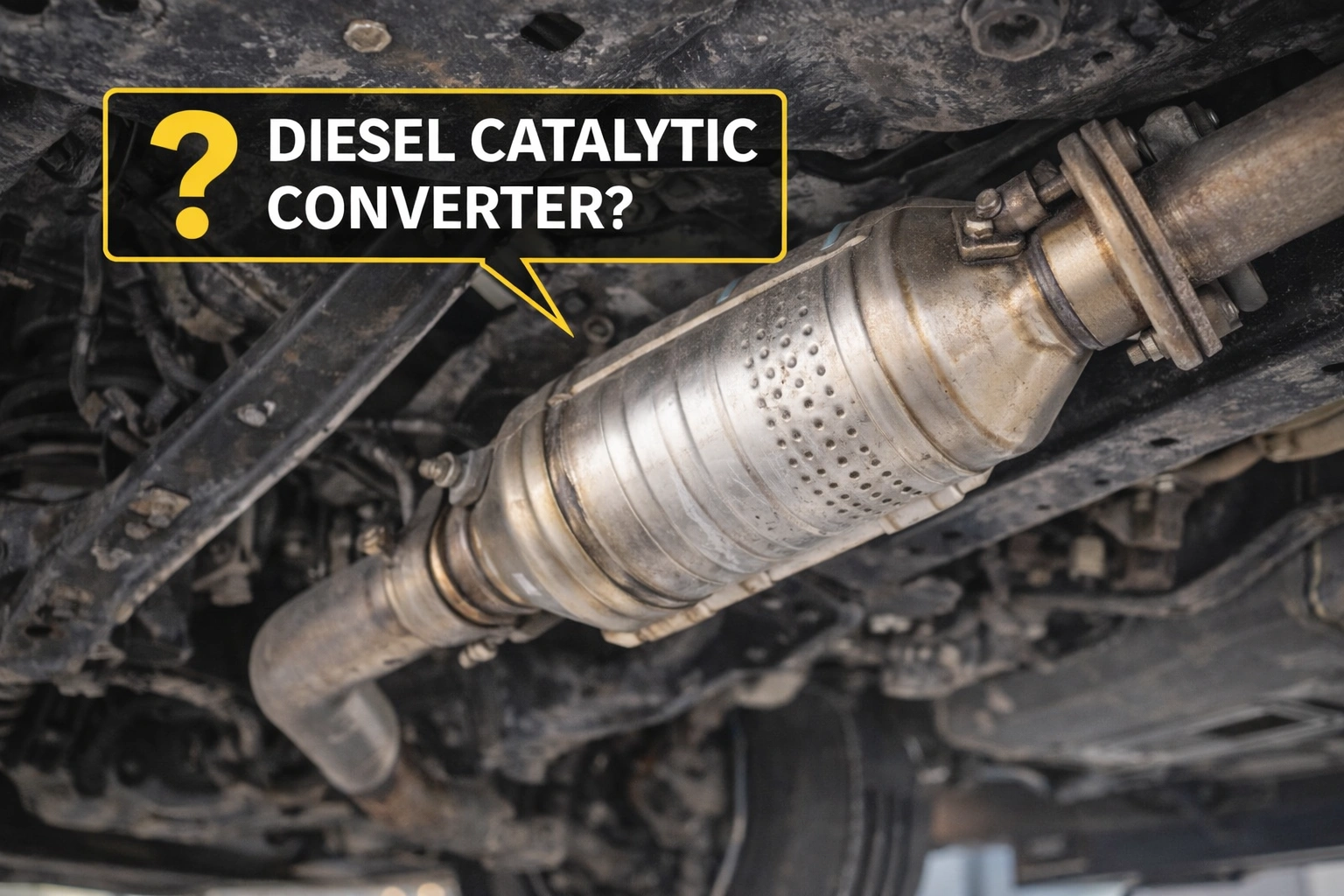
A diesel engine typically includes a diesel oxidation catalyst. This component functions similarly to a gasoline catalytic converter but is designed specifically for diesel exhaust chemistry.
The diesel oxidation catalyst reduces carbon monoxide and unburned hydrocarbons by promoting chemical reactions within a honeycomb structure coated with precious metals.
Unlike gasoline systems, diesel catalysts focus more on oxidizing pollutants rather than converting them through three way reactions.
The diesel oxidation catalyst serves as the first stage in the exhaust treatment process.
Diesel Particulate Filter Role
Chevrolet Silverado 2500HD
Many modern diesel vehicles include a diesel particulate filter positioned after the oxidation catalyst. This filter captures soot particles that would otherwise exit through the tailpipe.
Over time, trapped soot accumulates. The vehicle periodically initiates a regeneration process that burns off the collected particles at high temperatures.
This process keeps emissions within legal limits and maintains exhaust flow.
The diesel particulate filter works alongside the catalytic converter rather than replacing it.
Selective Catalytic Reduction System
In addition to a catalytic converter and particulate filter, many diesel engines use selective catalytic reduction technology. This system injects a fluid known as diesel exhaust fluid into the exhaust stream.
The fluid reacts with nitrogen oxides inside a special catalyst, converting them into harmless nitrogen and water vapor.
Selective catalytic reduction significantly lowers nitrogen oxide emissions and is common in modern heavy duty trucks.
Together, these components create a multi stage emission control system.
Differences Between Diesel And Gasoline Catalytic Converters
Gasoline engines typically use three way catalytic converters that manage nitrogen oxides, hydrocarbons, and carbon monoxide simultaneously.
Diesel engines rely on a combination of oxidation catalysts, particulate filters, and selective catalytic reduction systems to address similar pollutants in different proportions.
Diesel combustion produces excess oxygen in the exhaust stream, which requires a different chemical approach compared to gasoline systems.
While both engine types use catalytic technology, the structure and operating conditions vary significantly.
Understanding these differences clarifies why diesel exhaust systems appear more complex.
Maintenance And Longevity Of Diesel Emission Systems
Proper maintenance is essential for diesel emission components. Using correct engine oil reduces ash buildup in the particulate filter.
Maintaining adequate diesel exhaust fluid levels ensures the selective catalytic reduction system functions correctly.
Frequent short trips may prevent full regeneration of the particulate filter, potentially leading to clogging.
Following manufacturer guidelines helps extend component lifespan and avoid costly repairs.
Regular inspection supports long term reliability and emission compliance.
Diesel engines do use catalytic converters, but they are part of a broader emission control system that includes oxidation catalysts, particulate filters, and selective catalytic reduction technology.
These components work together to reduce harmful pollutants and meet strict environmental standards. Modern diesel vehicles are far cleaner than earlier models, thanks to advanced exhaust treatment systems. Proper maintenance ensures these systems continue to operate effectively and maintain emission compliance over time.

- Broken Belt In Tire Symptoms Causes And Safe Fix - May 4, 2026
- Car Starts Sometimes And Sometimes It Doesn’t Causes And Fix - May 4, 2026
- Synthetic Oil Change Cost At Jiffy Lube In 2026 - May 4, 2026