
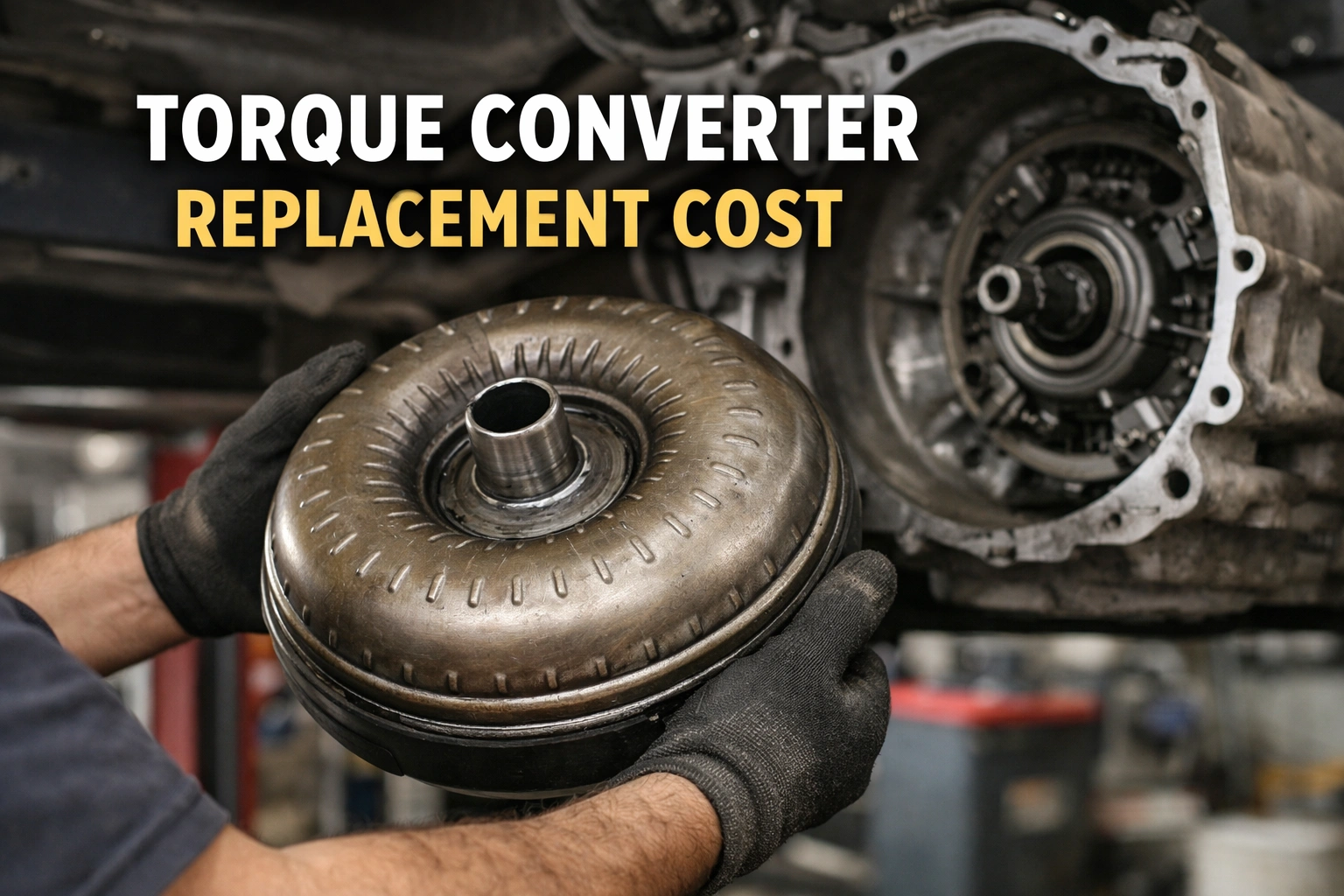
Automatic transmissions rely on a complex combination of hydraulic pressure, mechanical components, and electronic controls. At the center of that system sits the torque converter. This round, heavy unit connects the engine to the transmission and allows smooth power transfer without a traditional clutch pedal. It also multiplies engine torque at lower speeds, helping vehicles move from a stop with minimal effort.
When a torque converter begins to fail, the symptoms can be confusing. Shuddering during acceleration, delayed engagement, slipping, overheating, or unusual noises may appear gradually. Because the converter is mounted between the engine and transmission, replacing it requires significant labor. Many vehicle owners are surprised by the cost once they receive an estimate. A clear explanation of pricing, labor time, related repairs, and long-term value helps make sense of this major service and prevents unexpected financial strain.
Table of Contents
Average Torque Converter Replacement Cost
Typical Price Range For Parts And Labor
Torque converter replacement typically costs between $900 and $2,500, depending on vehicle type and location. In some cases, the cost may exceed $3,000, particularly for trucks, luxury vehicles, or models with complex transmission systems.
The torque converter itself usually ranges from $300 to $800 for most standard passenger vehicles. High-performance or heavy-duty converters may cost more. However, labor represents the largest portion of the bill. Removing the transmission to access the converter requires several hours of work. Labor charges often range from $500 to $1,500 depending on shop rates and vehicle complexity.
Vehicles like the Toyota Camry generally fall near the lower end of the cost range. Larger vehicles such as the Ford F-150 may cost more due to heavier transmission assemblies and additional labor time.
These figures often include fresh transmission fluid but may not include additional repairs if damage is discovered during removal.
Additional Costs That May Apply
In many cases, replacing the torque converter involves draining and replacing transmission fluid. A new filter and gasket are commonly installed during reassembly. These added components may increase the total cost slightly.
If the converter failure caused internal transmission damage, further repairs may be necessary. Metal debris from a failing converter can circulate through the transmission, affecting clutches and valve bodies.
In some situations, shops recommend rebuilding or replacing the entire transmission rather than installing a new converter alone. That decision depends on inspection results and mileage.
Requesting a detailed written estimate helps clarify what is included in the quoted price.
What Influences Torque Converter Replacement Cost
Vehicle Design And Transmission Type
Vehicle design plays a significant role in labor complexity. Front-wheel drive cars often require removal of multiple suspension components and drivetrain parts before the transmission can be lowered.
Rear-wheel drive trucks may offer easier access but involve heavier assemblies that require specialized lifting equipment.
Luxury vehicles with advanced electronic controls or dual-clutch systems may have more intricate removal procedures. Hybrid vehicles add another layer of complexity due to electric motor integration.
Selecting original equipment parts may increase upfront cost but can provide better durability and warranty coverage compared to lower-priced alternatives.
Labor Rates And Shop Selection
Labor rates vary by region and repair facility. Dealerships often charge higher hourly rates but offer manufacturer-trained technicians. Independent transmission specialists may provide competitive pricing while maintaining high service standards.
Urban areas typically have higher labor costs compared to rural regions. Shop reputation, warranty offerings, and technician experience also influence pricing.
Comparing estimates from multiple shops ensures a balanced perspective. Always confirm that the quote includes fluid replacement and related seals.
Clear communication reduces misunderstandings about final cost.
Signs Of A Failing Torque Converter
Common Performance Symptoms
A failing torque converter often produces shuddering during acceleration, especially at lower speeds. This occurs when internal clutch components wear or hydraulic pressure fluctuates.
Delayed engagement when shifting from park to drive may also indicate converter issues. The vehicle may hesitate briefly before moving.
Unusual noises such as whining or rattling can occur if internal bearings fail. Overheating transmission fluid may trigger warning lights or reduced performance.
Recognizing these symptoms early may prevent further transmission damage.
Diagnostic Confirmation
Technicians typically perform road tests and scan for transmission-related fault codes. Inspecting fluid condition provides additional clues. Burnt-smelling or discolored fluid may indicate overheating.
Pressure tests and converter clutch performance checks help confirm diagnosis. Because symptoms can overlap with other transmission issues, accurate testing is critical before approving replacement.
Replacing the torque converter without proper diagnosis can result in unresolved problems and additional expense.
Is Torque Converter Replacement Worth It
Evaluating Vehicle Age And Value
The decision to replace a torque converter depends on vehicle age, mileage, and overall condition. For newer vehicles in good mechanical shape, replacement often makes financial sense.
High-mileage vehicles nearing the end of their service life may require careful evaluation. In some cases, replacing the entire transmission offers better long-term value.
Consider market value versus repair cost. If repair exceeds vehicle worth, alternative options such as selling or trading may be more practical.
Each situation requires individual assessment.
Preventing Future Problems
Regular transmission fluid changes extend converter life. Clean fluid maintains proper lubrication and cooling.
Avoid aggressive acceleration that strains transmission components. Maintaining cooling system health prevents overheating.
Promptly addressing small transmission issues reduces risk of converter damage.
Proper maintenance lowers long-term ownership cost.
Torque converter replacement is a significant repair involving both parts and labor. Costs typically range from under a thousand dollars to several thousand depending on vehicle type and service provider.
Understanding pricing factors, recognizing symptoms early, and selecting experienced technicians help ensure reliable results. While expensive, timely replacement can restore smooth operation and prevent more serious transmission damage.
Planning ahead and maintaining transmission health provide the best defense against unexpected repair bills.

- How Families in UAE Manage Changing Vehicle Needs - March 4, 2026
- How Many Axles On A Car And What They Do - March 2, 2026
- Metal Shavings In Oil Causes And What It Means - March 2, 2026
