Brake fluid rarely gets attention until a service light appears or a repair is scheduled. Yet this hydraulic liquid plays a critical role in every stop your vehicle makes. It transfers force from the brake pedal to the calipers or wheel cylinders, allowing precise control over speed and stopping power. Because it operates under high pressure and high temperature, questions about its safety naturally arise. One of the most common concerns is whether brake fluid is flammable.
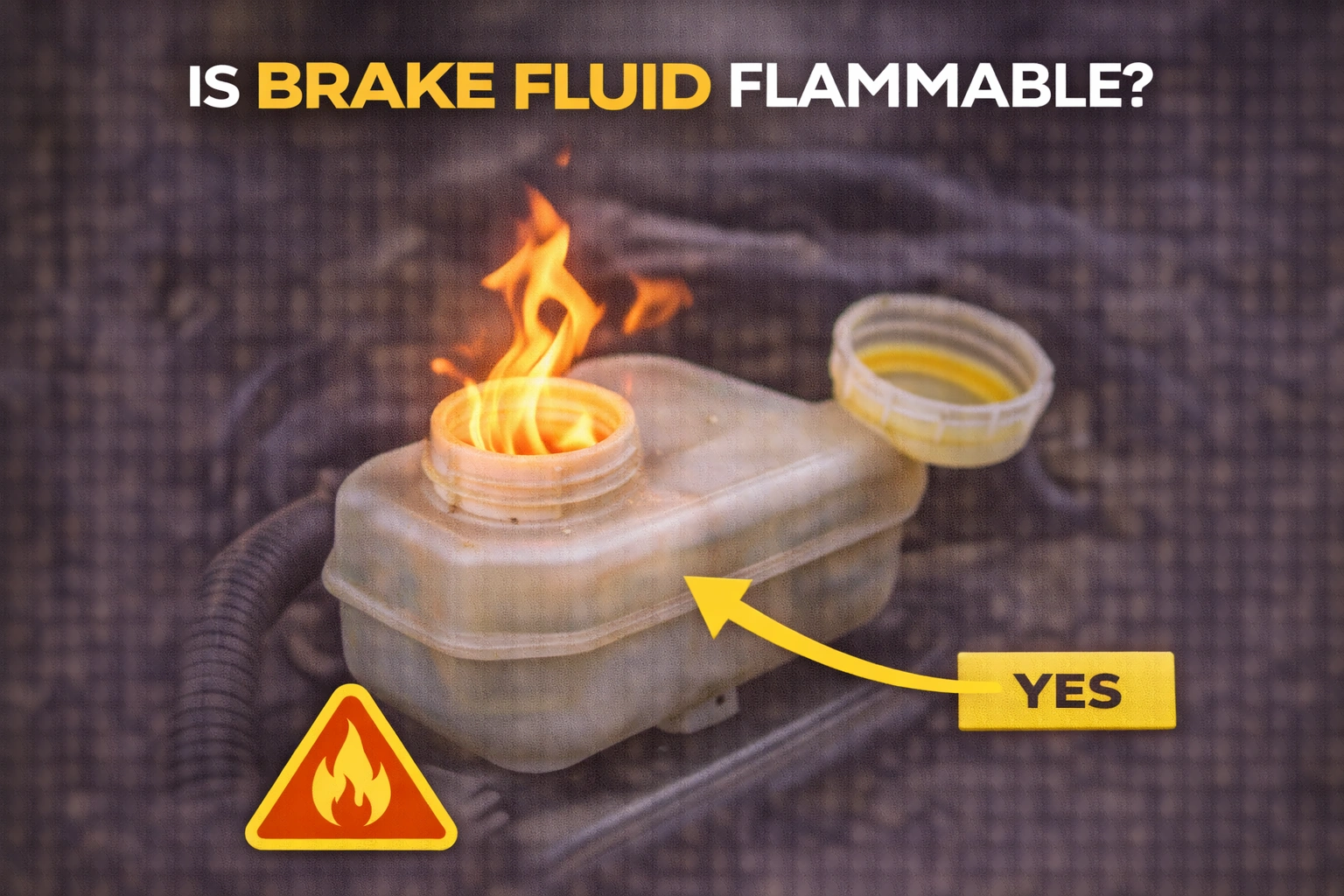
The short answer is yes, brake fluid can burn under certain conditions. However, it does not ignite as easily as gasoline. Its behavior depends on the type of fluid, temperature, and exposure to flame. To handle brake fluid safely, it is important to understand its chemical properties, flash point ratings, and how heat affects it inside a braking system. A closer look reveals why manufacturers specify certain fluid grades and how proper maintenance reduces fire risk.
Table of Contents
What Brake Fluid Is Made Of
Chemical Composition Of Common Brake Fluids
Most vehicles on the road today use glycol-based brake fluids such as DOT 3, DOT 4, or DOT 5.1. These fluids are composed of glycol ethers and other additives designed to resist corrosion and maintain consistent viscosity across temperature ranges.
Glycol-based fluids are hygroscopic, meaning they absorb moisture from the air. This characteristic helps prevent water pooling in the brake lines but also lowers the fluid’s boiling point over time. As moisture content increases, performance can decline.
Another type of brake fluid, silicone-based DOT 5, differs in composition. It does not absorb moisture and has different chemical properties. Because of these differences, DOT 5 is not interchangeable with glycol-based fluids in most systems.
Each fluid type has distinct flash and boiling points that determine how it behaves under extreme heat.
Flash Point And Boiling Point Explained
Flash point refers to the temperature at which a liquid can produce enough vapor to ignite in the presence of an open flame. Boiling point refers to the temperature at which the liquid turns into vapor.
Brake fluids are formulated with high boiling points to withstand the intense heat generated during braking. For example, DOT 3 fluid typically has a dry boiling point above 400 degrees Fahrenheit, while DOT 4 can exceed 500 degrees.
Even though brake fluid is flammable at high temperatures, it does not ignite under normal operating conditions. Its flash point is significantly higher than everyday engine compartment temperatures.
Is Brake Fluid Flammable Under Normal Conditions
Behavior Around Open Flame
Brake fluid can ignite if exposed directly to an open flame and heated beyond its flash point. Unlike gasoline, which vaporizes easily and ignites quickly, brake fluid requires sustained heat.
Spilled brake fluid on hot engine components may smoke before igniting. This is why careful handling during brake service is essential. Cleaning spills immediately reduces risk.
In workshop environments, open flames should always be kept away from any automotive fluid. Even fluids with higher flash points can pose hazards when heated intensely.
Understanding this distinction helps prevent misconceptions about routine brake system safety.
Heat Exposure During Braking
Braking generates significant heat, especially during heavy use or downhill driving. Calipers and rotors can reach very high temperatures.
However, brake fluid is sealed inside a closed hydraulic system. It is not exposed directly to flames or oxygen. Under normal operation, the fluid does not ignite.
Problems arise when brake fluid becomes contaminated with moisture. Water lowers the boiling point, which can cause vapor formation inside the brake lines. This condition, known as brake fade, reduces braking efficiency but does not necessarily cause fire.
Regular fluid replacement maintains proper boiling and flash points.
Safety Considerations During Brake Service
Handling And Storage Precautions
Brake fluid should always be stored in tightly sealed containers. Exposure to air allows moisture absorption, which degrades performance.
During service, gloves and eye protection are recommended. Brake fluid can irritate skin and damage painted surfaces.
Spills should be wiped immediately using absorbent materials. Dispose of contaminated materials according to local environmental guidelines.
Never store brake fluid near open flames or high-heat sources. Proper storage prevents accidental ignition and preserves fluid quality.
Compatibility With Vehicle Systems
Using the correct brake fluid type specified by the manufacturer is critical. For example, vehicles such as the Toyota Camry and Honda Civic typically require DOT 3 or DOT 4 fluid.
Mixing incompatible fluids can cause seal damage or reduced performance. Silicone-based DOT 5 should not be mixed with glycol-based types.
Consulting the owner’s manual ensures proper selection and safe operation.
Environmental And Fire Risk Awareness
Disposal And Environmental Impact
Brake fluid is classified as hazardous waste in many regions. Improper disposal can contaminate soil and water sources.
Used brake fluid should be taken to recycling centers or automotive service facilities equipped for safe handling.
Avoid pouring brake fluid into drains or onto the ground. Responsible disposal protects both the environment and public safety.
Fire Risk Compared To Other Automotive Fluids
Compared to gasoline or diesel fuel, brake fluid is far less volatile. It does not produce flammable vapors at room temperature.
Engine oil and transmission fluid also have higher flash points than gasoline. Brake fluid behaves similarly in that it requires significant heat before ignition occurs.
This distinction highlights that while brake fluid is technically flammable, it is not highly combustible under everyday conditions.
Brake fluid plays a vital role in vehicle safety, and its flammability depends largely on temperature and exposure. While it can burn under extreme heat and open flame, it does not ignite easily during normal vehicle operation.
Proper storage, careful handling during maintenance, and regular fluid replacement minimize risk. Selecting the correct fluid type ensures optimal performance and long-term reliability.
Awareness of its properties supports safe automotive service practices and responsible environmental care.

- How Families in UAE Manage Changing Vehicle Needs - March 4, 2026
- How Many Axles On A Car And What They Do - March 2, 2026
- Metal Shavings In Oil Causes And What It Means - March 2, 2026