
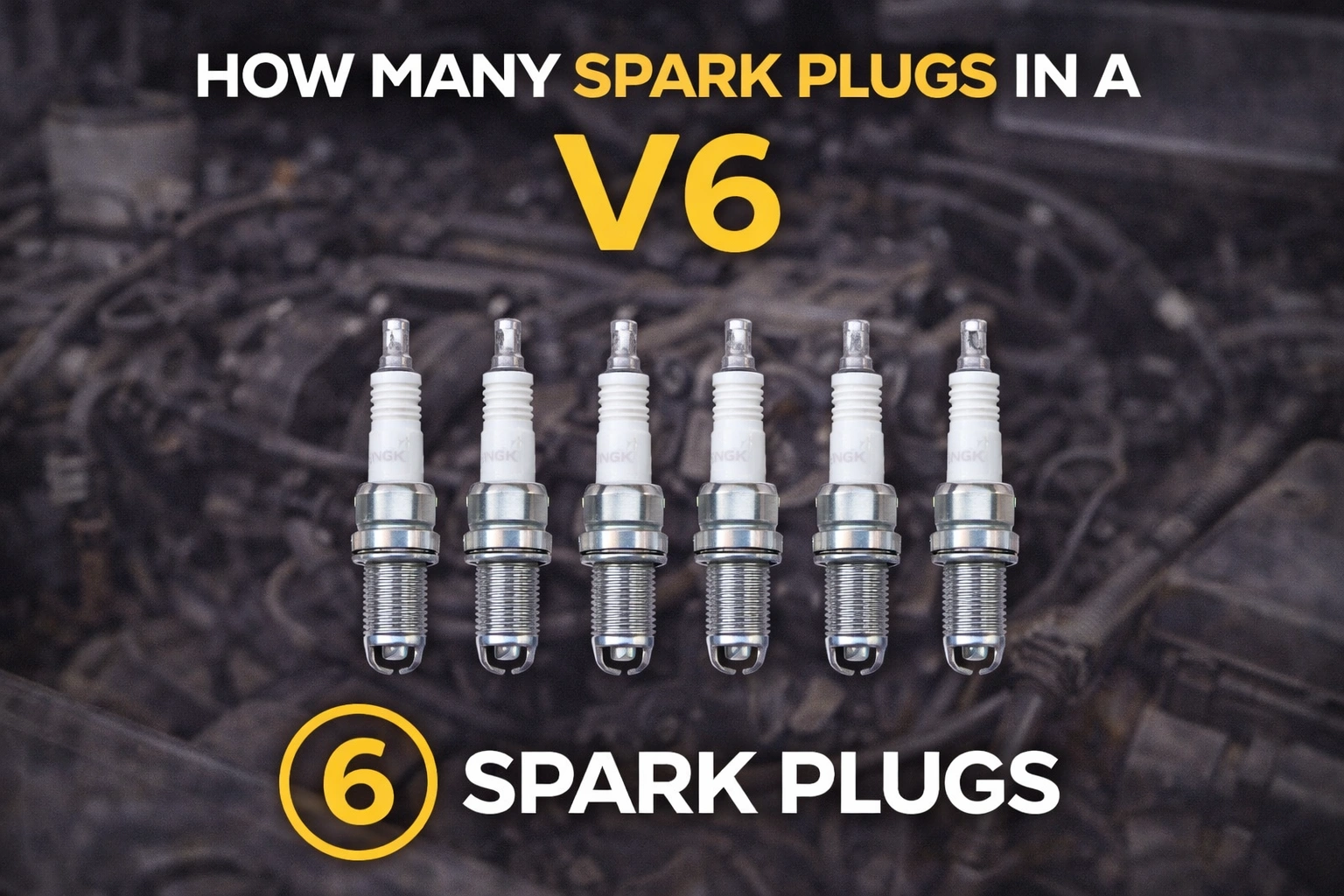
A V6 engine remains one of the most common engine configurations found in modern vehicles. It offers a balance between power and efficiency, delivering stronger acceleration than a four-cylinder while remaining more compact than a V8. From midsize sedans and SUVs to light-duty trucks, the V6 platform has served as a reliable workhorse for decades.
Among the many maintenance items inside a V6, spark plugs play a central role. These small components ignite the air-fuel mixture inside each cylinder, making combustion possible. Without them, the engine cannot operate. Despite their importance, many vehicle owners remain unsure how many spark plugs their V6 engine actually contains.
The answer may sound simple at first, yet variations in design and ignition systems can influence both plug count and service approach. Exploring how spark plugs function within a V6 engine provides clarity and helps maintain reliable engine performance.
Table of Contents
Basic Spark Plug Count In A Standard V6
One Spark Plug Per Cylinder
In a conventional gasoline V6 engine, there are six cylinders arranged in two banks of three. Each cylinder requires its own spark plug to ignite the compressed air-fuel mixture during the combustion cycle.
Because of this one-to-one relationship, a typical V6 engine uses six spark plugs. Each plug operates independently, firing in sequence according to the engine’s firing order.
This configuration has been standard for decades across most manufacturers. When replacing spark plugs in a traditional V6, technicians typically remove and install six plugs unless the vehicle uses a unique dual-plug system.
Why Each Cylinder Needs Its Own Plug
Internal combustion engines rely on precise ignition timing. When the piston compresses the mixture inside the cylinder, a spark must occur at the exact moment to maximize power output.
If one cylinder lacks spark, the engine misfires. This causes rough operation, reduced fuel efficiency, and possible catalytic converter damage.
Maintaining all six spark plugs in proper condition ensures balanced combustion across both banks of the V6 engine.
Exceptions And Special Engine Designs
Dual Spark Plug Systems
Some V6 engines use two spark plugs per cylinder. This design improves combustion efficiency and emissions control. In these cases, the engine may contain twelve spark plugs instead of six.
Manufacturers introduced dual-plug systems in certain performance or emissions-focused applications. Two spark points allow the flame front to spread more evenly within the combustion chamber.
While not common in most everyday V6 engines, it is important to check manufacturer specifications before ordering replacement parts.
Coil On Plug Versus Spark Plug Wires
Older V6 engines relied on spark plug wires connected to a distributor or ignition coil pack. Modern engines often use a coil-on-plug setup, placing an individual ignition coil directly above each spark plug.
Even though the ignition system changed, the number of spark plugs typically remained six unless a dual-plug design was used.
Coil-on-plug systems reduce misfire risk by eliminating long plug wires, but plug count still matches cylinder count in most cases.
Location And Accessibility In A V6 Engine
Understanding Cylinder Banks
A V6 engine features two banks arranged in a V shape. Three cylinders sit on each side.
In front-wheel-drive vehicles, the rear bank may sit close to the firewall. This makes access more challenging compared to the front bank.
Technicians often remove intake components or other parts to access rear spark plugs. Labor time can vary significantly depending on engine layout.
Why Some V6 Spark Plug Jobs Take Longer
Even though a V6 has only six spark plugs, access difficulty increases labor time. In transverse-mounted engines, reaching the rear bank may require additional disassembly.
This complexity explains why spark plug replacement costs can differ between vehicle models, even when plug count remains identical.
Proper torque during installation is essential to avoid thread damage in aluminum cylinder heads.
Replacement Intervals And Signs Of Wear
Typical Replacement Mileage
Spark plug lifespan depends on material type. Copper plugs may last around 30,000 miles, while platinum or iridium plugs often exceed 60,000 to 100,000 miles.
Most modern V6 engines use long-life iridium or platinum plugs. Following manufacturer service intervals ensures optimal ignition performance.
Replacing plugs too early wastes money, while waiting too long increases misfire risk.
Symptoms Of Worn Spark Plugs
Common signs of worn plugs include rough idle, reduced fuel economy, hesitation under acceleration, and engine misfire codes.
If a V6 engine develops uneven combustion, vibration may become noticeable.
Addressing plug wear promptly protects ignition coils and catalytic converters from additional strain.
Costs And Maintenance Considerations
Repair expenses depend on plug type and engine accessibility. Replacing six spark plugs typically costs less than replacing twelve in dual-plug systems. Labor charges may increase if intake components require removal. Addressing spark plug wear early often prevents ignition coil damage and reduces the risk of catalytic converter issues later.
Parts Versus Labor
Spark plugs themselves are relatively affordable components. However, labor costs may rise depending on vehicle design.
Vehicles with easy access to both cylinder banks generally require less service time.
Consulting service manuals ensure correct torque and gap specifications.
Importance Of Using Correct Plug Type
Installing incorrect spark plugs can affect combustion efficiency and engine timing.
Manufacturers specify heat range and electrode material to match engine design.
Using recommended plug types maintains smooth operation and long-term reliability.
Long Term Engine Health And Spark Plug Maintenance
Combustion Efficiency And Fuel Economy
Proper spark plug function ensures complete combustion within each cylinder. Efficient combustion supports better fuel economy and smoother engine operation.
When plugs wear, combustion may become incomplete, leading to increased fuel consumption and carbon buildup.
Routine inspection keeps the ignition system operating as designed.
Protecting Ignition Components
Failing spark plugs place extra strain on ignition coils. Extended misfires can overheat coils and cause additional repair expenses.
Maintaining healthy plugs reduces stress across the entire ignition system.
Balanced combustion across all six cylinders promotes consistent engine output.
Bottom Line
A standard V6 engine contains six spark plugs—one for each cylinder. Some specialized designs may use twelve plugs, but most modern V6 engines operate with six.
Spark plug count remains directly tied to cylinder count unless a dual-plug system is present.
Regular inspection, correct plug selection, and timely replacement ensure reliable combustion, stable engine operation, and long-term performance.

- How Families in UAE Manage Changing Vehicle Needs - March 4, 2026
- How Many Axles On A Car And What They Do - March 2, 2026
- Metal Shavings In Oil Causes And What It Means - March 2, 2026
