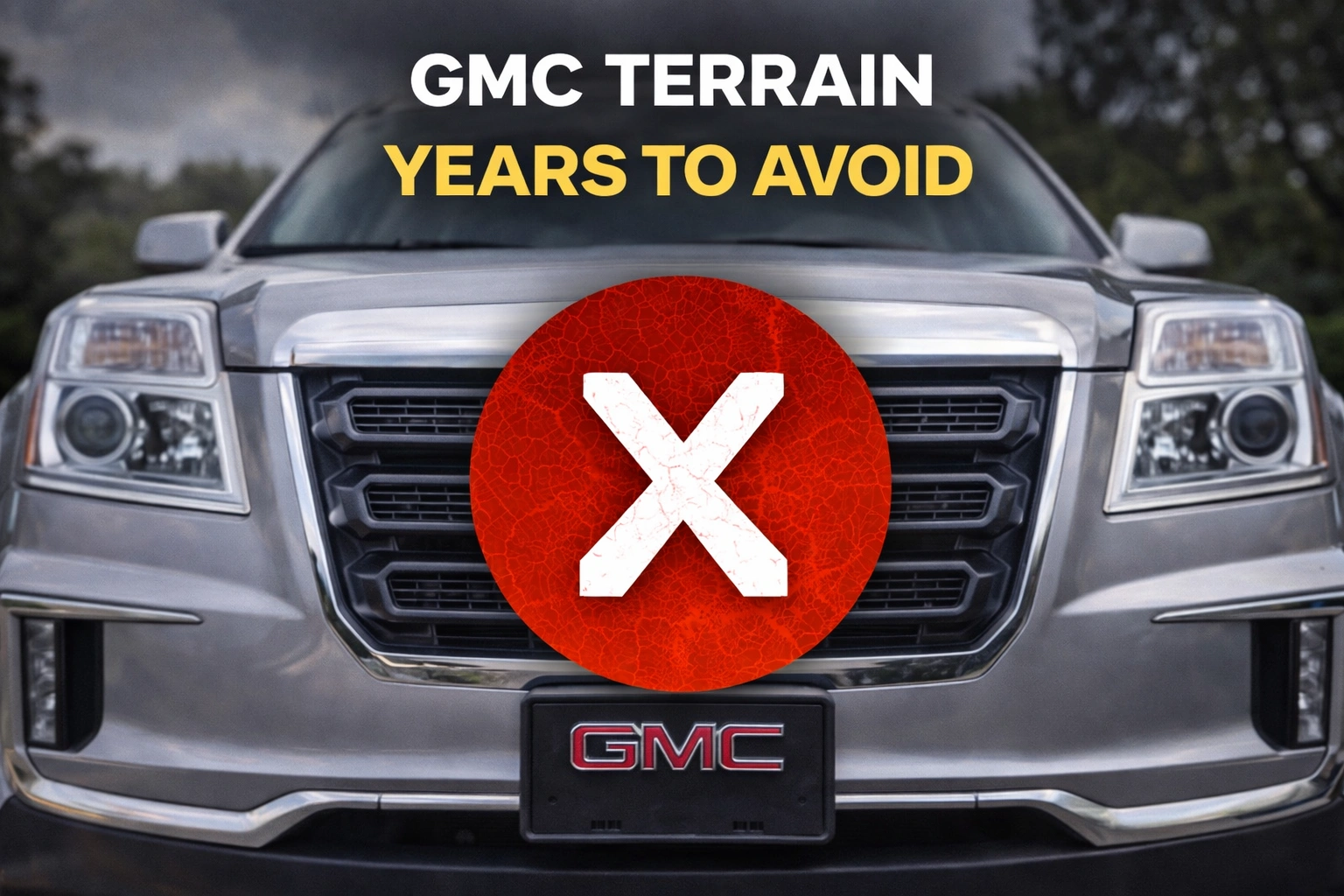
The GMC Terrain entered the compact SUV market with bold styling, a comfortable cabin, and practical cargo space. It quickly became a popular option for families and commuters who wanted SUV versatility without full-size bulk. Over the years, the Terrain has gone through multiple redesigns, engine changes, and technology upgrades. While many model years offer solid reliability, some have developed reputations for specific mechanical or electronic concerns.
Buying a used Terrain can be a smart financial decision, but only if the model year is chosen carefully. Certain production years experienced engine oil consumption problems, transmission hesitation, or electrical glitches that affected long-term ownership satisfaction. Not every vehicle from those years will have issues, yet patterns in owner reports and service bulletins provide valuable insight.
Looking at the Terrain generation by generation helps identify which years require closer inspection. A well-maintained example can still provide dependable transportation, but awareness of known trouble spots makes all the difference.
Table of Contents
First Generation GMC Terrain 2010 To 2017
2010 To 2012 Models With Four Cylinder Oil Consumption Concerns
The first generation GMC Terrain launched in 2010, sharing its platform with other General Motors compact SUVs. Early models equipped with the 2.4-liter four-cylinder engine became known for excessive oil consumption in some cases. Owners reported frequent oil level drops between scheduled service intervals. If left unchecked, low oil levels could lead to internal engine wear or timing chain problems.
General Motors issued technical service bulletins addressing piston ring wear and oil consumption testing procedures. Some vehicles required piston replacement or engine repair under warranty. While not every early Terrain suffered from this issue, it became common enough that buyers should verify service records carefully.
Checking oil change frequency and confirming that updated components were installed can significantly reduce risk. Vehicles with documented engine repairs or consistent maintenance may still offer reliable service.
2013 To 2015 Mid Cycle Updates And Ongoing Concerns
In 2013, the Terrain received minor updates and refinements. Although some early oil consumption complaints decreased, the 2.4-liter engine remained the most scrutinized component. Timing chain stretch related to insufficient lubrication also appeared in some cases, especially when oil levels were neglected.
Transmission hesitation and rough shifting were occasionally reported in these years. Software updates often resolved drivability complaints, but mechanical inspection remains important when purchasing.
Interior build quality improved slightly during this period, yet infotainment glitches and sensor warnings sometimes surfaced. Thorough pre-purchase inspection and test driving help identify irregular shifting behavior or warning lights.
Vehicles from this range benefit from clear maintenance documentation.
2016 To 2017 Late First Generation Improvements
Later first-generation Terrains showed noticeable refinement. Engine calibration updates and improved piston designs reduced oil-related complaints. While the four-cylinder engine still required attentive maintenance, reports of severe oil consumption declined compared to earlier years.
The optional V6 engine available in certain trims provided stronger performance and fewer oil-related complaints. However, fuel economy differed from the four-cylinder variant.
These later years often represent safer choices within the first generation, provided service records confirm proper upkeep.
Second Generation GMC Terrain 2018 To Present
2018 First Year Of Redesign Considerations
The 2018 model marked a complete redesign. The Terrain became lighter and introduced turbocharged engine options. As with many first-year redesigns, some owners experienced early production issues.
Reports included transmission hesitation, minor electrical software bugs, and sensor calibration concerns. Turbocharged engines introduced additional complexity compared to the older naturally aspirated engines.
Although widespread catastrophic issues were not common, first-year redesign models often experience more initial quality complaints than later refined years.
Buyers should confirm that any software updates or recall repairs were completed.
2019 To 2020 Refinements And Diesel Option
In 2019, GMC refined engine options and introduced a diesel variant in certain trims. The diesel engine offered strong torque and efficiency, but limited production numbers mean parts availability and long-term reliability data vary.
Turbocharged gasoline engines continued, with improved software tuning. While oil consumption concerns largely faded compared to early first-generation models, turbocharger maintenance and oil change intervals became more critical.
These years generally show improved reliability compared to earlier models, though proper maintenance remains essential.
2021 And Newer Technology Integration
More recent Terrain models feature advanced driver assistance systems, larger infotainment screens, and updated styling. Technology improvements enhance comfort and safety but introduce greater reliance on sensors and electronic modules.
Electronic throttle calibration, camera systems, and driver assistance warnings occasionally appear in owner discussions. However, overall mechanical reliability appears stronger compared to early first-generation concerns.
Newer models benefit from improved manufacturing processes and updated component designs.
Most Reported GMC Terrain Problem Years
2010 And 2011 Oil Consumption Issues
Among all production years, 2010 and 2011 receive the most frequent reports related to oil consumption and piston ring wear. Owners in these years were more likely to experience low oil warnings between changes.
Engines that ran with insufficient oil sometimes developed timing chain noise or internal wear. Vehicles that received updated pistons and consistent oil monitoring often remain reliable.
Prospective buyers should verify oil consumption testing history for these years.
2012 To 2014 Continued Engine Monitoring Needed
Although improvements occurred, 2012 through 2014 models still require attention to oil levels. Some vehicles from this period showed similar symptoms to earlier versions.
Regular maintenance and documented engine work significantly influence reliability outcomes.
Avoid examples lacking service history or showing signs of neglect.
What To Inspect Before Buying A Used GMC Terrain
Verify Oil Service Records
Reviewing oil change documentation is essential, especially for first-generation models. Consistent service at recommended intervals reduces the risk of engine damage.
Ask whether oil consumption tests or piston repairs were performed.
Lack of documentation warrants deeper inspection.
Listen For Timing Chain Noise
Rattling noise at startup may indicate timing chain wear. Early detection prevents severe engine damage.
Professional inspection helps confirm condition.
Test Transmission Performance
During test drive, observe gear shifts for hesitation or jerking. Smooth transitions indicate healthy operation.
Software updates may correct minor issues.
Scan For Stored Diagnostic Codes
Even if no warning lights are visible, scanning for stored codes may reveal hidden concerns.
Modern vehicles store historical data that can reveal previous faults.
Diagnostic scanning provides added assurance.
The Practical Takeaway
The GMC Terrain offers practicality and comfort across multiple generations. However, early first-generation models, particularly 2010 and 2011, require careful inspection due to oil consumption concerns. Mid-generation models improved gradually, and later first-generation years show better overall reliability.
Second-generation models introduced turbocharged engines and refined technology, with fewer widespread mechanical complaints. As with any used vehicle, maintenance history and condition matter more than year alone.
Selecting a well-maintained example, verifying repairs, and performing thorough inspection ensures dependable ownership. With proper evaluation, the Terrain can serve reliably without inheriting avoidable mechanical problems.

- How Families in UAE Manage Changing Vehicle Needs - March 4, 2026
- How Many Axles On A Car And What They Do - March 2, 2026
- Metal Shavings In Oil Causes And What It Means - March 2, 2026