Steering is one of the few systems in a vehicle that demands absolute trust. Every turn of the wheel depends on precise movement transferring from the driver’s hands to the front wheels.
At the center of that process in most modern vehicles is the rack and pinion system. It works quietly, smoothly, and reliably for years, which is why problems often go unnoticed until symptoms become difficult to ignore.
When a rack and pinion begins to wear out, the changes are rarely sudden. Instead, small signs appear over time. Steering may feel slightly loose, the wheel may resist turning, or faint noises may develop when driving over uneven roads.
These early signals are easy to dismiss, yet they point to a component that directly affects control and safety.
A failing rack and pinion does not just reduce comfort. It can alter wheel alignment, increase tire wear, strain other steering components, and eventually create situations where steering response becomes unpredictable.
Knowing the symptoms early allows timely action, limits repair costs, and preserves safe vehicle operation. Clear knowledge of how the system behaves when it starts to fail makes diagnosis more accurate and prevents unnecessary part replacement.
Table of Contents
How The Rack And Pinion Steering System Works
The rack and pinion system converts rotational motion into linear movement. When the steering wheel turns, that rotation travels down the steering column to a small gear called the pinion. The pinion meshes with a straight gear called the rack, which moves left or right. This movement pushes or pulls the front wheels through tie rods, changing direction.
Role Of Power Assistance
Most vehicles use power-assisted rack and pinion systems. Hydraulic systems rely on pressurized fluid to reduce steering effort, while electric systems use motors and sensors. In both designs, the rack itself remains the core mechanical link between the steering wheel and the tires.
When the rack wears internally or externally, both manual feel and power assistance suffer.
Why Rack And Pinion Wear Matters
The rack contains seals, bushings, and precision-machined surfaces. Over time, these parts face constant load, vibration, and environmental exposure. Wear affects alignment accuracy, steering feedback, and fluid control.
Because the rack connects directly to the wheels, any looseness or binding is immediately felt by the driver.
Most Common Bad Rack And Pinion Symptoms
Rack and pinion failure does not present as a single symptom. Instead, it creates a pattern that grows clearer over time.
Loose Or Wandering Steering
One of the earliest signs is a steering wheel that feels loose or vague. Small steering inputs may not produce immediate wheel response. The vehicle may drift slightly and require constant correction.
This looseness often comes from worn internal bushings or gear teeth inside the rack.
Steering Wheel Play
Excessive free play before the wheels begin to turn is a strong indicator of internal wear. The steering wheel may move several degrees without affecting direction.
This symptom becomes more noticeable at highway speeds.
Knocking Or Clunking Noises
A worn rack may produce knocking or clunking sounds when driving over bumps or during low-speed turns. These noises come from internal movement where components should remain tight.
The sound is often mistaken for suspension issues.
Difficulty Turning Or Stiff Steering
When seals fail or internal parts bind, steering effort increases. The wheel may feel heavy, especially at low speeds or while parking.
This problem can appear suddenly if fluid loss occurs.
Uneven Steering Feel
The steering may feel smooth in one direction but stiff or rough in the other. This uneven response points to uneven internal wear within the rack.
Balanced steering feel is essential for control.
Symptoms Specific To Hydraulic Rack And Pinion Systems
Hydraulic systems introduce additional warning signs related to fluid control.
Power Steering Fluid Leaks
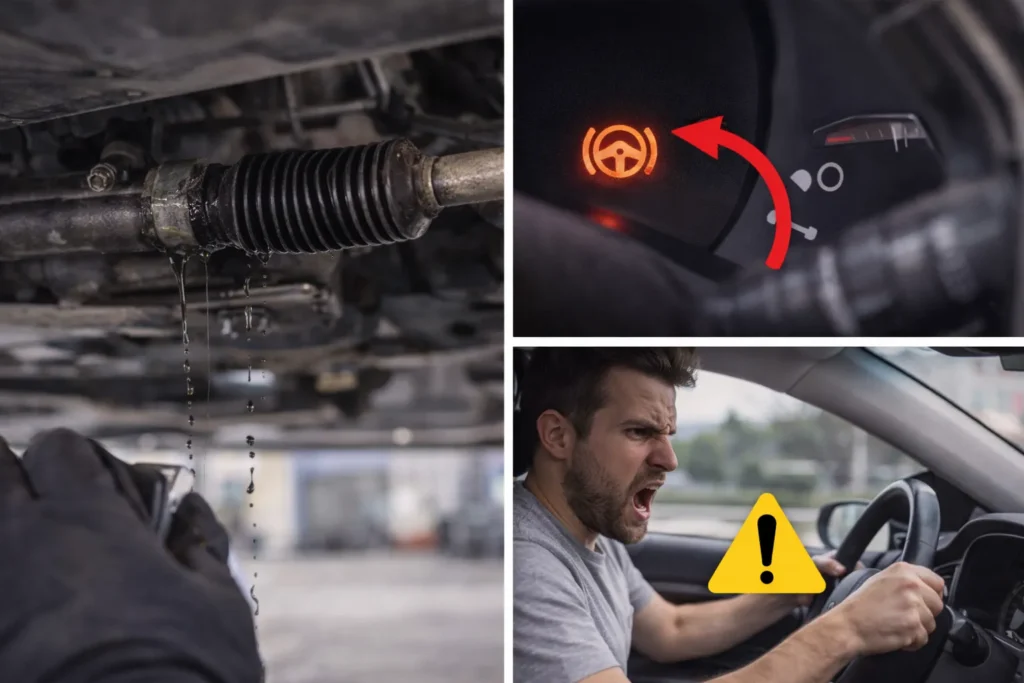
Fluid leaking near the front of the vehicle, especially around the rack boots, indicates seal failure. Leaks may appear as red or amber fluid on the ground.
Loss of fluid leads to rapid deterioration.
Whining Or Groaning Sounds
Low fluid levels or internal pressure loss cause whining noises when turning the wheel. The sound often increases at full lock.
Continued operation under these conditions accelerates wear.
Foamy Or Contaminated Fluid
Internal leaks can introduce air into the system. Foamy fluid reduces hydraulic efficiency and increases noise.
This condition requires immediate attention.
Symptoms Specific To Electric Rack And Pinion Systems
Electric steering racks fail differently but still show clear signs.
Intermittent Power Assist Loss
Electric racks may lose assist temporarily, making steering unexpectedly heavy. The assist may return without warning.
This inconsistency points to motor, sensor, or internal rack issues.
Steering Warning Lights
Dashboard warnings related to steering assist often accompany rack problems. These alerts should not be ignored.
Electronic systems monitor performance continuously.
Jerky Or Notchy Steering Feel
Worn internal components or motor issues can cause uneven assist. The steering wheel may feel notchy or jumpy during turns.
This affects precision and confidence.
Secondary Problems Caused By A Bad Rack And Pinion
Rack failure rarely stays isolated. Other systems begin to suffer as a result.
Uneven Or Rapid Tire Wear
Loose steering allows wheels to toe in and out unpredictably. This causes uneven tire wear, especially on inner or outer edges.
Replacing tires without fixing the rack leads to repeat wear.
Alignment Problems That Will Not Hold
Repeated alignments that fail to stay correct often trace back to rack movement or internal play.
Alignment adjustments depend on stable steering components.
Increased Stress On Tie Rods And Suspension
A failing rack transfers abnormal loads to tie rods, ball joints, and suspension bushings. These parts wear faster as they compensate.
This increases overall repair cost.
Causes Of Rack And Pinion Failure
Understanding why racks fail helps prevent future issues.
Normal Wear Over Time
High mileage gradually wears seals, bushings, and gear surfaces. This is the most common cause.
Fluid Contamination Or Neglect
Dirty or degraded power steering fluid damages seals and internal surfaces. Skipping fluid maintenance accelerates wear.
Impact Damage
Hitting curbs, potholes, or road debris can bend or damage the rack housing.
Even minor impacts may cause internal misalignment.
Torn Rack Boots
Protective boots keep dirt and moisture out. Once torn, contaminants enter and wear internal components rapidly.
Boot damage often goes unnoticed.
How To Diagnose A Bad Rack And Pinion Accurately
Proper diagnosis avoids replacing the wrong parts.
Visual Inspection
Checking for leaks, torn boots, and mounting looseness provides immediate clues.
Steering Play Measurement
Excess play at the wheel with no corresponding wheel movement indicates rack wear.
Road Test Evaluation
Clunks, wandering, stiffness, and uneven response become clear during controlled testing.
Professional Inspection
Lift inspections allow checking internal play and confirming rack movement under load.
This step is important before replacement.
Repair And Replacement Options
Once confirmed, repair choices depend on severity.
Rack Adjustment Possibilities
Some older racks allow minor adjustments to reduce play. This is rarely a long-term solution.
Modern racks are typically sealed units.
Rebuilt Or Remanufactured Racks
Quality remanufactured racks replace seals and worn components. They offer a balance between cost and reliability.
Choosing a reputable source matters.
New Rack Replacement
New racks provide the longest service life and restore original steering feel.
They cost more but reduce repeat repairs.
Cost Factors And Labor Considerations
Rack replacement involves more than the part itself.
Labor includes removal, installation, fluid bleeding, and alignment. Electric racks may require calibration.
Ignoring alignment after replacement compromises results.
Can You Drive With A Bad Rack And Pinion
Short-term driving may be possible with minor symptoms, but risks increase quickly.
Loss of steering precision, sudden assist failure, or fluid loss can occur without warning. Steering is a safety-critical system.
Delaying repair increases danger and cost.
Preventing Rack And Pinion Problems
Prevention focuses on care and awareness.
Inspect rack boots during service. Address leaks early. Replace fluid at recommended intervals. Avoid harsh impacts.
Small steps extend rack life significantly.
Bad Rack And Pinion Vs Other Steering Issues
Not all steering problems come from the rack.
Tie rods, ball joints, control arm bushings, and alignment issues can mimic rack symptoms. Accurate diagnosis ensures the correct repair.
Replacing the rack unnecessarily wastes money.
Final Thoughts
The rack and pinion system sits at the heart of vehicle control. When it begins to fail, the effects ripple through steering feel, alignment, tire wear, and overall safety. The symptoms often start subtly, which is why they are easy to ignore.
Loose steering, clunking noises, leaks, stiffness, and uneven response all point toward internal wear that will not correct itself. Acting early limits damage to surrounding components and restores precise steering control.
A healthy rack delivers confidence with every turn. When warning signs appear, careful diagnosis and timely repair protect not only the vehicle but everyone inside it.

- How Families in UAE Manage Changing Vehicle Needs - March 4, 2026
- How Many Axles On A Car And What They Do - March 2, 2026
- Metal Shavings In Oil Causes And What It Means - March 2, 2026