
An exhaust system does far more than carry fumes away from the engine. It controls noise, manages backpressure, protects cabin air quality, and plays a major role in emissions performance. When an exhaust leak develops, that balance is disrupted.
The result may start as a faint ticking sound or unusual smell, but it often grows into louder noise, reduced efficiency, warning lights, or even health concerns.
Exhaust leaks are common because the system operates under extreme conditions. Heat cycles, moisture, road salt, vibration, and age slowly weaken joints, gaskets, and pipes.
Some leaks appear suddenly after impact or corrosion failure, while others form gradually and go unnoticed until symptoms become obvious.
Fixing an exhaust leak does not always require replacing the entire system. Many leaks can be repaired effectively once the exact source is identified. Knowing where to look, how to confirm the leak, and which repair method fits the situation prevents wasted money and repeat failures.
This guide walks through the full process, from detection to repair, using clear steps that prioritize safety, durability, and long-term results.
Table of Contents
How An Exhaust Leak Develops Over Time
Exhaust systems fail in predictable ways. Understanding those patterns makes diagnosis easier.
Heat Expansion And Metal Fatigue
Exhaust components heat up rapidly and cool down just as quickly. Over thousands of cycles, metal expands and contracts repeatedly. This movement weakens welds, flanges, and thin pipe sections.
Cracks often begin small and grow slowly with each heat cycle.
Corrosion From Moisture And Road Chemicals
Water vapor forms inside the exhaust during normal operation. Combined with road salt and debris, it creates ideal conditions for rust, especially in mufflers, resonators, and low points of piping.
Corrosion eventually eats through metal, creating pinholes or larger openings.
Vibration And Mechanical Stress
The exhaust system moves constantly as the engine runs and the vehicle travels over uneven surfaces. Broken hangers or loose mounts increase stress on joints and flanges.
Once support weakens, leaks follow.
Improper Past Repairs
Temporary fixes or poorly aligned installations often fail prematurely. Clamps installed incorrectly or mismatched components create gaps that allow exhaust gases to escape.
Clear Signs That Point To An Exhaust Leak
Exhaust leaks rarely remain silent. Several symptoms appear as the leak grows.
Unusual Ticking Or Tapping Sounds
A sharp ticking sound, especially during cold starts, often indicates a leak near the engine or exhaust manifold. As metal heats and expands, the sound may soften temporarily.
This symptom should never be ignored.
Loud Exhaust Noise Or Rattling
Leaks farther downstream create louder exhaust notes, rattling sounds, or a hollow tone. Muffler or pipe leaks usually produce this effect.
Noise often increases during acceleration.
Strong Exhaust Smell
Exhaust gases escaping before reaching the tailpipe may enter the cabin. This creates a noticeable odor, especially when stopped or driving slowly.
Any exhaust smell inside the vehicle requires immediate attention.
Reduced Engine Performance
Leaks near the engine affect exhaust pressure and sensor readings. This can lead to sluggish response, hesitation, or poor fuel efficiency.
Modern engines rely on precise exhaust flow for proper operation.
Check Engine Light Activation
Leaks before oxygen sensors allow extra air into the system. This confuses fuel control calculations and triggers warning lights.
Codes may point to mixture issues rather than the leak itself.
How To Find The Exact Location Of An Exhaust Leak
Accurate repair begins with precise identification.
Visual Inspection With The Engine Cold
Start by inspecting the exhaust system when cold. Look for:
- Rust holes or flaking metal
- Black soot marks around joints
- Broken welds or cracked flanges
- Loose clamps or missing bolts
Leaks often leave visible traces.
Listening During Startup
Cold starts make leaks more noticeable. Listen carefully near the engine bay and underneath the vehicle.
A ticking or hissing sound helps narrow the location.
Hand And Paper Test
With the engine running, carefully move a hand near suspected areas without touching hot surfaces. Escaping exhaust creates noticeable pulses.
Holding a piece of paper near joints can reveal fluttering where gases escape.
Smoke Or Soapy Water Method
Introducing smoke into the exhaust system or spraying soapy water on joints can reveal leaks through bubbles or visible smoke escape.
This method works best for small leaks.
Professional Inspection When Needed
Some leaks hide behind heat shields or tight spaces. Professional lifts and tools improve access and accuracy.
How To Fix Exhaust Leak Based On Leak Type
The correct fix depends entirely on where and how the leak occurs.
Fixing Exhaust Manifold Leaks
Leaks near the engine are serious and should be addressed carefully.
Manifold Gasket Replacement
Failed gaskets between the engine and exhaust manifold are common. Replacement requires removing the manifold, cleaning mating surfaces, and installing a new gasket.
Bolts must be torqued evenly to prevent warping.
Cracked Manifold Repair
Small cracks may be welded, but replacement is often more reliable. Manifolds endure extreme heat, making permanent repairs difficult.
Temporary sealants are not recommended here.
Repairing Leaks At Flanges And Joints
Flanges connect major exhaust sections and are frequent leak points.
Loose Or Damaged Bolts
Replacing rusted or broken bolts and tightening evenly may stop the leak if flanges are intact.
Using new hardware prevents repeat failure.
Gasket Replacement At Flanges
Many flanges use gaskets that degrade over time. Installing a new gasket restores the seal.
Surface cleaning is critical before installation.
Fixing Small Holes Or Cracks In Exhaust Pipes
Pipe leaks vary in severity.
Exhaust Repair Clamps And Patches
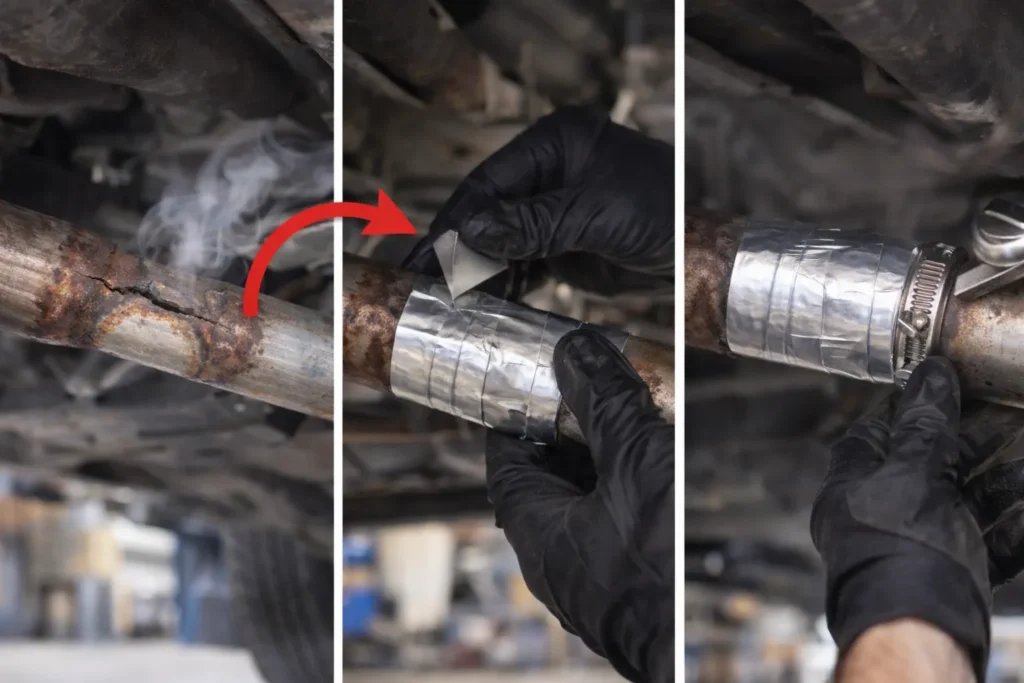
For small holes, repair sleeves or clamps with sealing compound can provide a solid fix. These are best for mid-pipe sections away from the engine.
Proper sizing ensures effectiveness.
Exhaust Putty Or Epoxy
Heat-resistant putty works for temporary repairs. It seals small leaks but does not restore structural strength.
This option suits short-term solutions only.
Muffler And Resonator Leak Repairs
These components often rust from the inside out.
Minor Surface Rust Leaks
Small perforations may be patched, but corrosion usually spreads internally.
Patching may extend life briefly.
Severe Corrosion Or Internal Failure
Replacement is the most reliable option. Mufflers and resonators are designed to be replaced once corrosion sets in.
New components restore noise control and flow.
Safety Considerations During Exhaust Repair
Exhaust work carries specific risks.
Allow Components To Cool Completely
Exhaust parts remain hot long after shutdown. Burns are common when safety is ignored.
Always work on a cold system.
Use Proper Jacking And Support
Never work under a vehicle supported only by a jack. Use jack stands on solid ground.
Vehicle stability is essential.
Avoid Exhaust Fumes During Testing
Testing leaks in enclosed spaces is dangerous. Carbon monoxide exposure can occur quickly.
Ensure proper ventilation at all times.
When Temporary Fixes Are Acceptable And When They Are Not
Not every repair method suits every situation.
Acceptable Temporary Repairs
- Small mid-pipe holes
- Short-term emergency situations
- Low-stress sections away from sensors
These fixes buy time, not permanence.
Situations Requiring Immediate Replacement
- Manifold leaks
- Leaks before oxygen sensors
- Structural pipe failure
- Cabin exhaust smell
Delaying proper repair increases risk and cost.
Cost Considerations And Repair Planning
Understanding cost factors helps decision-making.
DIY Repair Costs
Clamps, gaskets, and sealants are inexpensive. Basic tools often suffice for simple repairs.
DIY saves money but requires careful execution.
Professional Repair Costs
Labor increases cost, especially for manifold or catalytic converter-related repairs. However, professional repairs offer durability and warranty protection.
Complex jobs benefit from expertise.
Balancing Short Term And Long Term Value
Repeated temporary fixes often cost more over time. Investing in proper repair once usually saves money overall.
Preventing Future Exhaust Leaks
Prevention focuses on maintenance and awareness.
Regular Visual Inspections
Checking the exhaust during oil changes catches early corrosion or loose hardware.
Early action prevents major failure.
Replace Broken Hangers Promptly
Loose exhaust systems stress joints and flanges. Replacing hangers maintains alignment.
Proper support extends system life.
Wash Undercarriage In Harsh Climates
Removing road salt slows corrosion significantly.
Seasonal cleaning helps.
Exhaust Leak Vs Other Noise Or Smell Issues
Not all noises come from exhaust leaks.
Heat shields, engine ticks, and drivetrain noise can mimic exhaust problems. Proper diagnosis avoids unnecessary repairs.
When in doubt, professional confirmation helps.
Final Thoughts
Exhaust leaks rarely fix themselves. They grow louder, more damaging, and more expensive when ignored. The good news is that most leaks can be identified with simple inspection and repaired effectively once the source is known.
Choosing the correct repair method matters more than speed. Temporary fixes have their place, but permanent solutions protect performance, safety, and long-term reliability. Addressing exhaust leaks early keeps noise under control, emissions in check, and harmful gases out of the cabin.
A sealed exhaust system restores quiet operation and engine efficiency. With careful inspection, proper tools, and attention to detail, fixing an exhaust leak becomes a manageable task rather than a costly surprise.

- How Families in UAE Manage Changing Vehicle Needs - March 4, 2026
- How Many Axles On A Car And What They Do - March 2, 2026
- Metal Shavings In Oil Causes And What It Means - March 2, 2026