Coolant is one of the most important fluids in a car, yet it is also one of the most misunderstood. Many drivers know it helps prevent overheating, but few realize how specific coolant requirements have become in modern vehicles.
Today’s engines use aluminum components, advanced gaskets, precise temperature controls, and tightly designed cooling systems. Because of this, choosing the correct coolant is no longer optional or flexible. The wrong coolant can quietly damage internal parts long before obvious symptoms appear.
Manufacturers design cooling systems around very specific coolant chemistry. Additives protect metal surfaces, prevent corrosion, control scale buildup, and maintain stable operating temperatures in extreme heat and cold.
Using the wrong type may still look fine in the reservoir, but inside the engine it can reduce protection, clog passages, or shorten component life.
Knowing what coolant a car needs removes guesswork and prevents costly mistakes. This guide covers how coolant works, why different types exist, how to identify the correct one for a specific vehicle, and how to avoid mixing errors that cause long-term damage.
Table of Contents
What Engine Coolant Actually Does
Coolant is far more than colored liquid sitting in the reservoir. It performs several critical tasks at the same time.
Temperature Regulation
The primary role of coolant is to manage engine temperature. It absorbs heat from the engine block and cylinder head, then releases that heat through the radiator. This process keeps the engine within a safe operating range, even under heavy load or extreme weather.
Freeze And Boil Protection
Coolant prevents freezing in cold temperatures and raises the boiling point in hot conditions. This protection ensures consistent flow through the system year-round.
Corrosion And Wear Protection
Modern engines contain aluminum, steel, rubber, and plastic components. Coolant additives form a protective layer that prevents corrosion, electrolysis, and internal wear.
Lubrication Of Cooling Components
Water pumps and seals rely on coolant for lubrication. Incorrect coolant can cause seal damage and premature pump failure.
Different Types Of Engine Coolant Explained
Coolant types are defined by their chemical makeup, not just color. Color alone is not a reliable identifier.
Inorganic Additive Technology Coolant
This older formula uses silicates and phosphates for corrosion protection. It was common in older vehicles but is rarely used in modern engines.
It requires more frequent replacement and is not suitable for many aluminum-intensive designs.
Organic Acid Technology Coolant
This type uses organic acids instead of silicates. It provides longer-lasting protection and is common in many modern vehicles.
Organic formulas are designed to protect aluminum components while reducing internal buildup.
Hybrid Organic Acid Technology Coolant
Hybrid formulas combine organic acids with limited traditional additives. Many manufacturers choose this balance for extended protection and compatibility.
Hybrid coolants often have specific formulas unique to certain brands or regions.
Manufacturer-Specific Coolant Formulas
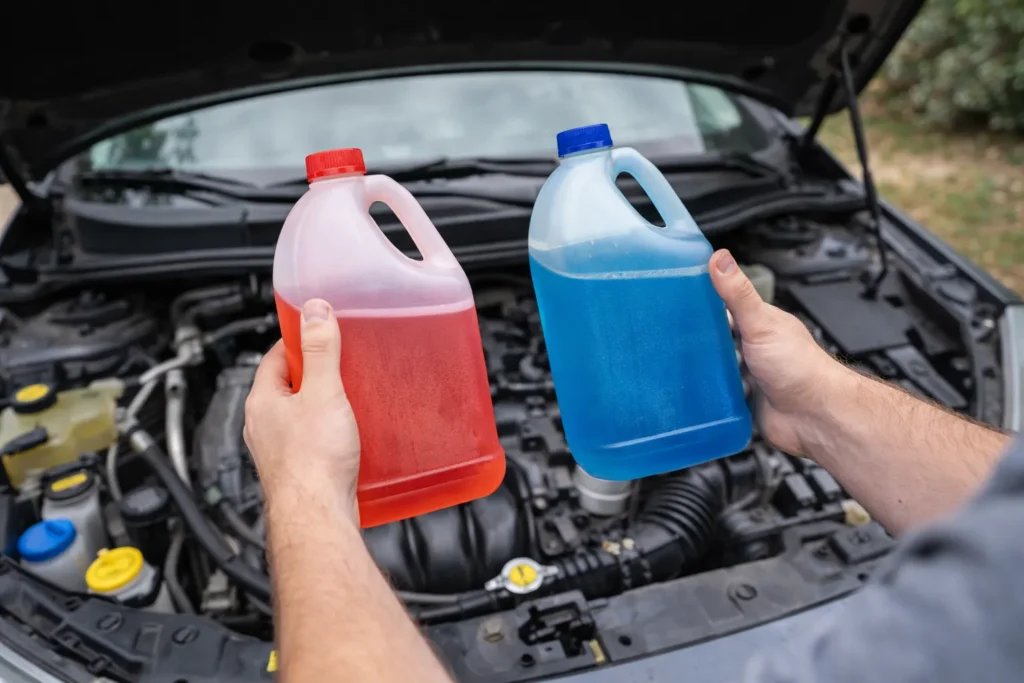
Many automakers develop proprietary coolant formulas tailored to their engine materials and cooling system designs. These coolants are not interchangeable, even if they share similar colors.
Why Coolant Color Alone Is Not Enough
Coolant color helps identify leaks and distinguish types visually, but it does not guarantee compatibility.
Same Color Does Not Mean Same Formula
Two coolants with the same color may have completely different chemical compositions. Mixing them can neutralize additives or create sludge.
Different Color Does Not Always Mean Wrong
Some manufacturers change colors while keeping chemistry similar. Checking specifications matters more than matching color.
Always Follow Vehicle Specifications
The owner’s manual or manufacturer service information provides the correct coolant type. That reference overrides color assumptions.
How To Find What Coolant Your Car Needs
Several reliable methods help identify the correct coolant without guesswork.
Owner’s Manual Information
The owner’s manual lists approved coolant specifications. It may reference a standard, a specific product type, or a manufacturer designation.
Under-Hood Labels
Many vehicles include coolant information on labels near the radiator or reservoir.
Dealership Or Service Documentation
Service departments can confirm the correct coolant based on vehicle identification number.
Avoid Generic Guessing
Using “universal” coolant without verifying compatibility increases risk. Some universal formulas work, others do not.
What Happens If The Wrong Coolant Is Used
Using the wrong coolant does not always cause immediate failure, but damage builds over time.
Reduced Corrosion Protection
Incorrect additives may fail to protect aluminum surfaces, leading to internal corrosion.
Sludge And Gel Formation
Mixing incompatible coolants can create thick deposits that block radiator passages and heater cores.
Water Pump And Seal Damage
Improper lubrication leads to leaks, noise, and premature failure.
Overheating Issues
Blocked flow or reduced heat transfer can cause temperature spikes under load.
Mixing Coolants Why It Is Risky
Mixing different coolant types is one of the most common mistakes.
Chemical Incompatibility
Different additive packages can cancel each other out or react negatively.
Loss Of Long-Life Protection
Long-life coolants lose their extended service benefits when mixed.
When Mixing Is Unavoidable
In emergencies, adding distilled water is safer than adding the wrong coolant. Water dilutes protection but avoids chemical conflict.
Concentrate Vs Premixed Coolant
Coolant comes in two main forms.
Concentrated Coolant
This requires mixing with distilled water, usually in a 50/50 ratio. It allows precise control of mixture strength.
Premixed Coolant
Premixed coolant is ready to use and eliminates mixing errors. It is convenient but typically costs more.
Why Distilled Water Matters
Tap water contains minerals that cause scale buildup. Distilled water prevents deposits inside the cooling system.
Coolant Service Intervals And Maintenance
Different coolants have different service lives.
Traditional Coolant Replacement
Older formulas often require replacement every two to three years.
Extended Life Coolant Replacement
Modern long-life coolants can last five years or more, depending on manufacturer guidelines.
Signs Coolant Needs Attention
Discoloration, debris, overheating, or warning messages indicate the system needs inspection.
Flushing The Cooling System When Changing Coolant Type
Switching coolant types requires a complete system flush.
Why Flushing Is Necessary
Residual old coolant can contaminate the new formula, reducing effectiveness.
Professional Vs DIY Flush
Professional flush equipment removes more residue, but careful DIY flushing with distilled water can be effective.
Never Skip The Flush Step
Partial draining does not remove trapped coolant in the engine block or heater core.
Special Considerations For Modern Engines
Newer engines place greater demands on coolant performance.
Turbocharged Engines
Higher operating temperatures increase coolant stress and additive depletion.
Hybrid And Start-Stop Systems
Frequent engine temperature changes require stable coolant chemistry.
Aluminum And Plastic Components
Modern cooling systems rely heavily on corrosion protection rather than just temperature control.
Coolant Myths That Cause Costly Mistakes
Several common beliefs lead to problems.
Color matching alone is unreliable. Universal coolant is not always universal. Water alone is not safe long-term. More coolant does not mean better protection.
Correct information prevents expensive repairs.
How Climate Affects Coolant Choice
Climate influences mixture ratio more than coolant type.
Cold Weather Considerations
Higher antifreeze concentration prevents freezing but must stay within manufacturer limits.
Hot Climate Considerations
Proper boiling protection and corrosion resistance remain critical, even without freezing risk.
Signs Your Cooling System Is Not Using The Right Coolant
Early warning signs often appear subtly.
Unexplained coolant loss, rusty residue, overheating during normal use, heater performance issues, or repeated component failures suggest incompatibility.
Prompt correction limits damage.
Choosing The Right Coolant With Confidence
The safest approach combines manufacturer specifications, correct formulation, and proper maintenance.
Avoid shortcuts. Verify compatibility. Use distilled water. Flush when changing types. Replace coolant on schedule.
These steps protect the engine long-term.
Final Thoughts
Coolant selection is not about convenience or color. It is about chemistry, compatibility, and protection. Modern engines depend on specific coolant formulations to manage heat, prevent corrosion, and support long-term reliability.
Choosing the correct coolant keeps internal components clean, temperatures stable, and maintenance predictable. One correct decision can prevent years of hidden damage.
A few minutes spent confirming the right coolant pays back through smoother operation, fewer repairs, and confidence that the cooling system is doing exactly what it was designed to do.

- How Families in UAE Manage Changing Vehicle Needs - March 4, 2026
- How Many Axles On A Car And What They Do - March 2, 2026
- Metal Shavings In Oil Causes And What It Means - March 2, 2026