
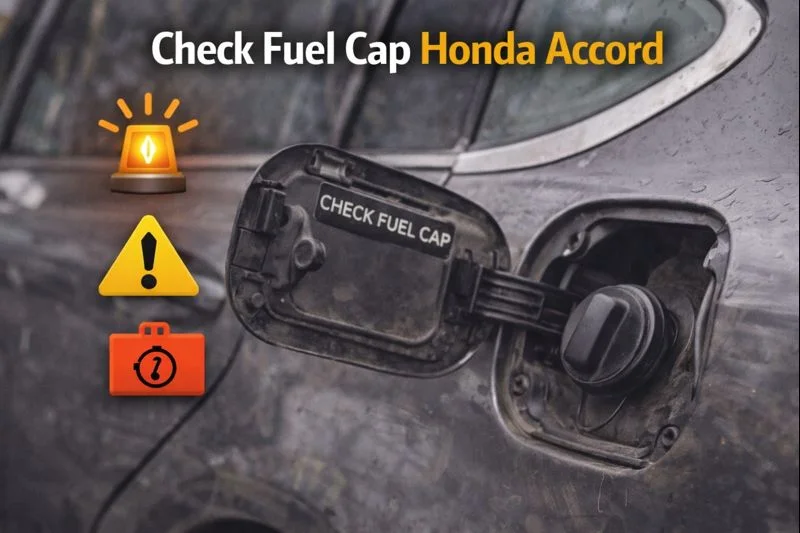
Modern vehicles are filled with warning messages that can feel confusing, especially when the car seems to be running normally. One message that often catches Honda Accord owners off guard is the “Check Fuel Cap” warning.
It may appear suddenly after refueling, during normal driving, or even days later without any obvious change in how the car behaves. Because the engine usually runs fine, many drivers ignore it or assume it is not important.
In reality, this message is part of the vehicle’s emissions monitoring system, not a simple reminder. It is designed to alert the driver when the fuel system cannot maintain proper pressure. Sometimes the cause is as minor as a loose gas cap.
Other times, it points to deeper issues within the evaporative emissions system. Knowing why this warning appears, how the system works, and what steps to take can save time, prevent unnecessary repairs, and stop a small issue from turning into a more expensive one.
Table of Contents
How The Fuel System And EVAP System Work Together
Purpose Of The Fuel Cap
The fuel cap does more than keep dirt out of the tank. It seals the fuel system so gasoline vapors do not escape into the atmosphere. A proper seal helps the vehicle meet emissions regulations and allows the onboard computer to monitor pressure changes accurately.
When the seal fails, pressure readings fall outside expected limits.
Role Of The EVAP System
The evaporative emissions system captures fuel vapors from the tank and routes them to a charcoal canister. These vapors are later burned by the engine instead of being released into the air.
Sensors constantly check for leaks or pressure loss.
Why Honda Uses A Fuel Cap Warning
Honda designed the Accord to display a specific fuel cap message before triggering a general check engine light. This early warning gives drivers a chance to fix a simple issue before it escalates into a stored fault code.
It acts as a preventive alert.
Common Reasons The Check Fuel Cap Warning Appears
Loose Or Improperly Tightened Cap
The most frequent cause is a fuel cap that is not tightened correctly. Even a small gap allows vapors to escape and disrupts system pressure.
The cap should click several times when tightened.
Worn Or Damaged Cap Seal
Over time, the rubber gasket on the fuel cap can crack, harden, or flatten. When this happens, the cap may feel tight but still fail to seal properly.
Age and heat accelerate seal wear.
After Refueling Habits
Topping off the tank after the pump clicks off can force fuel into the vapor system. This can temporarily confuse pressure readings and trigger warnings.
Fuel systems are designed to stop filling at the first click.
Fuel Cap Not Compatible With The Vehicle
Using a non-OEM or incorrect replacement cap may cause sealing issues. Some aftermarket caps do not meet Honda’s pressure specifications.
Fit and pressure rating both matter.
EVAP System Issues Beyond The Fuel Cap
Faulty EVAP Purge Valve
The purge valve controls when vapors enter the engine. If it sticks open or closed, pressure readings become abnormal.
This can trigger warnings even with a good cap.
Leaking EVAP Hoses
Cracked or disconnected hoses allow vapors to escape. These leaks are often small and difficult to detect visually.
Heat and age make rubber lines brittle.
Charcoal Canister Saturation
Fuel entering the charcoal canister can damage it. A saturated canister cannot store vapors correctly.
This often results from repeated overfilling.
Faulty Pressure Sensor
The fuel tank pressure sensor measures changes inside the system. If it fails, the computer may incorrectly assume a leak exists.
Sensor failure mimics leak symptoms.
What To Do When The Warning Appears
Step One: Check And Reseat The Fuel Cap
Remove the cap completely and inspect the seal for cracks or debris. Reinstall it carefully and tighten until multiple clicks are heard.
This resolves the issue in many cases.
Step Two: Drive Normally And Allow The System To Recheck
The system does not reset immediately. It may take several drive cycles for the message to clear.
Short trips may delay reset.
Step Three: Replace The Fuel Cap If Needed
If the warning returns, replacing the cap is a low-cost next step. Choose a cap designed specifically for the Honda Accord.
OEM-quality replacements are recommended.
Step Four: Scan For Diagnostic Codes
If the message persists, a diagnostic scan may reveal stored EVAP-related codes. These codes help narrow down the fault.
Codes guide accurate repair.
How Long It Takes For The Warning To Clear
The warning does not disappear instantly after fixing the problem. The vehicle must complete a self-test, which usually happens during steady driving conditions.
It may take several days of mixed driving.
Disconnecting the battery clears the message temporarily but does not fix the underlying issue.
Can You Drive With The Check Fuel Cap Warning On
Short-Term Driving Impact
Driving with this warning generally does not affect engine performance. The car remains safe to operate.
However, emissions efficiency is reduced.
Long-Term Consequences
Ignoring the warning can eventually trigger a full check engine light. This may cause inspection failure in emissions-testing regions.
Small leaks can worsen over time.
Fuel Economy Considerations
While fuel loss is minimal, vapor leaks slightly reduce efficiency and increase emissions.
Efficiency loss is usually small but avoidable.
Repair Costs And Typical Price Ranges
Fuel Cap Replacement Cost
A replacement fuel cap is inexpensive, often costing between $15 and $40.
Installation takes seconds.
EVAP Hose Repairs
Replacing damaged hoses varies by location and labor. Costs are moderate but increase with accessibility challenges.
Early repair lowers labor time.
Purge Valve Or Sensor Replacement
These components cost more due to labor and diagnostic time. Repairs typically fall into a mid-range category.
Accurate diagnosis prevents unnecessary part replacement.
Charcoal Canister Replacement
This is one of the more expensive EVAP repairs. Preventing fuel overfill reduces risk.
Avoiding repeated topping off protects this component.
Why The Warning Sometimes Comes And Goes
Environmental conditions affect pressure readings. Temperature changes can expand or contract vapors inside the tank.
This may cause intermittent warnings.
A marginal seal or small leak may only trigger alerts under specific conditions.
Common Myths About The Check Fuel Cap Message
Many believe the warning always means the cap is bad. While common, it is not guaranteed.
Another myth is that clearing the message solves the problem. Clearing only hides the symptom temporarily.
Some assume the issue is harmless. Emissions systems play a critical role in vehicle health and compliance.
Preventing The Warning In The Future
Proper Refueling Practices
Stop fueling when the pump clicks off. Avoid topping off.
This protects EVAP components.
Regular Cap Inspection
Check the fuel cap seal during routine maintenance. Replace it at the first sign of wear.
Caps wear out gradually.
Use Correct Replacement Parts
Choose caps designed for the specific Accord model year.
Compatibility matters.
Address Warning Messages Promptly
Early attention prevents more costly repairs.
Small fixes stay small.
Model Years Most Commonly Affected
Certain Honda Accord generations report this warning more frequently due to EVAP system sensitivity. Models from the mid-2000s through early 2010s commonly display the message.
Later models improved detection accuracy.
However, any Accord with an EVAP system can display it.
When Professional Inspection Is Necessary
If replacing the cap does not resolve the issue and the warning persists beyond several drive cycles, professional inspection is advised.
Smoke testing the EVAP system can locate small leaks.
Accurate diagnosis prevents guesswork.
Final Thoughts
The Check Fuel Cap warning on a Honda Accord is more than a simple reminder. It is an early alert from the emissions system that something is preventing proper pressure control. In many cases, the fix is quick and inexpensive, such as tightening or replacing the fuel cap. In other situations, the warning highlights underlying EVAP system issues that deserve attention.
Responding promptly keeps the vehicle compliant with emissions standards and prevents minor problems from escalating. With proper refueling habits, regular inspections, and timely repairs, this warning can remain a rare and manageable occurrence rather than a recurring frustration.

- How Families in UAE Manage Changing Vehicle Needs - March 4, 2026
- How Many Axles On A Car And What They Do - March 2, 2026
- Metal Shavings In Oil Causes And What It Means - March 2, 2026