
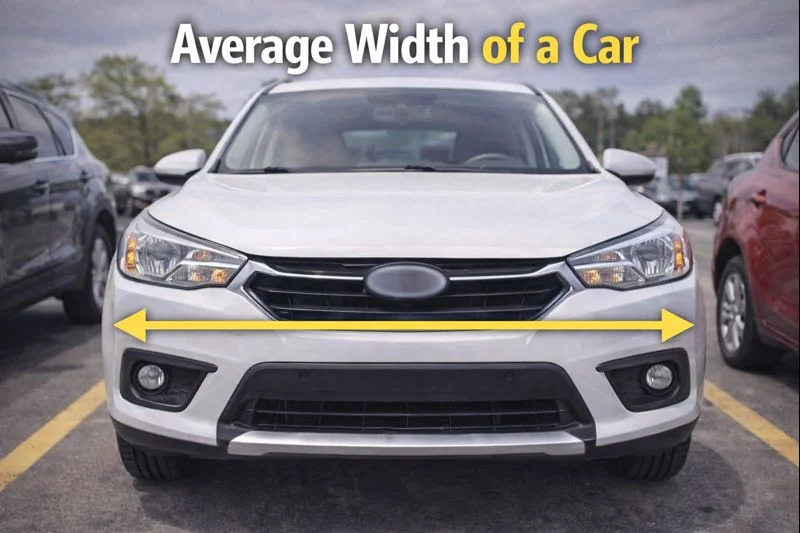
Car size is often discussed in terms of length or height, but width quietly plays an equally important role in daily use. It determines how comfortable a vehicle feels on narrow roads, how easily it fits into parking spaces, and how much room passengers actually have inside.
Many drivers only start thinking about vehicle width when they scrape a mirror in a tight garage or struggle to park in an older lot designed decades ago. At that moment, the question becomes very practical: how wide is a typical car anyway.
Vehicle width has changed gradually over time. Cars built today are generally wider than those from past generations, reflecting changing safety standards, interior expectations, and design trends.
At the same time, infrastructure like parking garages and residential driveways has not always evolved at the same pace. Knowing the average width of a car helps with buying decisions, garage planning, and everyday confidence behind the wheel.
Knowing how width differs across vehicle categories also explains why some cars feel easy to place on the road while others demand more attention.
Table of Contents
What Is Considered The Average Width Of A Car
Typical Width Measurement For Passenger Cars
The average width of a modern passenger car generally falls between 70 and 75 inches, not including side mirrors. This range covers most sedans, hatchbacks, and compact crossovers commonly seen on the road.
When mirrors are included, total width often increases by another 5 to 10 inches, depending on the design. Manufacturers usually publish both figures, but the body width is the number most often referenced when discussing vehicle size.
Why Width Is Measured Without Mirrors
Side mirrors are excluded from standard width measurements because they are considered external accessories rather than part of the vehicle body. Mirrors can fold, extend, or vary by market, making them less consistent for comparison.
Body width provides a stable reference point that helps compare vehicles accurately across different brands and segments.
How Modern Safety Standards Influence Width
Crash safety regulations have played a major role in increasing car width. Wider vehicles allow for stronger side-impact structures, larger crumple zones, and improved passenger protection.
As safety expectations rose, manufacturers responded by designing wider platforms, even in compact categories.
Average Width By Vehicle Type
Compact Cars And Subcompact Vehicles
Small cars are designed to be narrow for urban use. Most compact and subcompact cars measure between 65 and 70 inches wide. These vehicles are easy to maneuver in tight spaces and fit comfortably in older parking areas.
Their narrower width often comes at the expense of shoulder room inside the cabin, especially for rear passengers.
Mid-Size Sedans And Hatchbacks
Mid-size cars typically range from 70 to 73 inches in width. This category represents the most common average on the road.
These vehicles balance interior comfort with manageable exterior size, making them popular for families and daily commuting.
Full-Size Sedans
Full-size sedans often measure between 73 and 76 inches wide. The extra width translates directly into increased cabin space, particularly for rear passengers.
This size increase can be noticeable when parking in tight urban environments.
SUVs And Crossovers
Compact crossovers usually fall within the same width range as mid-size sedans. Mid-size and full-size SUVs often measure 75 to 80 inches wide or more.
The increased width supports higher seating positions, wider tracks for stability, and larger interior volumes.
Pickup Trucks
Pickup trucks are among the widest consumer vehicles. Many full-size trucks exceed 80 inches in width, especially when equipped with extended mirrors.
This width improves stability when towing but can be challenging in narrow spaces.
Why Car Width Has Increased Over Time
Changes In Design Philosophy
Older cars prioritized compact dimensions and lighter construction. Modern vehicles emphasize safety, comfort, and technology integration.
Wider bodies accommodate advanced safety systems, larger wheels, and more robust suspension designs.
Interior Comfort Expectations
Today’s drivers expect more shoulder room, wider seats, and spacious cabins. Increasing width allows manufacturers to meet these expectations without drastically increasing vehicle length.
This shift explains why even small cars feel roomier than their older counterparts.
Stability And Handling Improvements
A wider track improves handling by lowering the vehicle’s center of gravity and increasing stability during cornering.
This is particularly important for taller vehicles like SUVs and crossovers.
Practical Impact Of Car Width In Daily Use
Parking Spaces And Garage Fit
Standard parking spaces are typically 8 to 9 feet wide, or 96 to 108 inches. A car that is 72 inches wide leaves limited clearance once doors are opened.
In older garages or residential driveways, width becomes a deciding factor in vehicle choice.
Driving On Narrow Roads
Narrow streets, especially in older neighborhoods, can make wider vehicles feel intimidating. Lane placement becomes more critical as width increases.
Drivers often feel more relaxed in narrower cars when navigating tight environments.
Door Swing And Passenger Comfort
Wider cars often have larger doors that require more space to open fully. This affects parking next to other vehicles or walls.
While width improves interior comfort, it can reduce convenience in crowded areas.
Measuring Your Own Car’s Width Accurately
Checking Manufacturer Specifications
The most reliable way to find car width is through official specifications. These list body width without mirrors and sometimes with mirrors folded or extended.
Using official data avoids guesswork.
Measuring Manually When Needed
If specifications are unavailable, width can be measured manually using a tape measure across the widest part of the body, excluding mirrors.
This method is useful for garage planning or custom parking setups.
Accounting For Accessories
Roof racks, fender flares, and aftermarket modifications can increase effective width.
These additions should be considered when evaluating fit.
Common Misunderstandings About Car Width
Confusing Length With Width
Many people assume a longer car is harder to park, but width often causes more issues in tight spaces.
A long but narrow car can be easier to manage than a short, wide one.
Assuming All Cars Are Roughly The Same Width
Width varies more than many expect. Differences of several inches significantly affect daily usability.
Comparing models side by side highlights these differences clearly.
Ignoring Mirror Width In Real Situations
While body width matters most structurally, mirrors often determine whether a car fits through narrow passages.
Folding mirrors reduce risk but should not be overlooked.
Why Width Matters When Buying A Car
Matching Vehicle Size To Environment
Urban drivers benefit from narrower vehicles that fit easily into tight parking and streets.
Suburban and rural drivers may prioritize interior space and stability over compact width.
Family Needs And Passenger Space
Families often appreciate wider cabins for comfort, especially on longer trips.
Width directly affects shoulder room and seating comfort.
Resale And Long-Term Satisfaction
Choosing a car that fits daily routines reduces frustration over time.
Width-related inconveniences often become more noticeable the longer a vehicle is owned.
Width And Safety Considerations
Side Impact Protection
Wider vehicles provide more space for side-impact structures, improving occupant protection.
This has contributed to better crash ratings over time.
Visibility And Blind Spots
Wider vehicles often have larger blind spots, especially toward the rear.
Modern driver assistance features help mitigate this, but width still influences visibility.
Comparing Average Width Across Regions
Regional Design Differences
Vehicles sold in different regions sometimes vary slightly in width due to regulations and consumer preferences.
Urban-focused markets often favor narrower designs.
Global Trends Toward Larger Vehicles
Worldwide trends show gradual increases in vehicle width, especially in popular crossover segments.
Infrastructure adaptation has been slower in some areas, creating mismatches.
Long-Term Trends In Vehicle Width
Manufacturers continue to balance safety, comfort, and efficiency. While extreme growth is unlikely, gradual increases remain possible as technology evolves.
Electric vehicle platforms may influence future width trends due to battery placement and structural requirements.
Final Thoughts
The average width of a car typically falls between 70 and 75 inches, but that number hides meaningful differences across vehicle types and use cases. Compact cars prioritize narrow dimensions for maneuverability, while larger vehicles trade width for comfort, stability, and interior space. Over time, safety standards and consumer expectations have gradually pushed vehicle widths upward, even in smaller segments.
Understanding car width is about more than numbers on a specification sheet. It affects parking ease, road confidence, garage compatibility, and everyday comfort. Choosing a vehicle with the right width for your environment and needs leads to fewer frustrations and greater satisfaction over the long term. When viewed through this practical lens, width becomes one of the most important dimensions to consider, even if it is rarely discussed first.
- How Families in UAE Manage Changing Vehicle Needs - March 4, 2026
- How Many Axles On A Car And What They Do - March 2, 2026
- Metal Shavings In Oil Causes And What It Means - March 2, 2026